What is a UPI Address? Meaning and How It Works

Key Takeaways
- A UPI Address is a unique payment ID (e.g., name@bank) used to send and receive money through UPI.
- It replaces the need to share bank account numbers and IFSC codes.
- The UPI Address is linked directly to a bank account and enables instant transactions.
- Users can create a UPI Address through any UPI-enabled app by linking their bank account.
- Multiple UPI Addresses can be linked to the same bank account across different apps.
- It makes digital payments faster, safer, and more convenient.
You probably use online payments so often now that it feels almost automatic. A UPI address is one of the reasons that experience feels so smooth. It works as your personal digital payment identity and lets you send or receive money in seconds.
When you look at IMPS vs NEFT vs RTGS vs UPI, UPI stands out because it runs around the clock and fits easily into everyday life. The system now handles over 20 billion transactions every month, showing how deeply people trust it.
This blog explains what a UPI address is, how it works, how it differs from a UPI number, and why it makes everyday online payments in India faster, safer, and simpler.
Understanding UPI Address: Definition and Basics
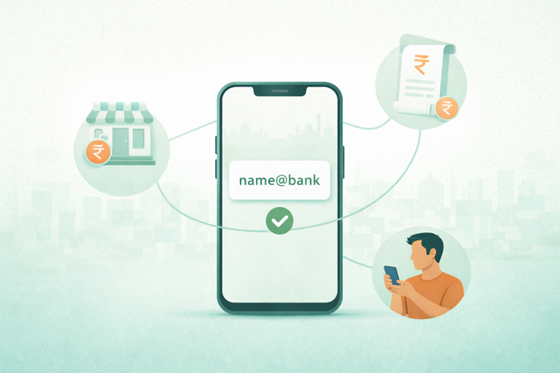
A UPI address is a unique alphanumeric identifier in the format name@bank that maps to a user's bank account and serves as the addressing layer for sending and receiving money through the Unified Payments Interface. It is officially called a Virtual Payment Address (VPA) because it works as a virtual stand-in for the underlying bank account - replacing the account number, IFSC code, and other sensitive details with a single readable string.
Why it is called a Virtual Payment Address:
- Virtual - it doesn't exist as a physical account; it is software-mapped to one
- Payment - its sole purpose is to route money, not to store a balance
- Address - like a postal address, it directs funds to the correct destination
Why you need a UPI address for payments:
- Receive money without exposing your account number to the sender
- Send money using an easy-to-remember string instead of account number + IFSC
- Use the same identifier across multiple UPI apps
- Required for every UPI transaction - no UPI payment flow bypasses a VPA on either side
How Does a UPI Address Work?
If you are wondering how this address works, the answer lies in its direct bank linkage. Your UPI address is securely mapped to your chosen account. When you make a payment, the system recognises the address, identifies the bank, and completes the transfer instantly.
In everyday terms, a UPI address means you can move money without extra steps or delays. You simply confirm the transaction using your UPI PIN. This instant settlement model explains why UPI has become the preferred choice for users for almost all types of payments.
Also Read: How to Change UPI PIN: Complete Guide for Indian Users
The Role of UPI Address in Digital Payments
This address plays a quiet but important role in online payments. Instead of filling in multiple banking fields, you only need this address to complete a transaction.
You may still hear people ask what the UPI number is, but a UPI address gives you more flexibility than a mobile number alone.
It allows you to pay individuals, shops, and service providers while keeping your bank details private. This design supports accuracy and ease, particularly when you are paying bills or EMIs.
Difference Between UPI Address and UPI Number
In most cases, when anyone asks what a UPI number is or what a UPI number means, they mean the bank-registered mobile number.
Contrarily, a UPI address is a unique virtual ID like name@UPI. Your mobile number serves as your identity, while your address allows you to carry out the transaction.
How to Create Your UPI Address — Step-by-Step Setup
Creating a UPI address takes five steps and is completed entirely within a UPI-enabled app.
Details required to set up a UPI address for the first time:
- Active savings or current account with a UPI-enabled bank
- Bank-registered mobile number active in the phone used for UPI
- Debit card details (last 6 digits and expiry) for first-time UPI PIN setup
- Smartphone with a UPI app installed
Setup steps:
- Step 1 - Download a UPI-supported app and grant SMS permission for OTP-based bank verification
- Step 2 - Register with your bank-linked mobile number; the app reads the SMS sent from your number to identify linked bank accounts
- Step 3 - Select and verify your bank account from the list the app discovers automatically
- Step 4 - Create your personalised UPI address — choose a unique prefix (name, brand, or initials) before the @ symbol; the suffix (handle) is assigned by the app, e.g., @okhdfcbank, @ybl, @paytm
- Step 5 - Set a secure UPI PIN using your debit card details; this PIN authorises every future transaction
Also Read: How to Create Your UPI Number Using a Mobile Banking App
Examples of UPI Addresses
Here are some examples:
- rohit@okhdfcbank
- neha@ybl
- user789@UPI
- business@icici
Each address is unique and securely linked to a bank account. The first part reflects your chosen name, while the second identifies the bank or service provider. These formats support quick processing for both personal and business payments.
Also Read: UPI for Business: Key Benefits, Usage, and Tips
Managing Your UPI Address: Sharing, Finding, and Updating
After your UPI address is set up, three everyday tasks come up repeatedly.
How to share your UPI address to receive money:
- Inside the UPI app: Open the app and tap the receive option; this shows your UPI address along with a personalised QR code that the sender can scan
- As text: Copy the address (e.g., yourname@okhdfcbank) and paste into WhatsApp, SMS, email, or an invoice
- As a QR code: Most UPI apps generate a downloadable QR for your VPA - print and display it at a shop, or share digitally
- For business invoices: Embed the UPI address in the payment instructions section; senders can copy-paste or scan directly
How to find your UPI address if you've forgotten it:
- Open the UPI app and go to Profile, Settings, or My UPI ID
- The active UPI address (or list, if you have more than one) appears near the top
- If multiple VPAs are listed, the primary VPA is marked with a default-account tag - that is the one used when someone sends money to your registered mobile number
- If app access isn't possible, the VPA is also visible on any transaction confirmation SMS from past payments
How to update your UPI address when your phone number changes:
- Update the mobile number at the bank first - via branch, net banking, or by calling the bank
- Reinstall the UPI app on the phone with the new SIM
- Re-verify your bank account through the new number's SMS-based authentication
- Create a new UPI address - the old VPA stops working once the bank update propagates; the same prefix can be reused if available
- Inform recurring senders (employer for salary, family members, regular customers) and re-set up auto-debit mandates linked to the old VPA
Also Read: Best UPI Apps for Cashback in 2026: Top Options to Save Money on Every Payment
Benefits of Using a UPI Address for Payments in India
Since a UPI address means simplified digital banking, it supports confidence and comfort in daily transactions.
- Instant payments are available at any time
- No need to share detailed bank information
- Strong encryption and two-factor authentication
- Works smoothly across banks and apps
- Well-suited for EMIs, loan disbursements, and merchant payments
Today, UPI accounts for 24.03 lakh crore of India’s retail digital payments, highlighting how central it has become to everyday financial activity.
Also Read - Using Two Bank Accounts with One Mobile Number for UPI
Make Digital Payments Smarter With UPI
By using a UPI address, you can manage money comfortably and simply. It enables fast payments, safeguards your banking information, and blends seamlessly with your everyday life.
As your financial needs change, it is important to have reliable financial backing when budgeting or setting personal goals. Hero FinCorp helps you stay in control with flexible loan options and a simple digital experience. Explore personal loan options and apply with ease today.
Keeping Your UPI Address and Payments Safe
Understanding upi address means knowing how to protect your identity and transactions in the UPI ecosystem. While the system is secure, users must follow best practices to avoid fraud and unauthorized access.
- Keep Your UPI PIN Confidential: Never share your PIN with anyone; it’s only required when sending money, not receiving it.
- Verify Payment Requests Carefully: Avoid approving unknown or suspicious collect requests without proper validation.
- Use Trusted Apps Only: Download UPI apps from official sources and keep them updated for security patches.
- Stay Informed with Guidelines: Follow updates from Reserve Bank of India and National Payments Corporation of India for safe usage practices.
Frequently Asked Questions
What is a UPI address, and how is it different from your bank account number?
It is a virtual payment ID that can be used for transactions, whereas a bank account number is your personal information that remains confidential and is used only by banks internally.
Can you have multiple UPI addresses linked to one bank account?
Yes, you can create multiple addresses across various apps, all linked to the same bank account.
Is a UPI number the same as a UPI address?
Actually, a UPI number most of the time refers to your mobile number that is registered; however, a UPI address is a payment-related identifier.
How secure are UPI transactions via the UPI address?
UPI transactions are secured by encryption and two-factor authentication; therefore, they are very secure.
Can UPI addresses be used internationally?
Currently, they are mainly set up for domestic transactions within India only.
How do I find my UPI address in payment apps?
You can find your UPI address in apps like Google Pay, PhonePe, or Paytm by going to your profile or bank account section. It is usually displayed as yourname@bankname.
Can I customize my UPI address?
Yes, some apps allow you to create a custom UPI address (like yourname@okaxis or yourname@ybl) at the time of setup, depending on availability.
Is a UPI address required for receiving payments?
Yes, a UPI address is essential to receive money via UPI. It acts as your payment identifier so others can send money without needing your bank details.
Can I change or delete my UPI address?
You cannot directly edit an existing UPI address, but you can create a new one or remove the old one by unlinking your bank account from the UPI app.
What should I do if I enter the wrong UPI address while sending money?
If you send money to an incorrect UPI address, the transaction is usually processed instantly. You should immediately contact your bank or app support to raise a complaint, as reversals depend on the recipient’s approval.
Disclaimer: The information provided in this blog post is intended for informational purposes only. The content is based on research and opinions available at the time of writing. While we strive to ensure accuracy, we do not claim to be exhaustive or definitive. Readers are advised to independently verify any details mentioned here, such as specifications, features, and availability, before making any decisions. Hero FinCorp does not take responsibility for any discrepancies, inaccuracies, or changes that may occur after the publication of this blog. The choice to rely on the information presented herein is at the reader's discretion, and we recommend consulting official sources and experts for the most up-to-date and accurate information about the featured products.