
Press / Media
In Conversation with our Jt. MD & CEO, Abhimanyu Munjal, on ET-Now's India Inc 2.0
Television Commercial
Our legacy, Our philosophy & Our story
Email: media@herofincorp.com
Our Blogs
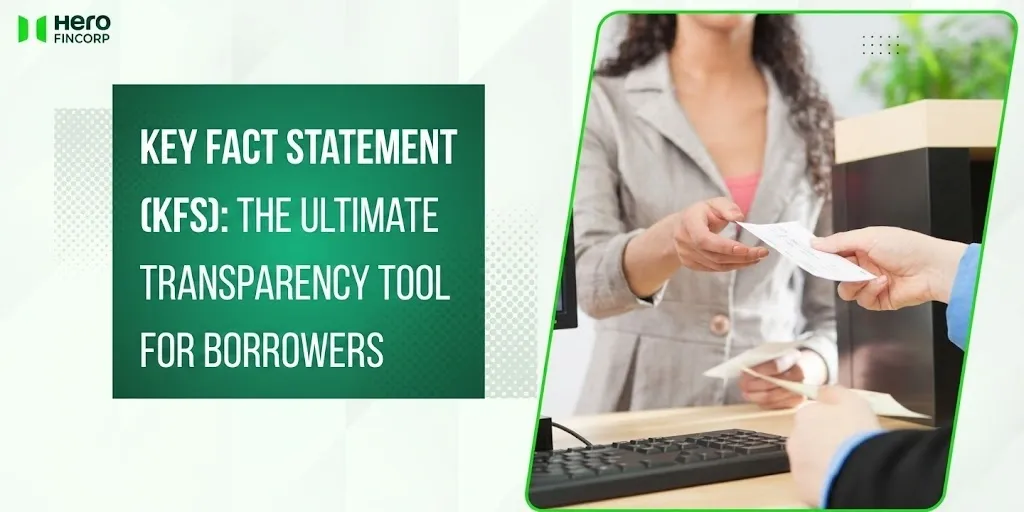
Imagine you’re taking out a personal loan for your dream wedding or an unexpected medical bill, and you’re bombarded by smallprint for pages and pages. What if there was a one-page easy to read summary document that told you everything that matters in plain language?

Tanuj Lalchandani
 Linkedin . 06 Aug, 2026

For many buyers, the first car isn’t about chrome and gadgets, it’s about getting from point A to B without worrying if the fuel gauge or engine light will cause drama on Monday morning.

Katyaini Kotiyal
 LinkedIn . 06 Aug, 2026

Somewhere behind every loan application sits a name most borrowers never bother to ask about. Nine times out of ten it's CRIF, licensed by the Reserve Bank of India alongside just three others. Whatever they report back can be the difference between a quick yes and a frustrating delay, which is reason enough to figure out what CRIF actually is and how it compares to CIBIL.
Katyaini Kotiyal
LinkedIn . 06 Aug, 2026

You’ve made that final EMI payment: Congratulations! The bike is fully yours. There is one more important step before you can really call the bike your own: Getting the No Objection Certificate and clearing the loan from the registration.
Katyaini Kotiyal
LinkedIn . 06 Aug, 2026

Loan defaults don’t all happen for the same reason. Sometimes repayments stop because income drops or a business struggles. In other cases, borrowers continue to have the means to pay but choose not to. RBI treats these two situations very differently.
'Wilful defaulter' is used only for deliberate non-payment, and the classification tends to persist for some time.
Ashavmedh Singh
Linkedin . 06 Aug, 2026