What Does Hypothecation Mean: A Simple Guide with Examples

When you opt for a loan, the lender asks you to pledge an asset as collateral.
Hypothecation is one way to offer collateral without ownership. Hypothecation is an effective way to get the funds you need. If you default on the payment, the lender has the right to claim the asset. Let’s get into the details of what hypothecation is, how it works, and how it benefits you.
Hypothecation Meaning and Definition: A Clear Explanation
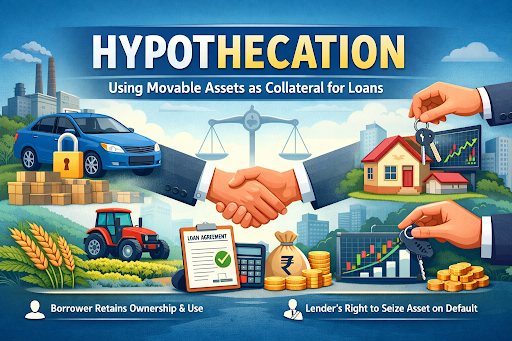
Hypothecation is the act of offering a movable asset as collateral. You still own the asset and use it. However, in the event of default, the lender has the right to take possession.
Let’s find out the characteristics of hypothecation:
- Possession and ownership: The borrower has both. He can keep using the asset while making the repayment
- Legal rights: If the borrower defaults, the lender has the right to seize or sell the asset. However, the lender cannot claim it during the loan term
- Type of assets: The borrower can use movable assets, such as machinery and cars. Etc.
- Repayment: Once the borrower pays the loan fully, the lender removes the hypothecation from the asset
Read more: What Are Personal Loans for Freelancers? How to Get a Personal Loan As a Freelancer In India
How Hypothecation Works: Mechanism and Process

When you get a loan with collateral, you hypothecate an asset. Sometimes you use the asset you are borrowing against, such as a car.
The borrower approaches the lender for a loan against a movable asset. The borrower keeps the ownership and uses the asset while making regular payments. After full repayment, the lender issues an NOC (No Objection Certificate). The borrower uses this to remove the asset's hypothecation.
Types of Hypothecation: Common Examples in India
When taking a loan through hypothecation, you can hypothecate various movable assets. Here are the common examples of hypothecation:
Vehicle Hypothecation
Around 75% of buyers use financing to purchase vehicles, and hypothecation is an effective option. When you apply for a vehicle loan, you keep the vehicle as collateral to get the loan. The hypothecation is mentioned in the registration certification (RC).
Inventory Hypothecation
When you need working capital loans or credit facilities for your business, you can hypothecate raw materials, inventory, or receivables.
Hypothecation of Agricultural Produce/Crops
When farmers want to avail seasonal agricultural credit, they may hypothecate farm equipment or produce to get a loan.
Stock Hypothecation
For margin trading, the investors can keep their stocks or shares as collateral with the broker. In case the investor does not meet the margin requirements, the broker can sell the shares.
Hypothecation vs. Pledge vs. Mortgage: Clear Distinctions
Here’s a breakdown of hypothecation, pledge, and mortgage to help you understand the differences clearly:
Aspect | Pledge | Hypothecation | Mortgage |
|---|---|---|---|
| Possession | The lender has possession | Borrower keeps the asset | The borrower has possession |
| Type of asset | Movable property. | Movable property | Real estate |
| Examples | Loans against securities, Gold loan | Equipment financing, Vehicle loans | Home loan |
| Regulatory framework | Indian Contract Act, 1872 | SARFAESI Act, 2002 | Transfer of Property Act, 1882 |
| Loan duration | Short-term | Short to mid-term | Long-term |
Advantages and Disadvantages of Hypothecation for Borrowers and Lenders
Hypothecation cuts two ways for both the borrower and the lender. Let’s find out its pros and cons for the borrower and the lender.
Pros For Borrower
- It reduces the lender's risk, so you can easily secure financing with faster processing. Plus, you can get the loan at a lower interest rate than the unsecured loans
- The ownership and possession stay with you, so you can keep using the asset. The lender can seize it only if you fail to make the payment
Cons For Borrower
- If you don’t repay the loan, the borrower has the legal right to seize the asset
- There are additional legal processes due to the hypothecation of the asset
Pros For Lender
- The lender does not have to worry about the storage of the asset
- The lender gets the asset as security, so in case of defaults, they can seize the asset to recover the money
Cons For Lender
- In case of default, the lender may need court intervention to seize the hypothecated asset
- The borrower will continue to use the property. As a result, there are chances of depreciation
Read More: Why Your Credit Score Dropped Suddenly
To Wrap Up
Hypothecation offers a flexible way to secure a loan by using movable assets as collateral. Borrowers have easy access to funds, and lenders have the security of payment. The borrower has to make the repayment on time to avoid losing the asset.
And if you are looking for a loan but do not have collateral, Hero Fincorp helps you with a collateral-free personal loan. You get fast approval through a paperless process and without collateral, so you can easily manage financial difficulties.
Explore the collateral-free personal loan options and get a personal loan when you need a financial cushion!
Frequently Asked Questions
Can I sell or transfer an asset that is under hypothecation?
No. You cannot transfer an asset that is under hypothecation. It is considered a breach of the hypothecation agreement.
How is hypothecation removed after the loan is repaid?
To remove hypothecation, you need to obtain the NOC from the lender and submit it, along with the required documents, to the RTO or ROC. Pay the applicable fees to remove the hypothecation.
What is rehypothecation?
When the lender uses the asset you pledge as collateral to secure his debt obligations, it is called rehypothecation.
Is hypothecation always registered?
Yes, registration is required for hypothecation. The precise requirements vary by asset type and governing laws.
Disclaimer: The information provided in this blog post is intended for informational purposes only. The content is based on research and opinions available at the time of writing. While we strive to ensure accuracy, we do not claim to be exhaustive or definitive. Readers are advised to independently verify any details mentioned here, such as specifications, features, and availability, before making any decisions. Hero FinCorp does not take responsibility for any discrepancies, inaccuracies, or changes that may occur after the publication of this blog. The choice to rely on the information presented herein is at the reader's discretion, and we recommend consulting official sources and experts for the most up-to-date and accurate information about the featured products.
