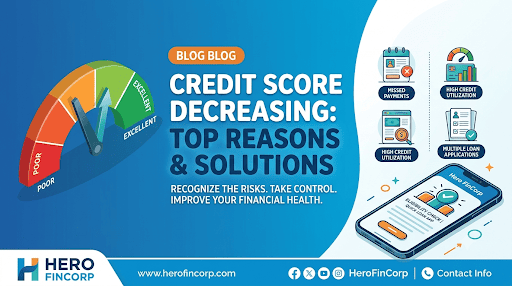
Credit Score Decreasing: Top Reasons & Solutions

- Why is My Credit Score Decreasing?
- Top Reasons Why Your Credit Score May Be Decreasing
- Missed or Late EMI and Credit Card Payments
- High Credit Utilization Ratio
- Multiple Loan or Credit Card Applications in a Short Time
- Closing Old Credit Accounts
- Errors in Your Credit Report
- Increase in Outstanding Debt
- Loan Settlement Instead of Full Repayment
- Becoming a Guarantor or Co-Applicant on a Defaulted Loan
- Credit Score Suddenly Dropped Even Though I Paid on Time, Why?
- How Much Can Different Credit Behaviors Affect Your Credit Score?
- How to Improve Your Credit Score After a Drop
- When Should You Be Concerned About a Credit Score Drop?
- Common Myths About Credit Score Reduction
- Conclusion
- Frequently Asked Questions
If you’ve been wondering why my credit score is decreasing, the answer is usually linked to recent changes in how you use credit, repay loans, or how lenders report your activity.
A credit score doesn’t fall without reason. Even small actions like higher credit card usage or a new loan application can trigger a drop. The key is to identify the cause early and correct it before it affects your future borrowing.
Why is My Credit Score Decreasing?
If you’re asking why my credit score is decreasing, it typically reflects updated credit behaviour or lender reporting. Credit bureaus track repayment history, outstanding debt, credit usage, and loan enquiries. Any change in these factors can move your score up or down.
A why my credit score is decreasing situation usually means your credit risk has slightly increased in the eyes of lenders, even if your income or job hasn’t changed.
Top Reasons Why Your Credit Score May Be Decreasing
If you’re trying to understand why credit score decreases, these are the most common reasons:
Missed or Late EMI and Credit Card Payments
Even one delayed payment can bring your score down since repayment history carries the most weight.
High Credit Utilization Ratio
Using a large portion of your credit limit signals higher dependency on credit and can trigger a why credit score decrease situation.
Multiple Loan or Credit Card Applications in a Short Time
Each application creates a hard enquiry, and too many in a short span can reduce your score.
Closing Old Credit Accounts
Older accounts help maintain a longer credit history. Closing them can shorten your credit age.
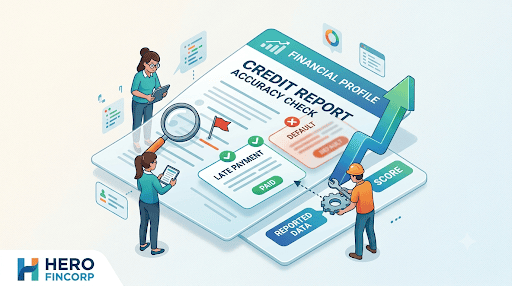
Errors in Your Credit Report
Incorrect reporting can explain why your credit score decreased, even when your financial behaviour is consistent.
Increase in Outstanding Debt
Higher total debt increases repayment burden and affects your credit profile.
Loan Settlement Instead of Full Repayment
Settling a loan for less than the full amount is viewed negatively by lenders.
Becoming a Guarantor or Co-Applicant on a Defaulted Loan
If the borrower defaults, it can indirectly affect your credit score.
Credit Score Suddenly Dropped Even Though I Paid on Time, Why?
A situation where your credit score suddenly dropped could happen even if you’ve paid everything on time. Here's why:
Credit Utilization Increased Before Statement Generation
Temporary high usage before billing can still impact your score.
Recent Hard Inquiries by Lenders
Loan or credit card applications can cause a short-term dip.
New Loan Reduced Average Credit Age
A fresh loan lowers your overall credit history length.
Reporting Delays by Financial Institutions
Sometimes updates from banks reach credit bureaus late, and this can lead to temporary fluctuations.
How Much Can Different Credit Behaviors Affect Your Credit Score?
Credit score decrease reasons vary in impact:
| Action | Impact |
|---|---|
| Late EMI payment | High impact |
| High Credit Utilisation | Medium to high |
| Multiple loan applications | Medium |
| Closing old accounts | Medium |
| Credit report errors | Variable impact |
Note that small repeated habits usually create the biggest long-term change.
How to Improve Your Credit Score After a Drop
If you’re facing a sudden drop in credit score, recovery is possible with consistent habits:
Pay All EMIs and Bills on Time
Timely payments gradually rebuild your score.
Keep Credit Utilization Below 30%
Avoid using most of your credit limit.
Check Your Credit Report Regularly
Catch and fix errors early.
Avoid Frequent Loan Applications
Apply only when necessary.
Maintain a Healthy Credit Mix
A balanced mix of secured and unsecured credit helps stability.
Resolve Outstanding Dues Quickly
Clear pending amounts as soon as possible.
When Should You Be Concerned About a Credit Score Drop?
A sudden drop in credit score should not always cause panic, but it needs attention if:
Minor Drop vs Major Drop
Any sharp declines need review, though small changes are fine.
Signs You Should Review Your Credit Report Immediately
Unexpected accounts, sudden debt increase, or repeated loan enquiries.
Common Myths About Credit Score Reduction
Misunderstandings often lead to confusion around why credit score decrease.
Checking Your Own Credit Score Lowers It
Self-checks do not affect your score.
Higher Income Automatically Improves Credit Score
Income is not a direct scoring factor.
Paying Minimum Due Is Always Safe
It avoids default but increases interest burden.
Closed Loans Instantly Improve Credit Score
Improvement takes time to reflect.
Conclusion
If you’ve been asking why my credit score is decreasing, it usually comes down to credit usage patterns, repayment behaviour, or reporting changes.
Most drops are reversible with consistent repayments, controlled credit usage, and regular monitoring of your report.
Hero FinCorp's Quick Loan App can help you determine your eligibility if you need quick access to money while improving your money management.
Frequently Asked Questions
Why did my credit score drop fifty points all of a sudden?
High credit usage, fresh loan inquiries, or updated lender reporting may be the cause.
Even if I make my EMI payments on time, would my credit score still drop?
Yes, it can still be impacted by other factors like new accounts and credit use.
How long does it take to recover a dropped credit score?
Usually a few months of disciplined credit behaviour shows improvement.
Does checking my credit score frequently affect it?
No, it is a soft enquiry and has no impact.
Can loan settlement reduce my credit score?
Yes, it is considered less favourable than full repayment.
How may a low credit score be raised the quickest?
Reduce utilization, make on-time payments, and steer clear of pointless credit applications.
How frequently should I look for mistakes in my credit report?
Every 3–4 months is ideal to ensure accuracy.
Disclaimer: The information provided in this blog post is intended for informational purposes only. The content is based on research and opinions available at the time of writing. While we strive to ensure accuracy, we do not claim to be exhaustive or definitive. Readers are advised to independently verify any details mentioned here, such as specifications, features, and availability, before making any decisions. Hero FinCorp does not take responsibility for any discrepancies, inaccuracies, or changes that may occur after the publication of this blog. The choice to rely on the information presented herein is at the reader's discretion, and we recommend consulting official sources and experts for the most up-to-date and accurate information about the featured products.