What are ACH Debit Return Charges and How to Manage Them

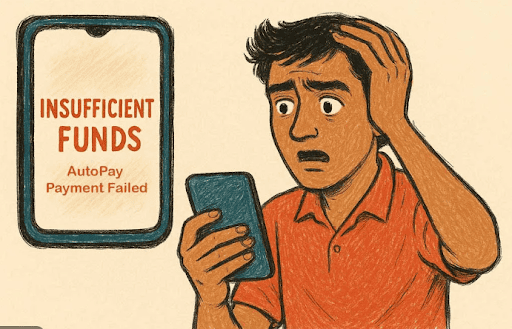
You check your bank balance one morning and notice an extra fee debited. Your EMI was supposed to go automatically through ACH, but instead, you see ACH debit return charges.
When an auto-debit fails, the lender may apply debit return charges according to policy.
If you want to know why this happens and how to prevent it, this guide explains everything.
What are ACH Debit Return Charges?
ACH or Automated Clearing House is used for electronic fund transfers between bank accounts. ACH is also used for auto-debiting EMIs for loans. It ensures timely repayments without manual intervention.
However, if the scheduled EMI cannot be debited, the transaction is returned. When this happens, lenders may levy ACH RTN charges.
ACH RTN charges meaning - a fee applied when your EMI auto-debit fails, and the transaction is sent back unpaid by the bank.
As per Hero FinCorp’s personal loan fees and charges policy, such charges are transparently disclosed and applicable only when a debit attempt fails.
So, ACH debit return charges are fees applied for unsuccessful ACH repayment attempts.
Common Causes of ACH Debit Returns
Here are some reasons that can lead to ACH debit return charges:
- Insufficient Balance - If your account does not have enough funds on the EMI date, the bank reverses the transaction.
- Incorrect Bank Details - Errors in the account number or IFSC code.
- Closed/Dormant Account - If the linked bank account is inactive or closed, the debit fails.
- Mandate Issues - Expired/cancelled ACH mandates can cause a return.
- Technical Errors - System or banking network glitches may cause transaction failure.
- Stop Payment - If the accountholder places a stop payment request with the bank, the EMI deduction will fail.
Understanding ACH RTN Charges and Fee Structures
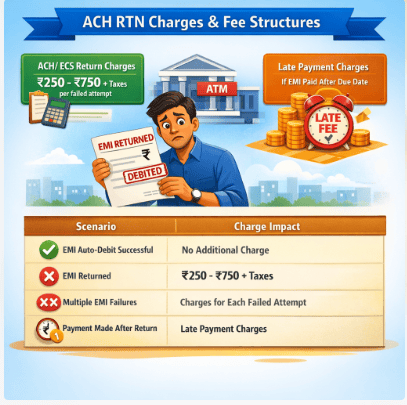
When an EMI auto-debit through ACH fails, ACH debit return charges (also called ACH RTN charges) may be applied as per the loan agreement.
What is Charged?
As per the agreement signing:
- ACH/ ECS/ NACH Return Charges - Approximately ₹250 to ₹750 plus applicable taxes per failed attempt, depending on loan type and lender policy
- Late Payment Charges - Applicable if EMI is unpaid beyond the due date
These charges are fixed per returned transaction by the lender. They are administrative fees charged when the bank reverses the EMI attempt.
| Scenario | Charge Impact |
|---|---|
| EMI auto-debit successful | No additional charge |
| EMI returned | ACH RTN charge - approximately ₹250–₹750 plus applicable taxes based on lender policy and loan agreement |
| Multiple EMI failures | Charge applied per failed attempt |
| Payment made after return | A late payment charge may apply if an EMI is paid manually after the due date. |
Impact of ACH Debit Return Charges on Businesses
Businesses and individual borrowers feel the immediate cost of ACH debit return charges as they increase:
- Workload and reconciliation efforts
- Payment processing costs
- Risk monitoring requirements
ACH debit return charges may:
- Affect loan repayment behaviour
- Increase overall loan cost
- Impact credit profile
How to Manage and Reduce ACH Debit Return Charges
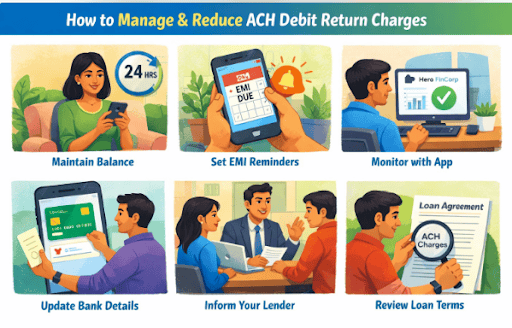
ACH RTN charges are avoidable. Here’s how you can reduce the risk:
- Keep a sufficient account balance at least 24 hours before the scheduled debit.
- Mark your EMI due date as a reminder in your calendar.
- Use Hero FinCorp’s digital tools to monitor repayment status.
- If you change your account details, update your ACH mandate.
- Inform the lender before stopping a debit.
- Understand ACH RTN charges when signing the loan agreement.
- Consider reviewing your repayment structure.
Regulatory Framework and Compliance Around ACH Return Charges
ACH/NACH transactions follow guidelines given by the RBI and NPCI frameworks, which mandate:
- Transparent disclosure of ACH RTN charges
- Clear communication related to ACH returns in loan agreements
- Fair grievance redressal procedures
RBI does not prescribe a uniform fixed ACH return charge, but a fair and pre-disclosed structure.
NBFCs, including Hero FinCorp, align their ACH RTN charges within industry norms and disclose them in sanction letters and loan agreements.
Compliance pillars followed by Hero FinCorp include:
- Transparent fee schedules on digital channels and the website
- e-NACH or digital mandate authentication
- Transaction logs
- RBI-aligned fair practices code
Disclaimer: Charges are subject to the terms of the loan agreement and may change according to regulatory or policy updates. This content is informational only.
Planning Effectively
You can avoid ACH debit return charges if you maintain a sufficient account balance, track EMI dates, and review your loan agreement.
Hero FinCorp provides transparent disclosures, digital monitoring tools, and structured repayment systems to make the EMI payment process smoother.
If you’re exploring loan options, check your eligibility and apply digitally through the official portal.
A little planning today can help you avoid unnecessary charges tomorrow.
Also Read: How to Avoid ACH Debit Return Charges?
Frequently Asked Questions
What do ACH debit return charges mean?
It refers to a fee applied when an ACH auto-debit EMI transaction fails and is returned unpaid by the bank.
How are ACH return fees calculated?
They are fixed charges that are applied per returned transaction. You can track them using the lender's fee schedule.
Why do ACH debit transactions return?
A few reasons that cause ACH return charges are insufficient account balance, incorrect bank details, dormant accounts, expired mandates, or technical issues.
Can businesses avoid ACH return charges? How?
Yes. Businesses can avoid ACH return charges by maintaining account balances, verifying account details, and tracking due dates.
What are common ACH return codes?
ACH frameworks classify returns using common codes such as:
- R01 Insufficient Funds
- R02 Account Closed
- R03 No Account or Invalid Account Number
- R04 Invalid Account Number Structure
- R08 Stop Payment
How does Hero FinCorp support ACH return charge management?
Hero FinCorp supports customers through clear fee disclosures, digital EMI tracking, app-based monitoring, and EMI reminders.
Disclaimer: The information provided in this blog post is intended for informational purposes only. The content is based on research and opinions available at the time of writing. While we strive to ensure accuracy, we do not claim to be exhaustive or definitive. Readers are advised to independently verify any details mentioned here, such as specifications, features, and availability, before making any decisions. Hero FinCorp does not take responsibility for any discrepancies, inaccuracies, or changes that may occur after the publication of this blog. The choice to rely on the information presented herein is at the reader's discretion, and we recommend consulting official sources and experts for the most up-to-date and accurate information about the featured products.
