Loan Against Shares: How It Works, Benefits & Eligibility
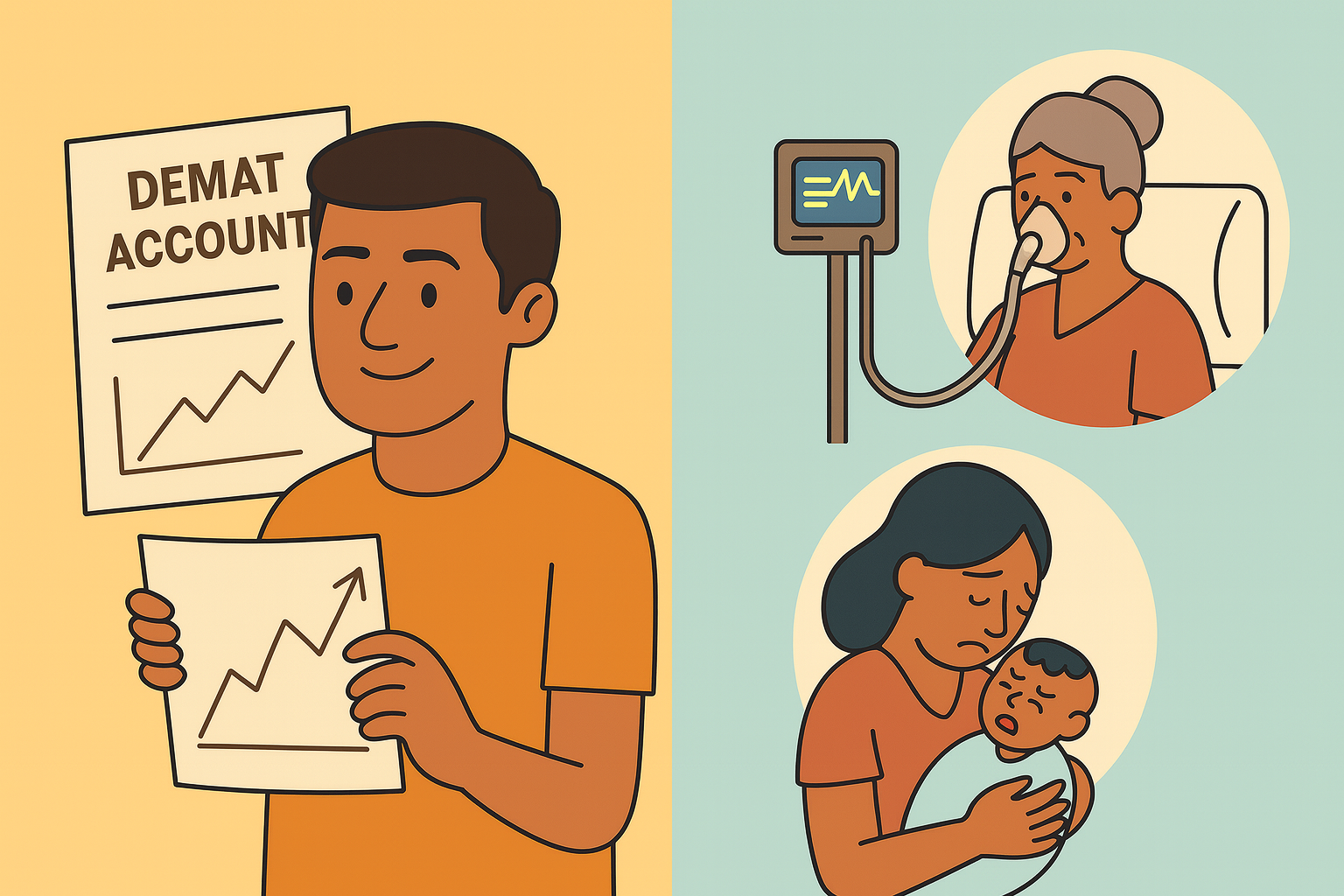
A loan against shares allows you to utilise your idle shares to unlock liquidity.
It can be done without selling off the shares. In fact, your shares can increase in value and offer dividends.
Keep reading to know how a loan against shares works, who it suits, and the risks before applying.
What is a Loan Against Shares (LAS)?
A loan against shares refers to a secured loan that uses your shares as collateral.
The service is available at banks and NBFCs (non-banking financial companies). Once you pledge your owned shares, these lenders advance cash against the shares' market value.
This way, the lender liens the assets until the amount is paid, while they stay in your demat account.
You can get an overdraft or a lump sum facility based on your needs.
Since the process uses collateral, you are likely to get a lower interest rate than with an unsecured personal loan.
How a Loan Against Shares Works
Under LAS, you offer eligible shares from a demat account. The lender sanctions a loan at their current market rate. The loan is worth a set slice of the shares' value.
The loan is generally capped at 50% of the shares' market value. You can use the unlocked limit whenever you need to.
In return, the lenders charge interest only on the amount you withdraw.
For example:
If you use only 30% of the shares and leave the remaining 70% untouched, that portion costs you nothing.
And yes, the shares remain in your demat account. Meaning, you can enjoy voting rights and dividends.
The lien is just a safety net to fall upon. So, if a payment is missed, the lender can sell the stocks to get their money.
And timely payment means the stocks are released the moment the loan is cleared.
Eligibility Criteria for Loan Against Shares
Here are the eligibility criteria for a loan against shares:
- Age: You can be aged 18 to 75. But the band can shift slightly depending on the lender.
- Residency: Indian residents, HUFs, proprietorships or partnership firms, and NRIs can apply.
- Demat account: Your shares must be dematerialised and not just sitting as physical certificates.
- Documentation: KYC documents, proof of ownership, and proof of income are available.
- Approved securities: Only approved stocks count, which usually means the big, heavily traded names.
- Minimum portfolio value: There’s a minimum limit on what you can pledge, and the limit can vary.
How to Get a Loan Against Shares: Step-by-Step Process
Nowadays, you can get a loan against shares in a few taps and with verification.
- Check your shares: Ensure your shares are listed on the NSE/BSE and the lender’s approved list.
- Apply: Fill out a form to start the pledge request. This can be done online or in an offline branch. Complete KYC and hand over the demat details.
- Pledge confirmation: Approve the pledge through NSDL or CDSL. This is generally done using an OTP (one-time password).
- Valuation and sanction: The lender values the pledged shares and fixes a limit based on the LTV ratio.
- Get the funds: Sign the agreement, the limit goes live, and the money’s yours, usually within a day or two.
If you're looking for funds for something else, download the Instant Personal Loan App from Hero FinCorp to check your loan eligibility in just a few minutes.
Loan Amount and LTV Ratio
Here is how much money you can get through a loan against shares.
The key figure is the LTV, or loan-to-value ratio. It is the portion of your shares’ value a lender is willing to advance.
For shares, the RBI holds NBFCs to an LTV of 50%. Moreover, the lender's margin requirement states that the loan cannot exceed 65% of the collateral.
So, ₹10 lakh of pledged shares can get you up to ₹5 lakh. The untouched half serves as breathing room to absorb a price drop without affecting the loaned amount.
Since sharp market dips can happen, the locked amount saves the loan from going underwater. That's why volatile stocks mean lenders advance even less than usual. Hence, the hedged number isn’t fixed across the board.
Benefits of Loan Against Shares
No Need to Sell Your Investments
The biggest benefit of such loans is that you do not have to sell shares.
Your shares stay invested, and your long-term plan stays intact. Also, you avoid the capital gains tax that selling triggers.
Flexible Repayment Options
You have multiple repayment options. Simply pay the interest when it's due and repay the principal once you can.
Lower Interest Rates Due to Security
Since your shares back the loan, the lender carries less risk. It allows them to pass the loan at a lower rate than an unsecured personal loan.
Quick Access to Funds
With shares already in demat form, pledging and valuation are fast. Borrowers usually receive funds within a day or two of approval.
Retain Dividends and Capital Appreciation
You remain the owner, so dividends, bonus shares, and any price appreciation remain yours throughout the loan's tenure.
Repayment Terms and Flexibility
Repayment is where a loan against shares earns its keep. The overdraft structure means you are not locked into a fixed EMI from the get-go.
Clear the principal early, and you save on interest, with most lenders charging little or nothing to prepay. You can even make digital payments for greater convenience.
The limits are typically renewable each year. So, the facility can stay open as a standby line for as long as you need.
That suits unpredictable cash flows far better than the fixed schedule of a term loan.
Do read the fine print on how interest is calculated and how renewal works, so nothing catches you off guard.
Who Should Opt for a Loan Against Shares?
The option does not suit everyone. But if you have been thinking of getting a loan without visiting a bank, or if you fall into one of these categories, it is one of the best options out there.
Business Owners
If you run a business, you'd be familiar with feast-or-famine months. A loan against shares can bridge the cash flow gap without pushing you to offload assets or apply for an expensive short-term credit.
Investors in Financial Emergencies
Unfortunate events do not check whether it’s a good day to sell. Pledging shares allows you to tackle the here-and-now, while your portfolio stays invested.
In case your holdings are on the lighter side. A dedicated emergency loan can also suit you.
Those Seeking Lower-Cost Borrowing
If your second-best option incurs a steep interest rate, borrowing against shares can be exponentially cheaper.
Risks and Considerations Before Applying
Everything has a flip side, so here is what you must consider before applying for a loan against shares.
Carrying the earlier example from above.
If the market drops and your shares dip from ₹10 lakh to ₹7 lakh, your loan of ₹5 lakh exceeds the 65% threshold.
If this happens, the lender will issue a margin call. Meaning, you either pledge more shares or pay down a chunk to push the LTV back up.
According to the RBI, you get seven working days to cover such shortfalls. If you let that clock run out, the lender has the right to sell your shares. It's possible that he might even do it when the market is at its worst.
So here is the sensible solution. Only borrow what you actually need. Also, keep a comfortable cushion under the maximum LTV so that an ordinary dip doesn’t trigger any call.
If your holdings are slim or prone to wild swings, you can even opt for a loan against property. There are other secured options that may give you steadier ground.
Frequently Asked Questions
What is the maximum LTV ratio for a loan against shares?
When it comes to NBFCs, the RBI draws the line at 50% of the market value of your pledged shares. So, with ₹4 lakh of shares, you unlock a loan of up to ₹2 lakh. Know that the leftover margin isn’t wasted. Instead, it’s the cushion that absorbs any price drop.
Can I pledge shares from mutual funds or ETFs?
Yes. Plenty of lenders take approved mutual fund and ETF units as collateral too, instead of listed shares. However, the LTV won’t always match. Please note that equity funds tend to track the share cap, while some debt funds can stretch a bit further.
What happens if the share price falls?
If your shares fall below the permitted LTV, there will be a margin call. You can then either pledge extra shares or repay part of what you owe. You usually get 7 working days to get the ratio back into shape.
Can I sell my pledged shares?
No. You cannot until the pledge stands. The lien locks them until you repay. What you can often do is swap one approved security for another of "equal value". But it largely depends on how your lender handles it.
What is the processing time for a loan against shares?
Usually, a day or two. Since the shares already sit in demat form, once the pledge is done and the paperwork is in order, most lenders sanction and give the limit within a day or two.
Are there any hidden charges or fees for a loan against shares?
Ideally, there are no hidden ones. But you should ask the lender. Some lenders have charges like a processing fee, a yearly maintenance or renewal charge, pledge costs, etc. You should get the full list up front, so you can see the final cost before any documentation.
Can I increase my loan limit after approval?
Yes. In most cases, you can. If your shares climb in value, or you pledge a few more approved ones, you can ask the lender to take another look. Please note that even after the increase, the 50% LTV cap will remain the same.
Conclusion
If you moderate it well, a loan against shares puts your silent portfolio to work.
It holds off panic sales, provides quick cash, and even lets you in on the bonuses and dividends.
Just remember to keep a buffer amount under the LTV ceiling. It will help you in a rough patch by fending off unnecessary marginal calls.
Is it the only option? Not really. You can always weigh in on more alternatives and only take what you need.
Always remember to read the terms for hidden charges. And if a loan against shares does not seem the right fit, check your personal loan eligibility with Hero FinCorp. It can be done in minutes using a quick, fully digital way to fund what matters without touching your investments.
Disclaimer: The information provided in this blog post is intended for informational purposes only. The content is based on research and opinions available at the time of writing. While we strive to ensure accuracy, we do not claim to be exhaustive or definitive. Readers are advised to independently verify any details mentioned here, such as specifications, features, and availability, before making any decisions. Hero FinCorp does not take responsibility for any discrepancies, inaccuracies, or changes that may occur after the publication of this blog. The choice to rely on the information presented herein is at the reader's discretion, and we recommend consulting official sources and experts for the most up-to-date and accurate information about the featured products.
