ZED Certification Scheme of MSME: Everything You Need to Know
The MSME sector is called the backbone of the Indian economy, and for good reason. It accounts for nearly 45% of all exports out of the country and for approximaly 30% of the GDP.
However, to keep up with growing expectations of global markets in terms of quality and sustainability, there needed to be a system in place to support the sector. That is why the ZED certification scheme was introduced.
This post will walk you through what the ZED certification is, why it was introduced, and key information about the scheme every MSME should know.
What Is ZED Certification?
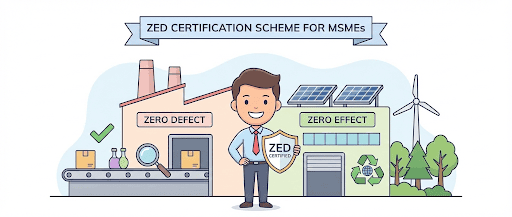
ZED, short for Zero Effect Zero Defect, is a certification scheme introduced by the Ministry of MSME. The end goal of it is two-fold: The
- “Zero Defect” portion focuses on improving the quality of the manufacture by reducing defects.
- “Zero Effect” portion of the certification focuses on limiting environmental impact during the manufacturing process itself.
In simple terms, the scheme evaluates whether your business follows structured quality processes while also being environmentally responsible.
The Vision Behind The ZED Certification Scheme
The vision behind the ZED certification scheme is simple: push Indian MSMEs to a level where they can manufacture goods that meet global quality standards without harming the environment. While the former is self-explanatory, the latter is essential in meeting Corporate Sustainability Due Diligence (CSDDD/CS3D) regulations in the EU.
Key Components Of The ZED Scheme
The ZED scheme is more about improving the system rather than just increasing an MSME's output. As a result, it evaluates MSME on the following parameters:
- Their quality management practices.
- How efficient are they with energy and resource usage?
- How efficiently is waste managed?
- Compliance with environment regulations.
- Are their improvement efforts continuous?
Why ZED Certification Matters for MSMEs?
A ZED certification is now a necessity given the evolution of global markets. Customers today pay as much attention to sustainability as they do to quality. Companies that import goods need to meet strict regulations and, as a result, prefer manufacturers who follow structured manufacturing processes.
A ZED benefits an MSME in the following ways:
- It inculcates better process discipline.
- It reduces their operational inefficiencies.
- Improves credibility with the end customers.
- It places them in a stronger position for exports.
- It gives them access to certain government incentives.
What Is The Eligibility Criteria To Apply For A ZED Certification?
To be eligible for a ZED certification, an enterprise must:
- Be registered as an MSME.
- Have a valid UDYAM registration.
- Operate in India, legally.
- Complete the required assessment.
Note: MSMEs that are manufacturers and those from the eligible service sectors (as defined by the scheme guidelines) can apply for this certificate.
What Are The Various Levels Of The ZED Certification?
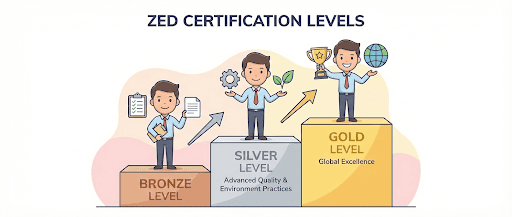
There are three levels of ZED certification that are awarded based on an MSME's performance level:
Bronze Level
The Bronze level ZED certification checks whether an MSME's essential systems are in place. It focuses primarily on documentation, process checks, and compliance.
Silver Level
The Silver level ZED certification focuses on more advanced quality management systems and MSME's environmental practices.
Gold Level
A Gold-level ZED certification represents high standards in quality, sustainability, and operational systems. An MSME with this level of certification signals a readiness for larger markets.
What Is The ZED Certification Process?
The process to get ZED certified typically follows these steps:
- Register on the official ZED portal.
- Complete the self-assessment.
- Upload the required documents.
- Undergo the evaluation.
- Receive the rating and certification level.
The documents required for the certification process are:
- The UDYAM registration certificate.
- Proof of the business registration.
- PAN details.
- All Process and quality records.
- Documents related to environmental compliance.
The assessment for the ZED certification is conducted by authorised evaluators. If an MSME fails to meet any parameters, they can make the improvements before opting for a reassessment.
What Are The Financial Incentives And Subsidies That A ZED Certification Unlocks?
To encourage participation in this scheme, the government offers subsidies and support in the following forms:
- A subsidised certification fee.
- Support for gap analysis, if required.
- Assistance for consultancy, if required.
- Reimbursement for testing or certification expenses.
The exact amount of support can vary based on the enterprise's size and which category it operates under. For example, micro enterprises and certain special categories, such as women or SC/ST entrepreneurs, may receive higher support under the MSME ZED subsidy framework.
Once an enterprise is ZED certified, it then gets access to:
- Credit guarantee schemes.
- Marketing assistance programs.
- Support for technology upgradation.
ZED Certification For the Win
A ZED certification is more than just a badge for an MSME. It guarantees improvement of an MSME's internal functioning as well as opens doors to global markets as a reliable exporter. In short, it can work as a launch pad to take your business to the next level.
Now, if you are planning to expand or upgrade your MSME to meet the requirements for a ZED certification, you will need capital. Hero FinCorp offers business loan solutions designed specifically for growing MSMEs, which you can apply for online via a loan app through a fully transparent and paperless process. Funds reach your account within 48 hours.
Frequently Asked Questions
Is ZED Certification mandatory for all MSMEs in India?
The ZED Certification Scheme is voluntary, but opting for it will work to the benefit of the MSME.
How long is a ZED Certificate valid for?
A ZED certificate is generally valid for a period of three years from the date it's issued.
Can a service-sector MSME apply for ZED Certification?
Service-sector MSMEs can apply for a ZED certification if they meet the scheme's guidelines.
What is the "ZED Pledge" and its significance?
The ZED Pledge is a formal commitment taken by an MSME before applying for certification, which is to follow all the quality standards and environmentally responsible practices under the Zero Defect Zero Effect framework.
What happens if an MSME fails the ZED assessment?
If an enterprise does not meet the required standards during assessment, it can address the gaps identified during evaluation and apply for reassessment after making the necessary improvements.
Disclaimer: The information provided in this blog post is intended for informational purposes only. The content is based on research and opinions available at the time of writing. While we strive to ensure accuracy, we do not claim to be exhaustive or definitive. Readers are advised to independently verify any details mentioned here, such as specifications, features, and availability, before making any decisions. Hero FinCorp does not take responsibility for any discrepancies, inaccuracies, or changes that may occur after the publication of this blog. The choice to rely on the information presented herein is at the reader's discretion, and we recommend consulting official sources and experts for the most up-to-date and accurate information about the featured products.
