What is an Electronic Payment System & How Does It Work?
Today, one can hardly imagine life without electronic payment solutions. Whether you are paying bills online, transferring money to family members, or shopping at your favourite retail store, EPS is everywhere.
They are the problem-solving instruments that have become an essential part of our daily lives and the foundation of modern commerce. But what exactly is an electronic payment system? Below, we break down what EPS means, how it works, its benefits, and the trends shaping its future.
What Is an Electronic Payment System?
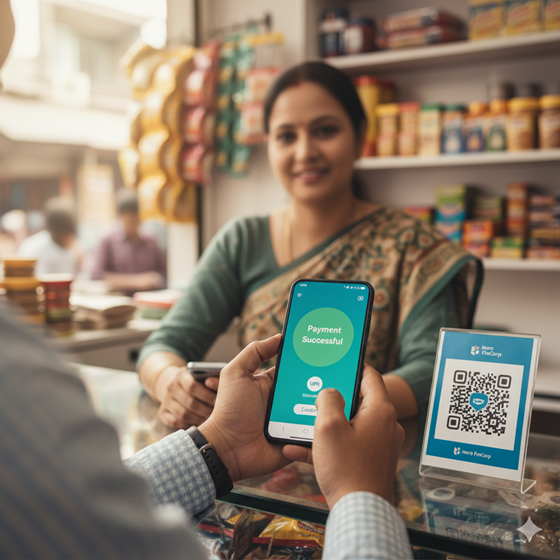
An electronic payment system (EPS) is a digital platform that facilitates the quick electronic transfer of money between parties involved. Put simply, it allows you to make and receive payments using electronic devices, replacing traditional cash or cheques.
The environment for electronic payments in India is expanding quickly. The Unified Payments Interface (UPI), mobile wallets, broader corporate use, and enhanced user trust are some of the main causes of this.
Hero FinCorp is one such organisation focused on making digital finance easier. We use modern technology to offer quick, paperless, and hassle-free financial solutions.
Types of Electronic Payment Systems
Electronic payment systems come in several different types. Some of these include:
Card Payments
Credit/debit card payments are the most commonly used and accepted payment method for both online and in-store purchases.
Electronic Fund Transfers
Electronic fund transfers (NEFT, IMPS, and RTGS) allow you to quickly and securely transfer money between bank accounts.
Also Read: How to Transfer Money Without UPI: An Essential Guide
Online Bank Transfers
Online bank transfers allow users to send money directly from their bank accounts to another user's account.
Virtual Payment Cards
Virtual payment cards are digital versions of physical credit or debit cards. You can use them for online purchases without requiring actual card details.
Automated Clearing House (ACH)
Automated clearing house, or ACH, helps to transfer funds between bank accounts directly. It is a suitable method for recurring payments and large transactions.
Wire Transfers
In wire transfers, funds are electronically moved between financial institutions.
Real-time Payments (RTP, UPI)
RTP and FedNow are two real-time platforms that facilitate instant transactions between businesses.
Contactless Payments
In contactless payments, transactions are conducted by simply tapping a card or smartphone near a payment terminal. The method uses radio frequency identification (RFID) and near-field communication (NFC) technologies to transmit the stored payment information.
Also Read: UPI Tap and Pay: The Future of Contactless Payments in India
Cryptocurrency
Cryptocurrencies enable decentralized, borderless transactions, eliminating reliance on traditional financial institutions.
Benefits of Electronic Payment Systems
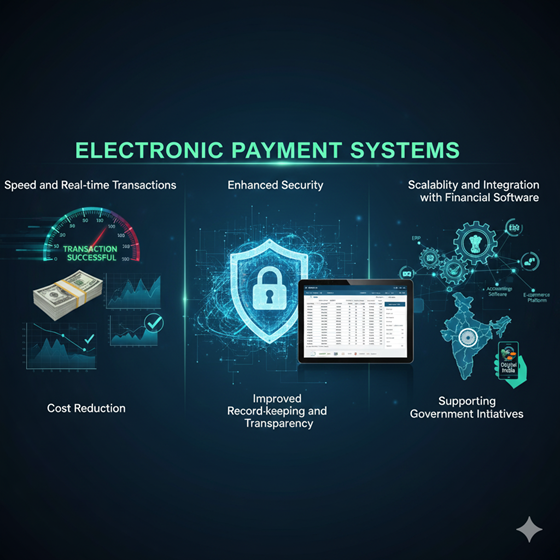
There are multiple advantages of the electronic payment system. Some of them are listed below:
Speed and Real-time Transactions
Paying through these systems is quite speedy, along with the benefit of real-time transactions. With EPS, there is no need to count cash or write a cheque. You can simply swipe quickly or dip, and you're done.
Cost Reduction
Managing and processing manual payments can be expensive for both businesses and consumers. Electronic payment systems significantly reduce these costs.
Enhanced Security
Electronic payment systems offer a completely secure option to transfer money.
Improved Record-keeping and Transparency
Keep an eye on your transaction history with electronic payment systems, which promote accountability and transparency.
Also Read: What is a UTR Number, Example & How to Check It?
Scalability and Integration with Financial Software
Electronic payment systems are scalable and can integrate with other financial systems, including your accounting software and ERP. It increases transaction volume as your business grows while minimising disruptions to your operations.
Supporting Government initiatives
Electronic payment systems promote numerous government efforts, such as Digital India, by encouraging financial inclusion, enhancing transparency and reducing costs.
Need quick funds? Download our instant loan app and access instant money with ease!
Future Trends in Electronic Payment Systems
India's payments landscape is undergoing a fundamental shift, with UPI growing at a phenomenal pace and registering explosive monthly volumes.
Data by McKinsey also suggests that the last few years have seen a steady rise in the adoption of electronic payments.
Some of the other noteworthy future trends in this space to look out for include:
- Biometric authentication, including fingerprint, facial and behavioural screening, has moved from optional to mainstream. This will help secure trillions in mobile payments, reduce customer friction, and raise new privacy questions.
- AI and machine learning are becoming the backbone of fraud defence. Advanced anomaly detection and adaptive models are projected to expand the fraud-detection market as attackers automate at scale sharply.
- Digital wallets and embedded finance are widening the availability of financial services-forecasts suggest rapid growth in India's embedded-finance business, enabling packaged credit, insurance and loyalty inside common apps.
Also Read: What is a Digital Wallet? Types, Examples & How to Use It?
Take the Next Step Toward Smarter Digital Finance
Increased security and more efficient financial operations are just two of the many advantages that an electronic payment system offers.
As India moves towards faster, safer and smarter digital payments, it's time to choose financial partners that keep pace with this growth. With Hero FinCorp, you get seamless loans, instant disbursals, and the convenience of modern electronic payment systems, all in one place.
So why wait? Install our app and experience a smarter, more effortless way to manage your finances!
FAQs (Frequently Asked Questions)
What are the key features of an electronic payment system?
Speed, security, global accessibility and automation are the key features.
How secure are electronic payment systems in India?
Electronic payment systems in India are quite secure with strong measures in place.
Can electronic payment systems handle international transactions?
Indeed, foreign transactions can be handled easily with electronic payment systems.
Which firms stand to gain the most from electronic payment systems?
Electronic payment systems are particularly beneficial to online businesses and e-commerce.
What should I consider before adopting an electronic payment system?
Consider factors such as affordability, security, and customer support before choosing an EPS.