What Is Video KYC? Meaning, Process, Benefits, and How It Works

- What Is The Meaning Of Video KYC?
- How Does Video KYC Work?
- Key Features of Video KYC
- Benefits of Video KYC
- Documents Required for Video KYC
- Eligibility Requirements for Video KYC
- Video KYC vs Traditional KYC
- Is Video KYC Safe and Secure?
- Where Is Video KYC Used?
- Common Reasons Why Video KYC Gets Rejected
- Tips for Successful Video KYC Completion
- Make Digital Verification Simpler
- Frequently Asked Questions
Rohit almost dropped his loan application after looking at the KYC process. He did not want to spend another afternoon visiting the branch, carrying documents, and waiting for his turn just to complete one verification step. Then the lender asked him to join a quick video call instead. A few minutes later, his KYC was done from his phone while sitting at home.
Many banks and nbfc now follow the same process to make verification easier for customers. If you have heard about Video KYC but never understood how it actually works, this guide will make the entire process simple and easy to follow.
What Is The Meaning Of Video KYC?
Opening a bank account or applying for a personal loan earlier meant visiting the branch with physical documents for verification. Not anymore because video KYC has simplified this process.
Video KYC Meaning Explained
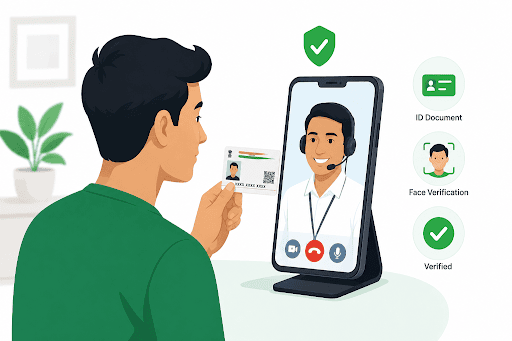
Video KYC is a paperless verification process where an authorized officer confirms your identity over a live video call. During the session, you show original documents, answer a few questions, and complete face verification in real time.
Why Financial Institutions Use Video KYC
Banks and lenders use Video KYC to verify customers more quickly without requiring them to visit a branch. It also helps them reduce paperwork and check customer details more easily.
How Does Video KYC Work?
The process follows a simple structure. Each stage helps the institution verify that the applicant and the submitted documents match.
Step 1: Online Application Submission
You have to submit personal details through the lender’s website or mobile app.
Step 2: Schedule Video Verification
The institution either schedules a verification slot or starts the session instantly.
Step 3: Live Video Interaction with Authorized Officer
An officer connects through a secure video call and asks basic identity related questions.
Step 4: Identity and Document Verification
Customers show original documents like PAN cards or Aadhaar cards clearly on camera for verification.
Step 5: Geo Tagging and Liveness Check
The system verifies the applicant’s real-time location during the verification process.
Step 6: KYC Approval and Account Activation
After successful verification, the institution approves the KYC and activates the requested financial service.
Key Features of Video KYC
Video KYC combines speed, security, and convenience in one process. Financial institutions use several built-in features to make verification reliable.
| Feature | Purpose |
|---|---|
| Live verification | Confirms applicant identity |
| Liveness detection | Prevents fake video usage |
| Geo tagging | Verifies applicant location |
| Digital onboarding | Reduces branch visits |
| Secure document capture | Protects customer data |
Benefits of Video KYC
Digital verification improves the experience for both customers and financial institutions. It saves time while making onboarding more convenient.
Faster Customer Onboarding
Most customers complete verification within minutes instead of waiting days for physical approval.
Convenience and Accessibility
You can complete verification from home using a phone or a laptop.
Reduced Paperwork
Digital processing removes the need for multiple physical forms and photocopies.
Enhanced Security and Fraud Prevention
Face verification and AI-based checks help institutions quickly identify suspicious activity.
Cost Savings for Financial Institutions
Digital onboarding reduces operational costs associated with physical verification.
Better Customer Experience
Quick approvals and smoother processes significantly improve customer satisfaction.
Documents Required for Video KYC
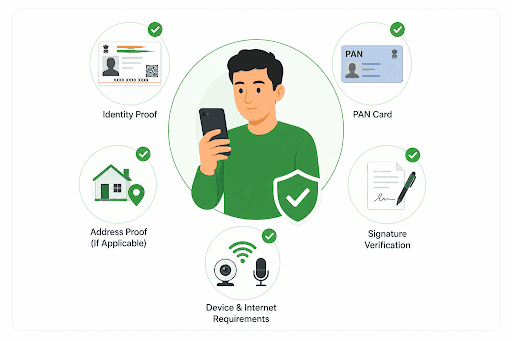
Having documents ready before the session reduces delays and improves the chances of approval. Clear visibility also helps officers complete checks faster.
Identity Proof
Most institutions accept Aadhaar or other officially valid identity documents.
PAN Card
PAN verification remains mandatory for many financial products and services.
Address Proof Where Applicable
Some institutions may request additional proof of address based on the product type.
Signature Verification Requirements
Applicants may need to sign on blank paper during verification.
Device and Internet Requirements
A working camera, microphone, and stable internet connection remain essential.
Eligibility Requirements for Video KYC
Institutions follow specific conditions before approving digital verification requests.
Individual Applicant Requirements
The applicant must complete verification personally during the live session.
Mobile Number and Email Verification
Registered mobile numbers and email addresses should remain active.
Availability of Original Documents
Only original documents qualify for successful verification checks.
Presence Within India During Verification
Applicants usually need to remain in India while completing Video KYC.
Video KYC vs Traditional KYC
| Video KYC | Traditional KYC |
|---|---|
| Remote verification | Branch visit required |
| Faster processing | Slower approval |
| Minimal paperwork | Heavy documentation |
| Digital interaction | Physical interaction |
Is Video KYC Safe and Secure?
Security remains one of the biggest reasons institutions confidently use Video KYC today. Multiple verification layers help protect customer data throughout the process.
Encryption and Secure Data Transmission
Encrypted systems protect customer information during the session.
AI-Based Fraud Detection
Advanced systems identify suspicious activity and unusual verification behavior.
Liveness and Face Verification Checks
Technology confirms that the applicant matches the submitted documents.
Regulatory Compliance Measures
Institutions follow RBI guidelines for secure Video KYC practices.
Where Is Video KYC Used?
Banks and financial platforms now use Video KYC across multiple products and services.
Savings Accounts
Banks use Video KYC to open savings accounts faster without branch visits.
Personal Loans
Lenders complete borrower verification quickly before approving personal loans.
Credit Cards
Card issuers use digital verification to speed up onboarding.
Mutual Fund Investments
Investment platforms use Video KYC to confirm investor identities.
Demat and Trading Accounts
Brokerage platforms complete account verification digitally.
Insurance Products
Insurance providers use Video KYC during customer onboarding.
Common Reasons Why Video KYC Gets Rejected
Small mistakes during verification often delay approvals. Understanding common issues helps applicants avoid repeated attempts.
Poor Internet Connectivity
Weak internet may interrupt the verification session midway.
Unclear Video Quality
Low lighting or blurry cameras make verification difficult.
Mismatch in Documents
Incorrect details across documents may trigger rejection.
Incomplete Verification
Applicants must complete every required step during the session.
Incorrect Personal Details
Wrong information in the application can delay approval.
Tips for Successful Video KYC Completion
A few simple steps can make the process smoother and faster. Preparation helps applicants avoid repeated verification attempts.
Keep Original Documents Ready
Keep all physical documents nearby before starting the session.
Ensure Good Lighting
Bright lighting helps officers clearly verify identity.
Use a stable Internet Connection
A strong internet connection prevents interruptions during the video call.
Verify Personal Details Before Submission
Cross-check names, dates, and contact details carefully.
Make Digital Verification Simpler
Video KYC has changed how people access financial services by making verification faster and more convenient. Customers no longer need repeated branch visits to complete basic onboarding requirements.
Hero FinCorp helps borrowers complete digital verification smoothly through a simple and secure personal loan app. Apply now for financial solutions online and manage your journey with greater speed, clarity, and confidence.
Frequently Asked Questions
What is Video KYC and how does it work?
Video KYC means identity verification through a live video interaction with an authorized officer.
Is Video KYC mandatory for opening a bank account?
Many banks offer Video KYC as an optional digital onboarding method.
What documents are required for Video KYC?
You will need all original PAN and an Aadhar card.
How long does the Video KYC process take?
A KYC process takes only a few minutes.
Can Video KYC be done from home?
Yes. You can complete Video KYC remotely using a smartphone or a laptop.
Is Video KYC safe and secure?
Yes, video KYC is safe and secure as banks use encryption.
What happens if my Video KYC is rejected?
The officer rejects your video KYC after specifying the reason. You can reconnect and correct your mistakes.
Disclaimer: The information provided in this blog post is intended for informational purposes only. The content is based on research and opinions available at the time of writing. While we strive to ensure accuracy, we do not claim to be exhaustive or definitive. Readers are advised to independently verify any details mentioned here, such as specifications, features, and availability, before making any decisions. Hero FinCorp does not take responsibility for any discrepancies, inaccuracies, or changes that may occur after the publication of this blog. The choice to rely on the information presented herein is at the reader's discretion, and we recommend consulting official sources and experts for the most up-to-date and accurate information about the featured products.