Personal Loan Insurance: Benefits, Coverage, Eligibility & How It Works
- What is Personal Loan Insurance?
- How Does Loan Insurance Work?
- Features and Benefits of Personal Loan Insurance
- What Does Personal Loan Insurance Cover?
- What is Not Covered Under Loan Insurance?
- Is Personal Loan Insurance Mandatory?
- Personal Loan Insurance Premium
- How to Choose the Right Loan Insurance Policy
- Personal Loan Insurance vs Life Insurance
- Frequently Asked Questions
Nobody applies for a personal loan thinking about what happens if they land in hospital three months later or lose their job mid-tenure. That oversight is exactly what loan insurance exists for.
This guide covers what it covers, what it skips, how the premium works, and whether buying it actually makes financial sense for your situation.

What is Personal Loan Insurance?
Think of personal loan insurance as a safety net stitched specifically to the loan. It does not replace the personal loan, it runs alongside it.
The borrower takes the loan as usual. At disbursement, the lender or an associated insurer puts an insurance policy on the table. A covered event during the tenure and the insurer either settles what is left of the outstanding amount with the lender, or covers the EMIs for a set period.
Death, permanent disability, critical illness, involuntary job loss. These are the events most loan insurance products cover, though the exact list varies by insurer.
What stays consistent is the logic: the borrower or their family should not have to manage a debt repayment at the same time as managing a crisis.
India's group credit life insurance segment crossed Rs. 30,000 crore in premiums in 2025. That kind of volume tells you lenders are bundling these products into almost every loan offer now.
How Does Loan Insurance Work?
At disbursement, the lender offers a loan insurance policy. The borrower pays the premium either as a single upfront amount or spread across monthly EMIs. Coverage kicks in after any waiting period the policy specifies.
A covered event happens. The borrower or their nominee notifies the insurer within the required timeframe, submits the documentation the policy asks for, and the insurer reviews the claim. Medical records for illness or disability claims. A retrenchment letter for job loss. Death certificate for a death claim.
On approval, the insurer pays the outstanding personal loan amount directly to the lender. The repayment obligation ends there for the covered amount. What triggers a payout, how much gets paid, and how long the process takes all sit in the policy document. Two policies covering identical loan amounts from different insurers can produce very different outcomes when a claim goes in.
Features and Benefits of Personal Loan Insurance
- Family does not inherit the debt: If the borrower passes away during the tenure, the insurer settles the outstanding loan with the lender directly. The family deals with the loss. Not the repayment.
- EMIs keep moving during a covered event: A critical illness diagnosis or a disability can pull someone out of work for months. Loan insurance covering these events keeps EMIs going without the borrower draining savings or pulling in family members who cannot afford to step in.
- Credit score stays protected: Missed EMIs register on CIBIL and stay there regardless of why the payments stopped. A policy covering repayments during a crisis protects the credit profile from damage that takes years to reverse and affects future borrowing costs long after the original problem has passed.
- Useful on longer tenures: A personal loan running three to five years moves through a lot of life. A policy running the full tenure takes one layer of uncertainty off the table across all of it.
- Flexible premium options: Single-premium upfront or periodic payments spread across the tenure. Single-premium is simpler to track. Periodic reduces the immediate cost but total outflow may be higher.
- Removes the need for a separate emergency reserve: Knowing the loan is covered under specific events means the borrower does not need to ring-fence a large amount specifically for loan repayment during a future crisis.
What Does Personal Loan Insurance Cover?
Coverage varies by insurer and policy. Most loan insurance products in India include some combination of:
- Accidental death: Insurer settles the outstanding personal loan with the lender if the borrower dies in an accident during the policy term
- Natural death: Most comprehensive policies extend cover to natural death, not just accidents
- Permanent total disability: Someone who cannot work again after an accident or illness should not also be managing a loan. Policies covering this event direct the payout toward the outstanding amount instead.
- Critical illness: Cancer, heart attack, kidney failure, stroke. Some policies list specific conditions where a confirmed diagnosis is enough to trigger settlement. The borrower does not need to wait for a worse outcome.
- Involuntary job loss: Select policies cover EMI payments for three to six months if the borrower is retrenched or the employer shuts down. Voluntary resignation is excluded without exception.
- Hospitalisation benefits: Certain policies offer additional cover during extended hospital stays, though scope varies
What is Not Covered Under Loan Insurance?
- Pre-existing medical conditions: Illnesses existing before the policy was purchased are excluded from claims in most policies
- Voluntary unemployment: Resignation or early retirement does not qualify under job loss benefits
- Self-inflicted injuries: Excluded across virtually every personal loan insurance policy
- Events during the waiting period: Claims for events that arise before the waiting period clears get rejected
- Premium lapse: Coverage stops when the premium lapses. Claims filed after a lapse are not processed.
- Specific excluded illnesses: Some policies list conditions explicitly excluded regardless of when they arose
The exclusions section is the most important part of the policy document. Reading it before signing is not a formality.
Is Personal Loan Insurance Mandatory?
No. Indian law does not require borrowers to purchase personal loan insurance. RBI guidelines require lenders to clearly disclose when insurance is optional and not make it a hidden condition of loan approval.
Lenders may present it at disbursement in a way that feels linked to the loan sanction. It is not. Declining does not affect approval or terms.
Whether to buy it depends on personal circumstances. Borrowers without existing life or disability cover, sole earners with dependants, and those carrying large loans over long tenures have a reasonable case for it. Borrowers with adequate term insurance and emergency savings may not find the additional cost worthwhile. Making the decision based on the actual policy terms rather than what the lender recommends at signing is always the better approach.
Personal Loan Insurance Premium
The premium depends on several factors the insurer weighs together:
- Loan amount: Higher principal means higher premium
- Loan tenure: Five years costs more than two on the same amount.
- Borrower age: A 28-year-old and a 45-year-old will not get the same rate. Age feeds directly into the insurer's risk calculation.
- Health profile: Existing conditions will either push the premium up or narrow the coverage. Sometimes both.
- Occupation: Construction worker versus desk job. Same loan, different premium.
- Coverage scope: Death-only cover costs less. Add disability, critical illness, and job loss and the price climbs with each addition.
- Payment structure: Single-premium is simpler. Periodic can cost more in total if interest applies on the financed amount.
Comparing premiums from two or three insurers before accepting the first offer makes financial sense. The lender's suggested policy is rarely the best available.
How to Choose the Right Loan Insurance Policy
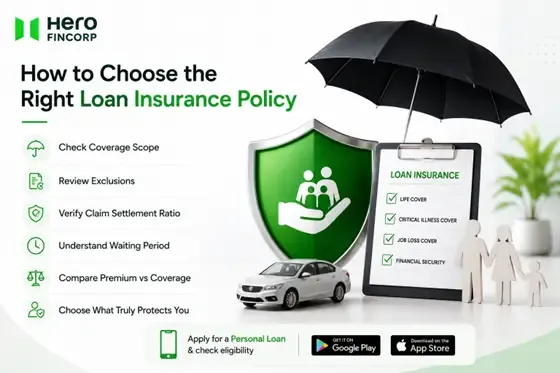
The right personal loan insurance policy takes more than accepting whatever lands on the table at disbursement.
Start with coverage scope. Which events does the policy actually cover? A death-only policy is not the same as one covering critical illness and involuntary job loss. The brochure does not always make this distinction clear.
Read the exclusions section first. Pre-existing condition clauses and specific illness exclusions leave gaps that only surface at the time of a claim. This is not where surprises belong.
Check the claim settlement ratio. IRDAI publishes this annually. Above 95% is generally solid. A low ratio is worth taking seriously.
Know the waiting period. Some benefits take longer to activate than others within the same policy. A claim filed during the waiting period gets rejected on process grounds regardless of how legitimate the event is.
Compare premium cost against actual coverage. A high-cost policy with narrow coverage is not a good deal. What the premium adds to the total loan cost needs to justify what risk it actually covers.
Apply for a personal loan and check eligibility on the Personal Loan App. Download the Instant Loan App on Android or the Quick Loan App on iOS to manage the full process from a phone.
Personal Loan Insurance vs Life Insurance
| Factor | Personal Loan Insurance | Life Insurance |
|---|---|---|
| Purpose | Covers outstanding loan in specific events | Financial support to nominees for any purpose |
| Coverage amount | Reduces as loan is repaid | Fixed sum assured throughout |
| Payout goes to | Lender | Nominee chosen by policyholder |
| Flexibility | Limited to loan coverage | Any use |
| Policy duration | Matches loan tenure | Independent of any loan |
| Premium | Single or periodic, often added to loan | Annual or periodic, paid separately |
| Portability | Tied to the specific loan | Fully portable |
| Best for | Borrowers without existing cover | Anyone needing broad long-term protection |
Borrowers with adequate life insurance covering outstanding liabilities may find personal loan insurance adds limited value. Those without existing cover taking a large personal loan over several years have a clearer case.
Frequently Asked Questions
What is personal loan insurance?
An optional policy covering outstanding personal loan repayments if a covered event occurs. The insurer pays the lender directly so the borrower or family does not have to manage the debt during a crisis.
How does loan insurance work?
The borrower opts in at disbursement, pays a premium, and coverage runs for the loan tenure. A covered event triggers a claim. On approval, the insurer pays the outstanding amount to the lender.
Is personal loan insurance mandatory?
No. RBI guidelines require lenders to disclose when it is optional. Declining does not affect loan approval.
What does personal loan insurance cover?
Commonly accidental death, natural death, permanent disability, and critical illness. Some policies add involuntary job loss and hospitalisation benefits. Coverage varies by insurer.
What is not covered under loan insurance?
Pre-existing conditions top the list. After that, voluntary resignation, self-inflicted injuries, anything that happens during the waiting period, and illnesses the policy explicitly names as excluded. The exclusions section of the document tells you more about the policy than the brochure ever will.
Who should buy personal loan insurance?
Someone who is the only earner in the household, carrying a large personal loan over several years, with no existing life or disability cover. That combination leaves very little room if something goes wrong.
How is the loan insurance premium calculated?
Loan amount, tenure, age, health profile, occupation, and how much the policy actually covers all go into it. A younger borrower taking a smaller loan for a shorter period will almost always pay less than someone older doing the opposite.
Can I buy loan insurance after taking a personal loan?
Some insurers allow it within a defined window after disbursement. Others require purchase at the time of the loan. Check with the lender or insurer shortly after taking the loan.
What happens to my loan if I have loan insurance?
A covered event and an approved claim means the insurer pays the outstanding amount to the lender. The repayment obligation ends for the covered amount.
Does loan insurance cover job loss?
Some policies cover EMI payments for three to six months if the borrower is retrenched. Voluntary resignation is excluded. Not all personal loan insurance policies include this benefit.
Does personal loan insurance cover critical illness?
Some do, covering conditions such as cancer, heart attack, or kidney failure. The list of covered illnesses varies by policy and insurer.
What is the difference between loan insurance and life insurance?
Loan insurance covers the outstanding loan and pays the lender. Life insurance pays a fixed sum to the nominee for any purpose and does not reduce as the loan is repaid.
Can I cancel my personal loan insurance policy?
Most policies include a free look period of 15 to 30 days. Cancellation within that window gets a partial refund. After that, refund terms depend on the insurer.
How do I file a personal loan insurance claim?
Notify the insurer within the required timeframe. Submit relevant documentation. The insurer reviews and processes the settlement on approval.
Is the insurance premium refundable?
Generally not if the policy runs its full course. A partial refund may be available during the free look period.
Does personal loan insurance improve loan approval chances?
No. Loan approval depends on credit profile, income, and repayment capacity. Insurance does not affect the decision.
Can self-employed individuals get loan insurance?
Yes, subject to insurer eligibility criteria. Job loss benefits may apply differently for self-employed borrowers. Check the policy terms before purchasing.
What documents are required to purchase loan insurance?
PAN card, Aadhaar, loan sanction letter, income proof, and a health declaration. Larger coverage amounts may require a medical examination.
Is personal loan insurance worth buying?
For borrowers without existing financial protection carrying a large personal loan over a long tenure, yes. For those with adequate term cover and emergency savings, the additional premium may not justify the cost.
Disclaimer: The information provided in this blog post is intended for informational purposes only. The content is based on research and opinions available at the time of writing. While we strive to ensure accuracy, we do not claim to be exhaustive or definitive. Readers are advised to independently verify any details mentioned here, such as specifications, features, and availability, before making any decisions. Hero FinCorp does not take responsibility for any discrepancies, inaccuracies, or changes that may occur after the publication of this blog. The choice to rely on the information presented herein is at the reader's discretion, and we recommend consulting official sources and experts for the most up-to-date and accurate information about the featured products.