What Is Lien Amount? Meaning, Types, Reasons & How to Remove It

- What Is a Lien Amount? (Lien Amount Meaning)
- Types of Lien in Banking
- Why Do Banks and NBFCs Place a Lien Amount?
- How to Check the Lien Amount in Your Bank Account
- How to Remove a Lien Amount From Your Bank Account
- How to Avoid a Lien on Your Bank Account
- Lien Amount and Its Impact: A Quick Reference
- Keeping Your Finances Lien-Free
- Frequently Asked Questions
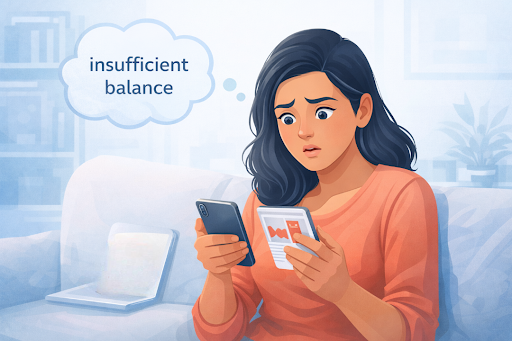
Priya had been careful with her finances all month. She had calculated her grocery run to the last rupee, queued at the checkout and then her card was declined. Not because her account was empty. Her balance showed Rs 8,000. But a message on her banking app revealed something she had never noticed before: “Lien Amount: Rs 6,500.”
She was not being penalised. No one had taken her money. But a portion of her balance had been temporarily ‘locked’ by her bank for a specific reason and until that reason was resolved, that amount was off-limits.
What Priya experienced is something thousands of bank account holders in India encounter every year, often without understanding why it happens or what to do about it. This article explains exactly that.
What Is a Lien Amount? (Lien Amount Meaning)
A lien amount is a specific portion of funds in your bank account that your bank or financial institution has temporarily blocked as security against an outstanding obligation. You remain the legal owner of this money, but you cannot withdraw, transfer, or use it until the underlying obligation is resolved.
In simpler terms: the lien amount means your bank has placed a legal hold on a part of your balance, ensuring those funds are available to settle a specific due or liability if required.
Lien amount ≠ Penalty. It is not a deduction or a charge. It is a temporary hold, your money stays in your account and even continues to earn interest, but it is inaccessible until the lien is lifted.
Understanding lien amount in a bank account matters because:
- It affects your usable balance: Your net available balance is your account balance minus the lien amount. If you are not aware of the lien, you may be caught off-guard like Priya.
- It impacts loan eligibility: Lenders assess your net liquid balance when evaluating loan applications. A high lien amount can reduce the funds available and affect your debt-to-income assessment.
- It can indirectly affect your CIBIL score: If the lien was placed due to an unpaid due that goes unresolved, the underlying default will be reported to credit bureaus and impact your credit profile.
- It affects ownership rights on assets: For secured loans, the lender holds a lien over the pledged asset. Until the loan is repaid, the asset cannot be freely sold or transferred.
Also Read: Know Maximum Personal Loan Amount Limit in India
Types of Lien in Banking
Not all liens work the same way. Here are the main types you are likely to encounter:
| Type of Lien | What It Means for Your Account |
|---|---|
| Banker's Lien | A general right of the bank to retain securities or assets deposited by a customer to recover unpaid dues. It applies automatically under banking law without a specific agreement. |
| Particular Lien | A hold placed on a specific asset or account for a specific debt. For example, a lien on your FD account for an overdue EMI on that account. |
| Equitable Lien | Arises from the principles of fairness rather than a formal agreement. Common in property or mortgage-related disputes. |
| Statutory Lien | Imposed by law or a government authority, such as the Income Tax or GST Department, for outstanding tax dues. |
| Possessory Lien | Applies when the creditor physically holds an asset (e.g., jewellery in a gold loan) and retains possession until the debt is cleared. |
Why Do Banks and NBFCs Place a Lien Amount?
A lien is not placed arbitrarily. Lending institutions and banks impose it in clearly defined circumstances. Here are the most common reasons:
1. Loan EMI Default or Missed Payment
If an EMI on a loan linked to your bank account is missed or delayed, the lender may place a lien on the corresponding funds. This serves as a precautionary hold to recover dues if the borrower continues to default. Maintaining a CIBIL score of 725 or above requires consistent, on-time repayments defaults that trigger liens are a direct risk to your credit profile.
2. Outstanding Credit Card Dues
When credit card dues remain unpaid beyond the due date, the issuing institution may impose a lien on associated bank account funds. Credit card defaults in India rose significantly in recent years, making this one of the more frequent triggers for account-level liens.
3. Tax Arrears: Income Tax or GST Department Orders
If statutory bodies such as the Income Tax Department or the GST Authority issue a notice of outstanding tax dues to your bank, the bank is legally obligated to place a lien on the specified amount. This is a statutory lien and cannot be removed without tax compliance documentation.
4. Court or Legal Orders
In the event of a legal dispute where the court directs the bank to preserve a certain amount pending resolution, the bank will place a lien on that portion of the account. This type of lien requires formal legal clearance before it can be lifted.
5. IPO Application via ASBA
When you apply for an Initial Public Offering through the Application Supported by Blocked Amount (ASBA) mechanism, the application amount is marked as a lien. It remains blocked until the allotment is processed. If you receive fewer shares than applied for, the balance is released; if no allotment is made, the entire amount is unblocked.
6. Loan Against Mutual Funds
When you pledge your mutual fund units as collateral to avail a loan, those units are marked under a lien by the fund house in favour of the lender. You cannot redeem or sell these units until the loan is fully repaid.
7. Fixed Deposit (FD) Used as Collateral
If you have availed an overdraft facility or a loan against your Fixed Deposit, the FD amount is placed under lien. The interest on the FD continues to accrue, but the principal cannot be prematurely withdrawn until the obligation is cleared.
8. Disputed Transactions
When you raise a chargeback or dispute on a transaction, the bank may place a temporary lien for the amount of the provisional credit posted to your account. Once the dispute is resolved and the transaction status is confirmed, the lien is lifted accordingly.
9. Unpaid Bank Fees or Charges
Unresolved service charges, penalty fees, or minimum balance shortfalls can also trigger a lien. These are typically smaller amounts but can accumulate if left unaddressed.
How to Check the Lien Amount in Your Bank Account
Identifying a lien on your account is the first step to resolving it. Here is how you can check:
- Net Banking / Mobile App: Log in to your account and check the account summary. Look for fields labelled ‘Lien Amount’, ‘Blocked Amount’, or ‘Hold Amount’ alongside your available balance.
- Bank Statement: Your monthly statement will reflect the lien amount separately from your actual balance. The difference between your account balance and available balance indicates a lien.
- Branch Visit: Request a detailed account statement or speak with a relationship manager who can provide a breakdown of the hold and its reason.
- Customer Care: Most banks allow you to raise an inquiry about a lien via their helpline or registered email.
How to Remove a Lien Amount From Your Bank Account
The path to lien removal depends entirely on the reason it was imposed. Here is a structured approach:
Step 1: Identify the Reason for the Lien
Check your net banking app, bank statement, or contact your bank to understand precisely why the lien was placed. You cannot resolve it without knowing the cause.
Step 2: Clear the Underlying Dues
For liens arising from unpaid EMIs, credit card dues, or bank charges: clear the outstanding amount in full. Once payment is confirmed, raise a written request to the bank to lift the lien. Always obtain written confirmation of the removal.
Step 3: Submit Supporting Documentation
Depending on the lien type, your bank may require specific documents to process the removal. These may include a loan closure letter, a No Objection Certificate (NOC) from the lender, tax clearance certificates (for statutory liens), or court compliance documents (for legal liens). Submit all proofs together to avoid processing delays.
Step 4: Apply Through Net Banking or Branch
Submit a formal lien removal application either online through your net banking portal or in person at a branch. Carry your account details, identity proof, and payment receipts.
Step 5: Track the Application
Obtain a service request or ticket number. Most lien removals are processed within 7 to 10 working days once the bank verifies the underlying issue is resolved. Follow up proactively if the hold persists beyond this period.
Step 6: Legal Resolution (For Court-Ordered Liens)
Court-imposed liens require a formal court order or compliance certificate before the bank can act. Consult a legal advisor to navigate this process and submit the relevant documents to your bank’s legal department.
How to Avoid a Lien on Your Bank Account
Prevention is more straightforward than resolution. These habits will significantly reduce your risk of encountering an account lien:
- Pay all loan EMIs on or before the due date. Setting up an auto-debit mandate ensures you never miss a payment.
- Clear credit card dues in full before the payment due date even paying the minimum due will not prevent a lien if the outstanding balance exceeds the lender’s threshold.
- Maintain adequate balance in your auto-debit account at all times to avoid payment failures that could trigger a hold.
- Stay current on income tax filings and GST obligations. Statutory liens are among the most complex to remove.
- Monitor your bank account regularly via net banking or the bank’s mobile application to spot any unusual holds early.
- Resolve disputes with your bank or NBFC proactively. Communicate payment delays in advance most lenders prefer a resolution to a legal hold.
- Keep your contact details updated with your bank so that lien notices or alerts reach you promptly.
Lien Amount and Its Impact: A Quick Reference
| Reason for Lien | Impact and Resolution Path |
|---|---|
| Unpaid EMI (Personal Loan) | Lien on account; credit bureau notified if default continues |
| Credit Card Dues | Lien on linked savings account; impacts credit utilisation ratio |
| Income Tax Arrears | Statutory lien; only removable with tax clearance from IT Department |
| ASBA – IPO Application | Temporary lien released post-allotment; no credit impact |
| Loan Against FD | Lien on FD; interest accrues but principal cannot be withdrawn |
| Court Order | Legal lien; requires court clearance or compliance certificate |
Keeping Your Finances Lien-Free
Understanding what a lien amount means in your bank account is the first step to protecting your financial health. A lien is not permanent, and in most cases, it is avoidable entirely through disciplined financial habits and timely repayment.
If you find yourself in a temporary cash crunch that risks disrupting your EMI payments or leading to unpaid dues, a personal loan can provide a planned, structured solution far preferable to defaulting and triggering a lien that impacts your credit record.
Hero FinCorp offers personal loans up to Rs 5 Lakh with flexible repayment tenures of 12 to 36 months and interest rates starting at 17.9% p.a. If you have a CIBIL score of 725 or above, you can receive instant approval and quick disbursal with a fully digital, paperless application process.
Frequently Asked Questions
What does the lien amount mean in a bank account?
Lien amount means a portion of your bank account balance that has been temporarily blocked by your bank or a financial institution as security against an outstanding obligation. You cannot use or withdraw this amount until the underlying issue such as an unpaid EMI, tax due, or legal order is resolved.
Can I withdraw my lien amount?
No. The lien amount is inaccessible until the lien is officially lifted by the bank. Your available balance is your total account balance minus the lien amount.
Does a lien amount affect my CIBIL score?
A lien itself is not directly reported to credit bureaus. However, if the lien was placed due to an unpaid loan EMI or credit card default, that underlying default will impact your credit score. Resolving the dues promptly limits the damage.
How long does a lien stay on a bank account?
The duration depends on the reason for the lien. Liens from ASBA IPO applications are lifted within days of allotment. Liens from unpaid dues are removed once payment and documentation are confirmed. Court-ordered or statutory liens may persist for weeks or months pending formal legal or regulatory clearance.
Will I earn interest on the lien-blocked amount?
Yes. The lien amount remains part of your account balance and continues to earn applicable interest. It is a hold on usability, not a deduction from your account.
What is the difference between a lien amount and an EMI bounce charge?
An EMI bounce charge is a penalty levied when an auto-debit fails due to insufficient balance. A lien amount is a proactive hold placed by the lender as security. Both can arise from payment defaults, but they are distinct in nature — one is a charge, the other is a temporary block.
What documents are needed to remove a lien?
Documents vary by lien type. Typically: payment receipt or bank transfer confirmation (for EMI/credit card dues), loan closure letter or NOC (for secured loans), tax clearance certificate (for statutory liens), or court compliance order (for legal liens).
Disclaimer: The information provided in this blog post is intended for informational purposes only. The content is based on research and opinions available at the time of writing. While we strive to ensure accuracy, we do not claim to be exhaustive or definitive. Readers are advised to independently verify any details mentioned here, such as specifications, features, and availability, before making any decisions. Hero FinCorp does not take responsibility for any discrepancies, inaccuracies, or changes that may occur after the publication of this blog. The choice to rely on the information presented herein is at the reader's discretion, and we recommend consulting official sources and experts for the most up-to-date and accurate information about the featured products.