UPI P2M Transactions- Meaning In UPI

- What Is A P2M Transaction?
- P2M Meaning In Banking
- Benefits Of P2M Transactions
- How P2M Transactions Work
- Challenges In P2M Adoption
- Regulatory And Technological Measures
- The Future Of P2M Transactions
- Signing Off
- Frequently Asked Questions
- 1. What is a P2M (peer-to-merchant) transaction?
- 2. How do P2M payments work in UPI?
- 3. What are typical examples of P2M transactions?
- 4. What is the distinction between P2M and P2P transactions?
- 5. Are P2M payments safe and secure?
- 6. What are the benefits of P2M transactions?
- 7. Can P2M payments be made using QR codes and UPI IDs?
It is now common to pay for groceries with a QR code scan or pay a restaurant bill with a UPI app. These daily online payments are P2M transactions.
Knowing the UPI P2M meaning could help explain how money transfers immediately between a customer and a business, making payments easier and eliminating the need for cash.
The term UPI P2M refers to Peer-to-Merchant payments, which involve the transfer of money between an individual and a business via digital platforms such as UPI.
P2M meaning in banking involves a customer paying a merchant using a UPI ID, QR code, or payment link. The transaction is authenticated instantly using a UPI PIN and processed in real time.
What Is A P2M Transaction?
What is a P2M transaction? It refers to an electronic payment made by a customer to a merchant in exchange for goods or services.
The P2M transactions' meaning includes everyday use cases such as:
- Paying at retail stores
- Ordering food online
- Paying utility bills
- Booking tickets or services
For instance, paying ₹1,200 for an online order through UPI is a P2M transaction where the money moves directly to the merchant’s account in real time.
These payments are designed to be convenient and quick, and do not require any cash or card information.
P2M Meaning In Banking
P2M in banking is a disciplined, digital payment framework that reduces reliance on cash and enhances transaction efficiency.
Interoperable systems, e.g., UPI QR codes and Bharat QR, are also supported by UPI-based P2M payments and can be used to pay across banks and apps.
These systems are controlled by the Reserve Bank of India (RBI), which ascertains safe processing, settlement, and user protection.
It has also facilitated digital payment by small businesses and street vendors without sophisticated infrastructure.
Benefits Of P2M Transactions
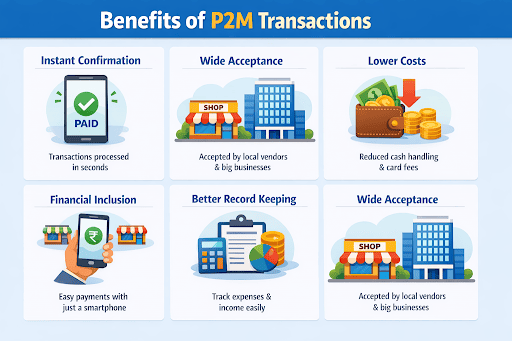
P2M transactions have several viable benefits:
- Instant confirmation
The transactions made are processed within seconds, eliminating wait time for customers and merchants.
- Wide acceptance
Local vendors and large businesses in India accept P2M payments.
- Lower costs
Online payments will decrease reliance on cash handling and card processing fees.
- Financial inclusion
Just a smartphone is enough to facilitate payment to small businesses and MSMEs.
- Better record keeping
The transactions are processed automatically and help track expenses and income. For users exploring digital payments alongside other financial needs, understanding eligibility and available options can help make more informed decisions. You can check suitable options through Hero FinCorp’s official journey here.
How P2M Transactions Work
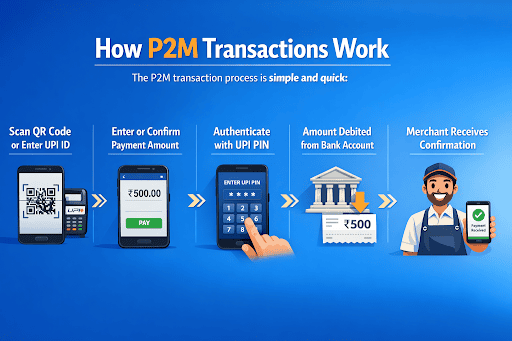
The P2M transaction process is simple and quick:
- A QR code is scanned, or a UPI ID is entered
- The payment amount is entered or pre-filled
- The transaction is authenticated using a UPI PIN
- The amount is debited from the bank account
- The merchant receives instant confirmation
Challenges In P2M Adoption
Though P2M payments are popular, certain difficulties still exist.
Network failures and other technical issues may cause delays in confirmations or temporary payment issues. Reconciliation mismatches may occur if successful payments are not immediately reflected in merchant systems.
Smaller merchants may also be exposed to KYC compliance and onboarding processes. Platform standardisation is still undergoing improvement and has yet to be fully implemented.
Regulatory And Technological Measures
Regulatory and technological frameworks are constantly evolving to address these challenges.
RBI has established the rules regarding payment aggregators and online purchases to ensure they are safe and reliable. QR codes are interoperable, enabling payment across various platforms without compatibility issues.
Secure authentication methods, encrypted systems, and constant monitoring ensure the security of transactions and a low risk of fraud.
These steps ensure P2M payments are both safe and efficient for customers and businesses.
The Future Of P2M Transactions
The future of P2M payments in India looks bright, thanks to more people using smartphones and adopting digital payments. The government is working to make cashless payments more common, and the expansion of MSMEs and internet shopping is likely to make P2M even more popular.
New features such as voice-based transactions, contactless payments, and improved interactions with financial services will continue to enhance the user experience.
As digital infrastructure improves, P2M transactions will likely become the most common way to pay in both urban and rural areas.
Signing Off
P2M transactions have altered how everyday payments happen, making them faster, easier, and far more convenient. Understanding what P2M means in banking may help you understand how money transfers easily between businesses and customers.
As digital payments become more popular, this change will become an even greater part of everyday life, making transactions feel nearly effortless.
Frequently Asked Questions
1. What is a P2M (peer-to-merchant) transaction?
It is the funds that one transacts to a firm through online apps like UPI.
2. How do P2M payments work in UPI?
It involves either scanning a QR code or entering a UPI ID and then authenticating with a UPI PIN.
3. What are typical examples of P2M transactions?
Shopping, utility, food delivery, and e-commerce.
4. What is the distinction between P2M and P2P transactions?
P2M and P2P are distinguished by the fact that they are charged to merchants and people, respectively.
5. Are P2M payments safe and secure?
Yes, they are encrypted, have levels of authentication, and are structured by RBI.
6. What are the benefits of P2M transactions?
They are fast, convenient, highly accepted, and offer improved financial tracking.
7. Can P2M payments be made using QR codes and UPI IDs?
Yes, P2M transactions are usually done using both QR codes and UPI IDs.
Disclaimer: The information provided in this blog post is intended for informational purposes only. The content is based on research and opinions available at the time of writing. While we strive to ensure accuracy, we do not claim to be exhaustive or definitive. Readers are advised to independently verify any details mentioned here, such as specifications, features, and availability, before making any decisions. Hero FinCorp does not take responsibility for any discrepancies, inaccuracies, or changes that may occur after the publication of this blog. The choice to rely on the information presented herein is at the reader's discretion, and we recommend consulting official sources and experts for the most up-to-date and accurate information about the featured products.