How to Choose Your Financial Lender

More than 9,000 NBFCs were registered with the Reserve Bank of India in 2024, and that is before you even count the banks and the lending apps. So when you set out to borrow, you are not short of options. If anything, you are drowning in them.
Here is the catch. Two lenders can hand you the exact same loan amount, and one of them still ends up costing you thousands more by the end, all because of fees nobody bothered to mention upfront. The lender you pick is what guards your money long after it lands in your account.
So let us sort out how to choose well, without the guesswork.
Why Your Choice of Lender Matters
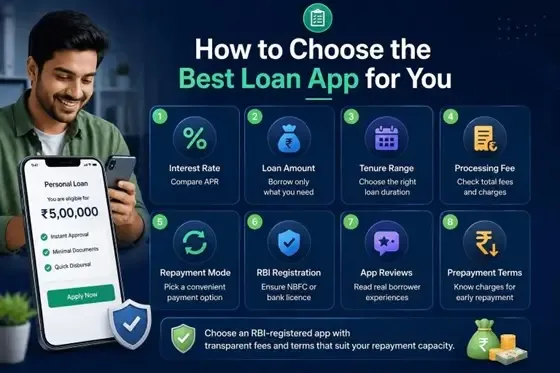
It is tempting to chase the lowest advertised rate and call it a day. But that rate is just the headline. The real cost also wraps in the processing fee, the penalty for paying early, and how the lender behaves the day a payment slips. A lender that looks cheaper on paper can quietly turn out to be the pricey one once you add all of that up.
Choose well, and the loan just gets on with its job. Choose badly, and you spend the next few years paying for the slip.
6 Things to Check Before You Choose a Lender
Run any lender you are weighing up past these six checks. Fail the first one badly and you can stop right there, no need to go further.
1. Confirm the Lender Is Registered With the RBI
This one is non-negotiable. Anyone lending money in India has to be a bank or an NBFC registered with the RBI, and you can search the regulator's public list yourself in about two minutes. A registered lender plays by the RBI's fair practices code, so you get clear pricing, a grievance officer you can actually reach, and firm limits on how recovery agents treat you. A lender that goes cagey the moment you ask about registration? That is your answer. Hero FinCorp, for the record, is an RBI-registered NBFC that has been lending since 1991.
2. Compare the APR, Not Just the Interest Rate
The number that really matters is not the interest rate. It is the Annual Percentage Rate, the APR, which rolls the interest plus the processing fee and the rest into one figure. Since 1 October 2024, the RBI makes every retail lender hand you a Key Fact Statement, or KFS, that shows this all-in APR before you sign. Use it. It is the cleanest like-for-like you will ever get, so compare APR with APR, never one lender's headline rate against another's.
3. Look Closely at the Fees
A low rate can hide a whole stack of charges. Before you commit, get the lender to spell them out: the processing fee, usually 1 to 3 per cent of the loan; the foreclosure charge if you close early; the late payment penalty; and any insurance that has been slipped in without you asking. Add those to the interest and there is your real cost.
4. Match the Loan to What You Actually Need
Decide your own numbers before a lender decides them for you. Borrow what you actually need, not the most they will hand you. Pick a tenure that keeps the EMI comfortable. A shorter tenure costs less in interest, even if the monthly figure looks bigger. Run it through an EMI calculator first, so you walk in already knowing what fits.
5. Test the Speed and the Digital Experience
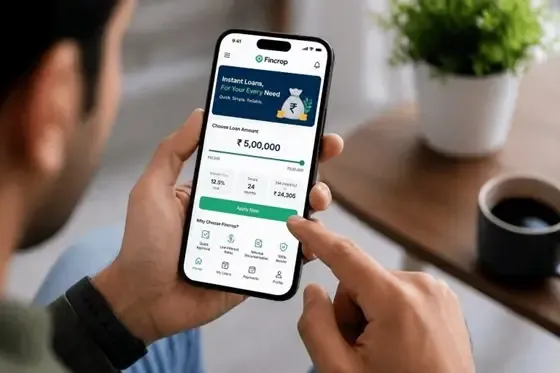
In an emergency, how fast a lender moves can matter as much as the rate itself. A good digital lender lets you check eligibility, upload your documents, and get a decision without setting foot in a branch. See how far you can get online before committing. With Hero FinCorp you can check your eligibility in minutes and run the whole application from your phone through the Instant Loan App.
6. Read the Fine Print Before You Sign
Boring? Yes. Worth it? Completely. Skim the agreement for the reset clause on any floating rate, the exact foreclosure terms, and what the lender counts as a default. If a clause reads as fuzzy, ask. A lender worth your time will explain it in plain words rather than nudge you to sign.
Bank, NBFC, or Digital Lender: Which Suits You?
Each kind of lender has its strong suit. Which one fits comes down to how fast you need the cash and how your profile looks on paper.
| Criteria | Bank | NBFC | Digital Lender / App |
|---|---|---|---|
| Approval speed | Slower | Faster | Fastest |
| Eligibility flexibility | Stricter | More flexible | Flexible, profile-based |
| Interest rate | Often lowest for existing customers | Competitive | Varies, compare the APR |
| Best for | Salaried with a strong score | Those wanting speed and flexibility | Small, quick, paperless loans |
Also Read: Personal Loan vs. Credit Card EMI: Which One Should You Choose?
A Quick Checklist Before You Apply
Keep this close once you are down to your last two or three options:
- The lender appears on the RBI's register of banks or NBFCs
- You have compared the APR, not just the headline rate
- Every fee is in writing, including foreclosure charges
- The EMI sits comfortably within your monthly budget
- You have read the default and prepayment terms and understood them
Choosing a Lender Is About More Than the Rate
Strip it back and choosing a lender is really three honest questions. What does the loan actually cost? Is the lender properly registered? And how easy are they to deal with when something goes sideways? Nail those three and you rarely look back.
Want to see it for yourself? Apply for a personal loan with Hero FinCorp and get your offer in minutes, with quick disbursals and EMIs shaped around your budget. You can handle the whole thing from your phone on the Quick Loan App, whether you are salaried or self-employed.
Frequently Asked Questions
Is a bank or an NBFC better for a personal loan?
Neither, by default. NBFCs often approve faster and bend a bit more on eligibility, while a bank might give an existing customer a lower rate. Compare the APR and the turnaround for your own case, not the category.
How do I know a lender is genuine?
Check it sits on the RBI's register of banks or NBFCs, has a real address and a grievance officer, and gives you a Key Fact Statement. And steer well clear of anyone asking for a fee before your loan is even approved.
Does applying to several lenders hurt my credit score?
Each formal application triggers a hard enquiry, and a bunch of them in a short window can drag your score down. Use eligibility checkers that run a soft enquiry first, then apply formally only to your top pick.
What is the one document I should always ask for?
The Key Fact Statement. It lays out the all-in APR and the main charges in a standard format, which makes comparing two lenders far less of a headache.
Disclaimer: The information provided in this blog post is intended for informational purposes only. The content is based on research and opinions available at the time of writing. While we strive to ensure accuracy, we do not claim to be exhaustive or definitive. Readers are advised to independently verify any details mentioned here, such as specifications, features, and availability, before making any decisions. Hero FinCorp does not take responsibility for any discrepancies, inaccuracies, or changes that may occur after the publication of this blog. The choice to rely on the information presented herein is at the reader's discretion, and we recommend consulting official sources and experts for the most up-to-date and accurate information about the featured products.