What Is CRIF? Meaning, Full Form, Credit Report, and CRIF Score Explained

- What Is CRIF?
- Why CRIF Matters in the Financial Ecosystem
- What Is a CRIF Score?
- Difference Between CRIF Score and CIBIL Score
- Which Score Do Lenders Prefer?
- How Is a CRIF Score Calculated?
- Why Is a CRIF Credit Report Important?
- How to Check Your CRIF Credit Report
- Common Factors That Can Lower Your CRIF Score
- Tips to Improve Your CRIF Score
- CRIF vs Other Credit Information Companies in India
- Who Should Monitor Their CRIF Credit Report?
- Myths About the CRIF Score
- Conclusion
- Frequently Asked Questions
Somewhere behind every loan application sits a name most borrowers never bother to ask about. Nine times out of ten it's CRIF, licensed by the Reserve Bank of India alongside just three others. Whatever they report back can be the difference between a quick yes and a frustrating delay, which is reason enough to figure out what CRIF actually is and how it compares to CIBIL.
What Is CRIF?
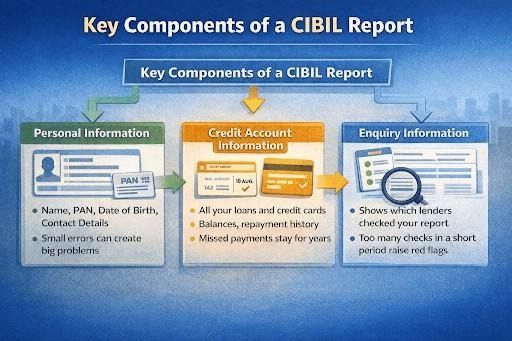
In India, CRIF goes by the name CRIF High Mark. It's one of a small club, just four bureaus carry an RBI licence under the Credit Information Companies (Regulation) Act, 2005. Chances are you already recognise the rest of that club: TransUnion CIBIL, Experian, and Equifax.
Miss an EMI, swipe a card, take out a loan, somewhere down the line CRIF finds out. All of that gets folded into a report and reduced to a single three-digit number.
Why CRIF Matters in the Financial Ecosystem
Think of CRIF as a neutral scorekeeper sitting between you and every lender you approach. It doesn't lend a rupee or approve anything. It just keeps an honest record of how you've repaid, so lenders aren't guessing. A clean history opens doors. A patchy one quietly shuts them.
What Is a CRIF Score?
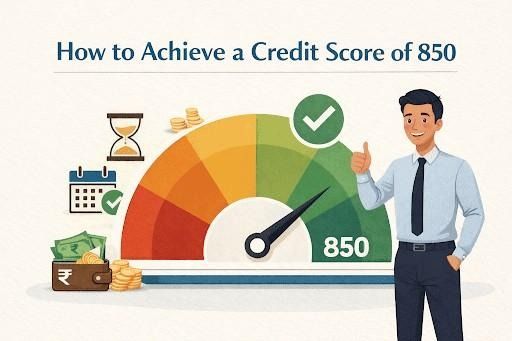
A CRIF score boils your reliability as a borrower down to one number, somewhere from 300 to 900. Higher is better. Same scale CIBIL uses.
CRIF Score Range Explained
Roughly, here is how lenders read the number:
| CRIF Score | What It Usually Signals |
|---|---|
| 750 to 900 | Excellent. Best approval odds and the sharpest rates |
| 700 to 749 | Good. Most lenders say yes without much fuss |
| 650 to 699 | Fair. Possible, but often at a higher rate |
| 300 to 649 | Weak. Expect a hard look, or a no, until you rebuild |
What Constitutes a Good CRIF Score?
Anything above 700 is treated as healthy, and 750-plus is the sweet spot where lenders court you rather than the reverse. No number is a guarantee, mind you. Your income, your running EMIs, and your job stability all sit in the decision too.
Difference Between CRIF Score and CIBIL Score
People mix these two up constantly. But they aren't two versions of one score. Two separate bureaus, each with its own file on you, and a lender might pull either.
Similarities
Both are RBI-licensed, both run 300 to 900, both lean hardest on your repayment record, and both owe you one free full report a year. Feed either good habits, and the two tend to move together.
Key Differences
Where they part ways:
| Basis | CRIF High Mark | TransUnion CIBIL |
|---|---|---|
| In India since | 2010 | 2000 |
| Known for | Strong microfinance and retail data | The score most borrowers recognise |
| Score range | 300 to 900 | 300 to 900 |
| Free report | One a year | One a year |
Which Score Do Lenders Prefer?
There's no fixed winner. Some lean on CIBIL, some pull CRIF, plenty check more than one. What matters far more is the story your history tells, because a responsible borrower looks good on all of them.
How Is a CRIF Score Calculated?
Your score isn't pulled from thin air. A handful of ingredients build it.
Repayment History
This one carries the most weight by far. Pay every EMI and bill on time, and you're most of the way there already. Slip up even once, and it leaves a mark, and a run of missed payments drags the number down fast.
Credit Utilisation
Basically, how much of your limit you're actually using. Sit at 90% month after month, and it reads as stress, whereas staying under a third tells a lender you've got room to spare.
Credit Mix
Mixing secured loans, a car or home loan, with something unsecured like a card looks better on paper than a file built around a single product.
Credit Age
A longer track record earns more trust, simple as that. That old card sitting quietly in your wallet is doing you a favour, which is exactly why closing it rarely pays off.
Loan Enquiries
Every formal application triggers what's called a hard enquiry. One or two won't hurt. A flurry of them in a short window, though, reads as desperation and drags the score down.
Why Is a CRIF Credit Report Important?
The score grabs the attention, but the full report is where the real value sits. A strong one buys you a few things.
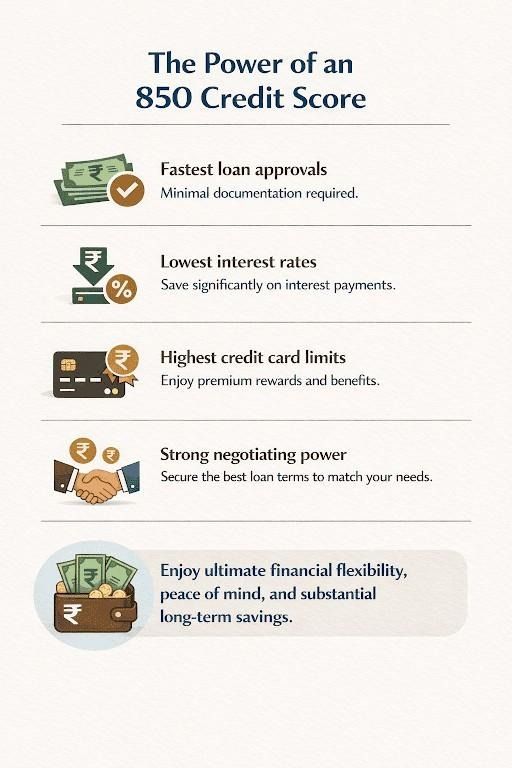
Faster Loan Approval
A clean report lets a lender clear the risk check in minutes instead of days, which is exactly why digital loans move as fast as they do.
Better Interest Rates
Risk and rate move together. Show up with a strong profile and the interest saved over the life of a loan is real money, not a rounding error.
Improved Creditworthiness
Lenders open up bigger limits and better products once your history backs you up.
Higher Negotiation Power
A healthy report buys you room to push back a little, whether that's on the rate, the tenure, or getting a fee waived. Lenders would rather bend a little than watch you walk to a competitor.
How to Check Your CRIF Credit Report
Worth doing before you apply anywhere, so nothing blindsides you.
Online Process
It starts on the official CRIF High Mark portal, where a PAN number, a couple of basic details, and an OTP are all it takes before your report loads up.
Documents Required
Not much to gather. Your PAN, some valid ID such as Aadhaar, and a mobile number that's already registered with your lenders will cover it.
Frequency of Checking
You get one free full report a year from each bureau, so rotate between them every few months. Checking your own is a soft enquiry, and it never dents the score.
Common Factors That Can Lower Your CRIF Score
A score rarely crashes overnight. It leaks. Keep an eye on these.
- Missed EMI Payments
- High Credit Utilisation
- Multiple Loan Applications
- Loan Defaults
- Settlement Accounts
Tips to Improve Your CRIF Score
A low score today isn't a life sentence. Dull, steady habits fix it, usually within a few months.
Pay EMIs on Time
Nothing moves the needle more than this one habit. Set up auto-pay so a due date never slips past you unnoticed.
Maintain Low Credit Utilisation
Try to keep card spending under about a third of your limit. Spending more than that regularly? Call the bank and ask for a higher limit instead of running it to the edge every month.
Avoid Frequent Credit Applications
Space out your applications and only apply where you're reasonably confident of a yes.
Monitor Credit Report Regularly
Errors creep in more often than you'd think: a wrong default here, a loan that was never yours there. Catch them early and raise a dispute with the bureau before they sit on your file for years.
Maintain Healthy Credit Mix
A sensible mix of secured and unsecured credit, handled responsibly, beats a file built around just one product.
CRIF vs Other Credit Information Companies in India
India has exactly four RBI-licensed bureaus. Same job, different histories and strengths. You can see the full list on the RBI website.
| Credit Bureau | Notable Strength |
|---|---|
| CRIF High Mark | Deep microfinance and retail lending coverage |
| TransUnion CIBIL | The most widely recognised score among borrowers |
| Experian | Global bureau with a strong analytics footprint |
| Equifax | Long-standing global player used across lenders |
Who Should Monitor Their CRIF Credit Report?
Short answer: anyone who might borrow. But a few groups have more riding on it than most.
Salaried Individuals
Planning a personal loan, a car, or a home soon? Your score sets the terms you'll be offered.
Self-employed Professionals
Income is harder to prove here, so a clean score does double duty.
Business Owners
Working capital or a business loan may be around the corner. Keep the record tidy.
First-time Loan Applicants
You're building a file from scratch, so every early habit counts.
Myths About the CRIF Score
Plenty of credit folklore floats around. What actually holds up:
| Myth | Reality |
|---|---|
| Checking your own score lowers it | It's a soft enquiry. It never touches your score. |
| A high income means a high score | Income isn't in the score at all. Only how you handle credit is. |
| No loans means a great score | No history gives a lender nothing to judge. That can hurt too. |
| Closing old cards helps | It can shorten your credit age and nudge the score down. |
Conclusion
CRIF isn't the enemy. It's a mirror. Pay on time, borrow within your means, glance at your report now and then, and the score looks after itself. Do that, and you walk into any loan talk from strength, not hope.
Got your score in good shape? Hero FinCorp, an RBI-registered NBFC since 1991, lets you check your eligibility and apply for a personal loan in minutes. Run the numbers first with the EMI calculator, then handle it all on your phone via the Hero FinCorp Instant Loan App.
Frequently Asked Questions
What is CRIF and what does it do?
CRIF, known in India as CRIF High Mark, holds an RBI licence to run as a credit bureau. Every lender you've dealt with feeds it your loan and card history, which gets compiled into a report and reduced to the score that decides your next application.
What is the full form of CRIF?
It operates locally as CRIF High Mark Credit Information Services. The parent company is actually Italian in origin and runs credit bureaus across a good number of countries now.
Is a CRIF score different from a CIBIL score?
It can be, since they're separate files kept by separate companies. Don't be surprised if the two numbers sit a few points apart for you personally. Both run on the same 300 to 900 scale and reward the same repayment habits, so a good score on one usually means a good score on the other too.
How can I check my CRIF credit report online?
The official CRIF High Mark portal handles it. Enter your PAN, confirm with an OTP, and the report loads up right away, and since one full report is free every year, there's no reason to put it off.
What is considered a good CRIF score for a loan?
Anything past 700 is comfortable territory. Cross 750 and lenders start competing for your business with better rates and faster approvals.
Can I improve my CRIF score quickly?
No shortcut here, but the fix isn't slow either, usually a few months of steady habits. Pay every EMI on time, keep card usage down, cut back on applications, and get any errors on your report corrected.
Do lenders always check a CRIF report before approving a loan?
At least one bureau gets checked, whether that's CRIF, CIBIL, or another, and plenty of lenders check more than one. Your credit history is part of nearly every loan decision, one way or another.
Disclaimer: The information provided in this blog post is intended for informational purposes only. The content is based on research and opinions available at the time of writing. While we strive to ensure accuracy, we do not claim to be exhaustive or definitive. Readers are advised to independently verify any details mentioned here, such as specifications, features, and availability, before making any decisions. Hero FinCorp does not take responsibility for any discrepancies, inaccuracies, or changes that may occur after the publication of this blog. The choice to rely on the information presented herein is at the reader's discretion, and we recommend consulting official sources and experts for the most up-to-date and accurate information about the featured products.