CIBIL Written Off: Meaning, Impact, and Removal Process

- What is Write Off in CIBIL?
- Impact of Written Off Status on Your CIBIL Score
- How to Remove Written Off from CIBIL: Step-by-Step Guide
- Important Takeaways about Removing Written-off Status
- Difference Between Written Off and Settled Status in CIBIL
- Rebuilding Credit After a Written-Off Loan
- Take Control of Your CIBIL Written-Off Status
- Frequently Asked Questions
You take a loan with the best of intentions, but end up missing a few EMIs due to circumstances beyond your control. Later, you are shocked to see a written-off status on your loan when you check your CIBIL report while applying for another loan.
This may leave you wondering whether you still owe EMIs, the true status of the loan's closure, and whether it will affect your ability to get another loan in the future.
A CIBIL written-off status doesn’t mean the debt has been cleared. It merely means the lender has written off the loan as a loss after an extended period of non-payment, usually 180 days or more.
In this blog, we explain the written-off meaning in CIBIL, how it affects your credit score, and steps you can take to recover and rebuild your credit.
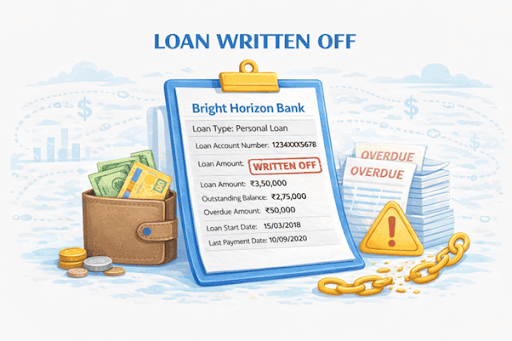
What is Write Off in CIBIL?
So, what is written off meaning in CIBIL exactly? A loan is written off when the borrower fails to repay for an extended period, usually after multiple reminders. The lender then writes off the loan and considers it uncollectible for accounting purposes.
The lender then reports the CIBIL written-off status to credit bureaus, and it appears on your credit report.
This notifies other lenders that the loan was not repaid as agreed. A write-off doesn’t mean your debt goes away. You remain legally liable, and the lender can still try to collect through the courts or a debt collection agency.
Also Read: What is the Difference Between Loan Write off and Loan Waive off?
Impact of Written Off Status on Your CIBIL Score
The CIBIL written-off can have a severe impact on your credit score. Since it reflects prolonged non-payment, credit bureaus treat it as a major negative mark.
Here’s how it affects you:

- A CIBIL written-off status can significantly reduce your CIBIL score.
- Most banks hesitate to approve loans or charge higher interest rates due to increased risk.
- Credit card issuers may reject applications.
- The write-off can stay on your credit report for up to 7 years from the default date
However, you can get the written-off status removed from your CIBIL report to minimise the negative impact on your credit profile.
How to Remove Written Off from CIBIL: Step-by-Step Guide
If you’re wondering how to remove written off from CIBIL, here are the steps you can follow.

Step 1: Request and Check your CIBIL Report
You can get a copy of your CIBIL report from the website and check the outstanding amount and account details.
Step 2: Contact Your Lender
Once you find out a ‘Written Off’ status in your CIBIL report, reach out to understand the total dues and repayment options. Request a structured repayment plan and clear all your dues.
Step 3: Request Status Update
Ask the lender to update the account as “closed” and get a No Dues Certificate as written proof of repayment.
Step 4: File a Grievance with CIBIL
Check for the update in your CIBIL Report. In case your ‘Written Off’ status is still not revoked, you can raise a grievance against CIBIL to get the matter resolved.
Step 5: Follow up
Follow up on your grievance status. It could take some time, but it will be addressed, and the "Written Off" status will be removed from your credit report.
Also Read: What is Written Off in CIBIL?
Important Takeaways about Removing Written-off Status
Here is what you need to keep in mind when removing written off in CIBIL.
- The status can only be updated or corrected by the lender. Corrections typically take 30 to 45 days after the lender reports them.
- A complete payoff is better than a partial settlement for your credit score. Always take a written confirmation after clearance of dues.
- Do not risk delaying your future EMIs to protect your score and borrow within limits to avoid future write-offs.
Difference Between Written Off and Settled Status in CIBIL
| Factor | Written Off | Settled |
|---|---|---|
| Meaning | Loan not paid for an extended time | Loan partially paid. Remaining waived |
| Payment Status | Unpaid | Partially paid |
| Impact on Credit Score | Severe negative impact | Negative impact |
| Future Loan Approval | Very difficult | Difficult but slightly better |
| Upgrade Possibility | Can improve after full repayment | Can be upgraded if the balance is cleared |
Rebuilding Credit After a Written-Off Loan
Rebuilding credit after written-off accounts takes time, but it’s possible with discipline.
Here are some tips to increase your CIBIL score.
- Clear all EMIs and credit card dues on time.
- Have a credit utilisation of less than 30%.
- Don't apply for multiple loans at once.
- Apply for both secured and unsecured loans.
- Check your credit report periodically.
Take Control of Your CIBIL Written-Off Status
A CIBIL written-off status can feel stressful, but it doesn’t have to decide your financial future. After you clear the outstanding dues and ensure your credit report is updated, it is time to work on rebuilding your credit profile.
This is where responsible borrowing from trusted lenders like Hero FinCorp can help. Set up consistent EMI payments through UPI autopay to strengthen your credit history.
Apply online for a Hero FinCorp Personal Loan or through their instant Personal Loan app to help you move forward confidently after resolving a written-off status.
Frequently Asked Questions
1. How long does a written-off status stay on my credit report?
Written-off status can remain on your report for up to 7 years.
2. Can I remove written-off from my CIBIL report?
You can’t remove it unless it’s a mistake. When you pay the dues, your status may be updated to “closed” or “settled”.
3. How do I get a no dues certificate for a written-off loan?
You can apply for a no-dues certificate after you clear the outstanding amount with the lender.
4. What is the difference between settled and written-off in CIBIL?
Written-off is when the lender considers it a loss due to non-payment. Settled means you paid part of the dues, and the rest was waived.
Disclaimer: The information provided in this blog post is intended for informational purposes only. The content is based on research and opinions available at the time of writing. While we strive to ensure accuracy, we do not claim to be exhaustive or definitive. Readers are advised to independently verify any details mentioned here, such as specifications, features, and availability, before making any decisions. Hero FinCorp does not take responsibility for any discrepancies, inaccuracies, or changes that may occur after the publication of this blog. The choice to rely on the information presented herein is at the reader's discretion, and we recommend consulting official sources and experts for the most up-to-date and accurate information about the featured products.
 Apply For Used Car Loan
 Apply For Personal Loan
 Apply For Loan Against Property
 Apply For Two Wheeler Loan
 Apply For Business Loan
 Apply For New Car Loan
Did You Know
Disbursement
The act of paying out money for any kind of transaction is known as disbursement. From a lending perspective this usual implies the transfer of the loan amount to the borrower. It may cover paying to operate a business, dividend payments, cash outflow etc. So if disbursements are more than revenues, then cash flow of an entity is negative, and may indicate possible insolvency.