Loan Against Property for Pensioners: Features and Benefits

- What is a Loan Against Property for Senior Citizens?
- Eligibility Criteria for Senior Citizens and Pensioners
- Features and Benefits of a Loan Against Property for Senior Citizens
- Reverse Mortgage Loan for Senior Citizens
- Application Process and Documentation
- Why Choose Hero FinCorp for a Loan Against Property?
- Plan Your Loan with Confidence
- Frequently Asked Questions

Rajesh retired a few years ago and now depends on his monthly pension. When his wife needed surgery, he had to arrange a large amount of money. He did not want to sell the family home that he had built over the years. Then, a friend suggested taking a loan against the property instead.
Many senior citizens face similar situations after retirement. If you own a property but need funds for an important expense, this guide explains how a loan against property works, who can apply, and the benefits it offers.
What is a Loan Against Property for Senior Citizens?
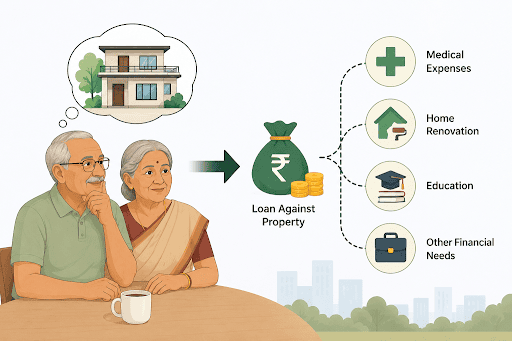
Many senior citizens own a home but may not have enough savings to cover a medical emergency, renovate their home, or meet other major expenses. Selling the property is not always the right choice. A loan against property provides them with another way to secure funds.
With this loan, you retain ownership of your property and use it as collateral. The lender determines the loan amount after assessing your property's value and repayment capacity. You can then use the money for any genuine financial need.
Eligibility Criteria for Senior Citizens and Pensioners
Every lender follows its own eligibility rules, but most check similar factors before approving a loan against property for senior citizens.
- The applicant should meet the lender's minimum and maximum age criteria.
- Residential, commercial, or industrial property should have clear ownership documents.
- Pension, rental income, or other regular income should support repayment.
- The property should satisfy the lender's legal and technical checks.
- A co-applicant may improve eligibility for a senior citizen loan against property in some cases.
Features and Benefits of a Loan Against Property for Senior Citizens

This loan helps retirees access funds without selling a valuable asset. It also offers flexibility for different financial needs.
- Borrow a substantial amount based on the property's market value.
- Continue using the property during the loan tenure.
- Enjoy longer repayment tenures than many unsecured loans.
- Use the funds for almost any legal personal or business purpose.
- Pay interest only on the sanctioned loan as per the agreed terms.
Reverse Mortgage Loan for Senior Citizens
A reverse mortgage differs from a regular loan against property. Instead of paying EMIs, eligible senior citizens receive periodic payments from the lender against their home's value.
- Suitable for retirees who need a regular income after retirement.
- The borrower continues living in the property.
- Repayment usually happens after the borrower or spouse no longer occupies the home.
- The legal heirs can repay the loan and retain the property if they choose.
Application Process and Documentation
Applying becomes easier when you keep your documents ready before starting the process.
- Submit the loan application with basic personal details.
- Provide identity, address, age, and income proof, including pension documents if applicable.
- Submit property ownership papers and recent tax receipts.
- Allow the lender to complete legal verification and property valuation.
- Sign the loan agreement after approval, and receive the sanctioned amount.
Why Choose Hero FinCorp for a Loan Against Property?
Choosing the right lender, like Hero FinCorp, matters as much as choosing the right loan. A reliable lending process can make borrowing easier from application to disbursal.
- Competitive loan options based on your eligibility.
- Simple application process with digital support and online apps.
- Quick property evaluation and transparent communication.
- Dedicated customer assistance throughout the loan journey.
- Easy repayment options designed for borrower convenience.
Plan Your Loan with Confidence
A loan against property can help you meet important financial needs without giving up ownership of your property. The right loan should also fit comfortably within your monthly budget.
Use Hero FinCorp's Loan Against Property EMI Calculator to estimate your monthly repayments before you apply. Once you're ready, check your eligibility and apply online for a loan that suits your financial needs.
Frequently Asked Questions
Can pension income be considered for loan eligibility?
Yes. Many lenders accept pension income if it meets their repayment requirements.
What is the maximum loan tenure for a senior citizen LAP?
The tenure depends on the lender's policy, the applicant's age, and repayment capacity.
Are there prepayment charges for senior citizen loans?
Prepayment charges vary between lenders and depend on the loan's terms and conditions.
How does Hero FinCorp assess property valuation?
Hero FinCorp conducts a professional property valuation and legal verification before determining the eligible loan amount.
What happens if the borrower passes away before the tenure ends?
The legal heirs usually have the option to repay the outstanding loan or settle it in accordance with the loan agreement.
What is the minimum and maximum loan amount for senior citizens?
The approved amount depends on the lender's policy and the property's assessed value.
Is a guarantor required for a senior citizen LAP?
Not always. The requirement depends on the lender's assessment and the applicant's financial profile.
Disclaimer: The information provided in this blog post is intended for informational purposes only. The content is based on research and opinions available at the time of writing. While we strive to ensure accuracy, we do not claim to be exhaustive or definitive. Readers are advised to independently verify any details mentioned here, such as specifications, features, and availability, before making any decisions. Hero FinCorp does not take responsibility for any discrepancies, inaccuracies, or changes that may occur after the publication of this blog. The choice to rely on the information presented herein is at the reader's discretion, and we recommend consulting official sources and experts for the most up-to-date and accurate information about the featured products.