How to Cancel a Cheque? A Complete Guide to Write a Cancelled Cheques

- What Is a Cancelled Cheque?
- How to Write Cancelled Cheque Correctly
- Cancelled Cheque Format and Sample
- Why Is a Cancelled Cheque Required?
- Common Uses of a Cancelled Cheque
- Information Available on a Cancelled Cheque
- Can a Cancelled Cheque Be Misused?
- Alternatives to a Cancelled Cheque
- Mistakes to Avoid While Writing a Cancelled Cheque?
- Frequently Asked Questions
A cancelled cheque is a common tool used in daily financial and banking processes.
It is required while applying for a loan, starting an SIP, and on several other occasions. It is an ordinary cheque, which is marked so it can’t be used for any payment.
Banks and lenders use it to confirm your account. This guide walks through how to write a cancelled cheque the right way. Also, learn about its meaning, format, where it’s used, and the precautions to keep you safe.
What Is a Cancelled Cheque?
So, what is a cancelled cheque?
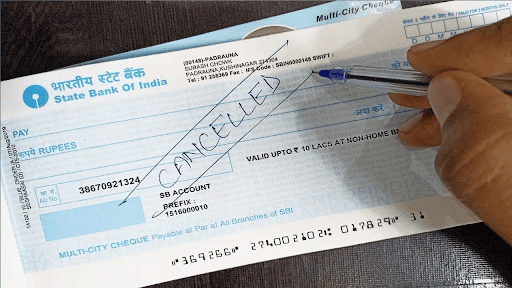
As stated above, it is simply a regular cheque with two parallel lines across it and ‘CANCELLED’ written on top.
The marking ensures that the cheque becomes void to withdraw money, authorize transactions, and make payments.
But why is it used? The real cancelled cheque meaning is to be used as proof of a bank account.
It shows your key details, like bank account number, name, branch details, IFSC, etc. Hence, it proves the account exists and is yours. Its most common uses are EFT, KYC verification, loan applications, and salary processing.
How to Write Cancelled Cheque Correctly
Here’s how to write a cancelled cheque correctly, step by step. It takes under a minute.
Step 1: Use a Blank Cheque Leaf
Get an unused cheque from your cheque book. Ensure details like amount, payee, and date are not filled.
Step 2: Draw Two Parallel Lines Across the Cheque
Draw two parallel lines diagonally across the cheque, from one corner to another. Use a pen since these lines flag that the cheque is out of use.
Step 3: Write “CANCELLED” in Capital Letters
Between the lines, write CANCELLED in clear capitals. It should be big enough to be read at a glance. Remember not to cover the account number or IFSC since the bank requires them.
Important Details You Should Not Alter
Leave the printed bits alone, such as the name, account number, IFSC, and MICR. Also, do NOT sign it.
A cancelled cheque needs no signature, and adding one only raises the risk.
Cancelled Cheque Format and Sample
A cancelled cheque format is simple, but it helps to picture it. Below is a cancelled cheque sample, so you can see exactly what to do.
What Information Remains Visible on a Cancelled Cheque?
You need to keep the key details in a cancelled cheque fully visible. Your account holder name, account number, IFSC code, MICR code, and the bank and branch name. The lines and ‘CANCELLED’ should remain in the middle.
What Information Should Never Be Written?
So what details should not be included in a cancelled cheque? Never fill in the amount, the payee, or the date. Also, NEVER sign it. Leave every blank space blank. The goal is a readable account, and nothing more.
Why Is a Cancelled Cheque Required?
So why cancelled cheque is required at all? There are mostly three reasons:
Verification of Bank Account Details
The first is for bank account verification. The cheque carries your account number and IFSC straight from the bank’s records. It’s a quick, reliable way to confirm the account exists and the numbers match.
Proof of Account Ownership
The second is account ownership proof. Your name on the cheque ties the account to you. The link matters for loans, refunds, salary credits, etc.
Safe and Standard Banking Practice
The third cancelled cheque purpose is mere standard practice. A cancelled cheque is used to share account details safely. It is readable, yet useless for any payment.
Common Uses of a Cancelled Cheque
The uses of a cancelled cheque are more common than you’d think. Here are some of the examples:
Personal Loan Application
When you apply for a personal loan, lenders can ask for a cancelled cheque to verify the account for disbursal and EMIs. Want to check your eligibility for loans? Do it in minutes.
Home Loan and Mortgage Processing
Home loans involve massive funds and are stricter. But the role of a cancelled cheque remains the same here.
Vehicle Loan Verification
If you want to buy a car or a two-wheeler on finance, the same drill. Share a cancelled cheque to lock in the repayment account.
Mutual Fund and Investment KYC
Starting a SIP or opening a demat account often needs a cancelled cheque as well. It links your account for purchases, redemptions, and dividends.
Salary Account Verification
Joining a new job? HR may ask for a cancelled cheque to set up your salary account, so your pay lands in the right place.
EMI and Auto-Debit Registration
A cancelled cheque also registers the account for automatic monthly deductions for any EMI or auto-debit mandate.
Also Read: What are NACH Mandate Charges?
Information Available on a Cancelled Cheque
Want to know what you should leave on it? The details on a cancelled cheque should be limited to these.
Account Holder Name
Your name as registered with the bank
Account Number
Your full account number
IFSC Code and MICR Code
Your bank account’s IFSC and MICR codes
Bank Name and Branch Details
Your bank’s name and branch details
Can a Cancelled Cheque Be Misused?
It is understandable to worry about a cancelled cheque misuse. After all, the cheque has your name and bank details. Let’s learn more about it.
Is It Safe to Share a Cancelled Cheque?
Yes, it is. On its own, a cancelled cheque cannot be used to withdraw money. However, remember not to put any signature or amount on it.
Potential Risks & Misconceptions
The real risk with a cancelled cheque is your account details. Since the cheque has your account number and IFSC, someone can use it in a phishing attempt.
Best Practices Before Sharing
The best way to avoid such issues is to be vigilant. Write the purpose clearly across your cheque, like ‘for HDFC loan only’. Also, share the cheque only with verified banks, lenders, or employers. And NEVER hand over a blank, unmarked cheque.
Alternatives to a Cancelled Cheque
Want to know more about the alternative to a cancelled cheque? Keep reading:
Bank Passbook Copy
You can use a copy of your passbook’s first page since it shows the same details, like your name, account number, IFSC code, etc.
Bank Statement
You can use a recent bank statement to replace the cheque, too.
Account Verification Letter from Bank
You can submit a request to your branch for a letter confirming the account is yours.
Digital Bank Verification Methods
Many lenders now verify accounts digitally via a small test deposit, the penny-drop, or a quick net-banking check. It is generally the fastest alternative to a cancelled cheque.
Mistakes to Avoid While Writing a Cancelled Cheque?
Here are some of the most common cancelled cheque mistakes you should avoid.
Writing Over Important Banking Details
Make sure not to let your lines or the word ‘CANCELLED’ cover the account number or IFSC. These details have to stay readable.
Signing Unnecessarily
Do NOT sign the cancelled cheque. A signature adds risk and isn’t needed at all.
Using a Filled-In Cheque
You should NEVER use a cheque with an amount, date, or payee filled on it. Keep these sections blank.
Sharing with Unverified Entities
Don’t share a cancelled cheque with anyone you can’t verify. Only stick to known banks, lenders, and employers.
That’s all there is to it. Knowing how to write a cancelled cheque merely involves drawing two lines, writing one capitalised word, and keeping a few details left untouched.
Make sure to keep it blank, unsigned, and share it only with people you trust.
If that cheque is for a loan, check your personal loan eligibility with Hero FinCorp in minutes. It is quick, simple, and fully digital.
Frequently Asked Questions
What is the correct way to write a cancelled cheque?
Start by taking a blank cheque. Then draw two parallel lines across it, and write ‘CANCELLED’ in capitals between them. Do NOT sign it, but keep the account number and IFSC readable.
Is a signature required on a cancelled cheque?
No. A cancelled cheque should NEVER be signed. The signature isn’t needed for personal verification, and leaving it off keeps it safer to share.
Can a cancelled cheque be used to withdraw money?
No. It can’t act as a payment without an amount, date, or signature. It is only needed to show your account details, so nobody can withdraw funds using it.
Why do lenders ask for a cancelled cheque?
They ask for it to confirm your bank account before they release a loan or set up EMIs. It proves the account is real and yours, so the money is sent to the right place.
Can I submit a photocopy of a cancelled cheque?
Yes, you can sometimes. BUT many banks and lenders ask for the original. A photocopy is easier to misuse, so check what’s accepted before you send one.
What should I do if my chequebook does not have my name printed?
You need to submit supporting proof, such as your passbook’s first page or a bank statement with your name. In some cases, lenders can even ask for a personalised cheque instead.
Is a cancelled cheque always necessary for KYC and bank verification?
Not always. You can also use tools like a passbook copy, bank statement, or digital verification. You should ask the bank or lender about their criteria.
Disclaimer: The information provided in this blog post is intended for informational purposes only. The content is based on research and opinions available at the time of writing. While we strive to ensure accuracy, we do not claim to be exhaustive or definitive. Readers are advised to independently verify any details mentioned here, such as specifications, features, and availability, before making any decisions. Hero FinCorp does not take responsibility for any discrepancies, inaccuracies, or changes that may occur after the publication of this blog. The choice to rely on the information presented herein is at the reader's discretion, and we recommend consulting official sources and experts for the most up-to-date and accurate information about the featured products.