How to Rebuild Your Credit Score: A Complete Guide

When it comes to determining your eligibility for loans, credit cards or similar products, one of the most important factors is your credit score. Having a poor or low credit score means a high chance of your application getting rejected.
The good news, however, is that you can improve your score with the right set of strategies and consistent financial practices. For instance, by making payments on time or reducing your debt, you can help better your score instantly.
Let's explore it further and discuss a few of the best ways to improve your credit score.
How Long Does It Take to Improve your Credit Score?
The time that you need to improve your credit score ranges from a few months to more than a year. Your credit improvement depends on a range of factors such as making on-time payments, reducing debt, and correcting errors on your credit reports.
People with minor credit problems, such as high credit card debt, will begin to see improvement once they establish a regular payment history.
On the contrary, major credit issues such as collections, charge-offs, foreclosures, and bankruptcies typically require a significant amount of time and substantial effort to fix.
Also Read: What is the Effect of Closing a Credit Card on Credit Score?
Best Ways to Rebuild a Bad Credit Score
With consistent efforts and an organised plan, you can quickly improve your credit score. Here are some of the ways to help you rebuild your credit.
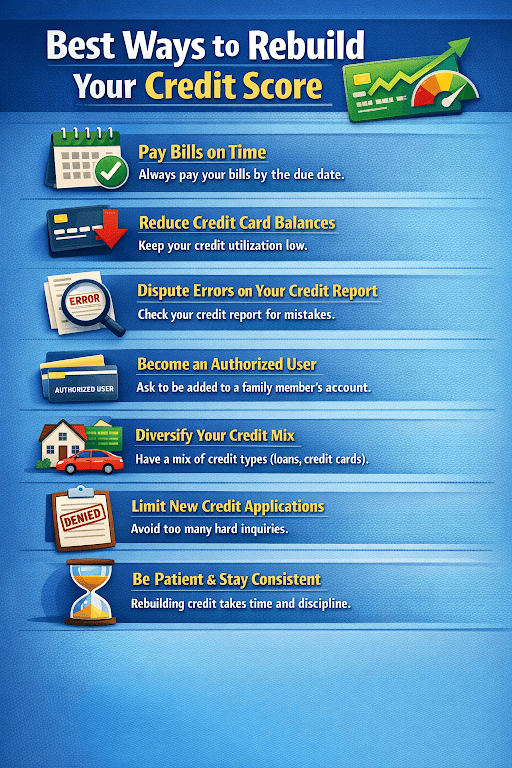
a. Review Your Credit Report Regularly
Keep checking your credit report regularly to see if there are any mistakes. If you find any errors, reach out to the credit bureau instantly. Removing these incorrect negative items will lead to an instant boost in your credit score.
b. Make All Payments On Time
You should create payment reminders or use automatic payment systems to meet all upcoming payment deadlines. The essential credit recovery process requires you to make all your payments on time because payment history accounts for most of your credit score.
c. Keep Credit Utilisation Low
Credit utilisation is a matrix that highlights how much credit limit you are using out of total available limit. A high credit utilisation ratio indicates heavy dependency on credit, which can negatively impact the credit score. The best practice here is to maintain your credit utilisation ratio below 30%.
d. Use Secured Credit Cards
A secured credit card serves as an alternative for people who cannot get approved for standard credit cards, as it helps them build a favorable payment history. You should use this card for minor purchases while paying back the full amount each month.
e. Diversify Your Credit Mix
The most effective way to improve your credit score is to expand the types of credit accounts you have. You can use credit cards, personal loans and auto loans as your credit options.
f. Limit New Credit Applications
Avoid applying for multiple new credit accounts within a short span, as this is typically seen as financial instability and can hamper your credit score's recovery.
g. Become an Authorised User
You can seek a reference from a trusted friend or family member with good credit to add you as an authorised user on their credit card account. Their strong, positive payment history can benefit your credit profile.
Also Read: 725 Credit Score: Is It Good or Bad?
Tools and Resources to Help Rebuild Credit
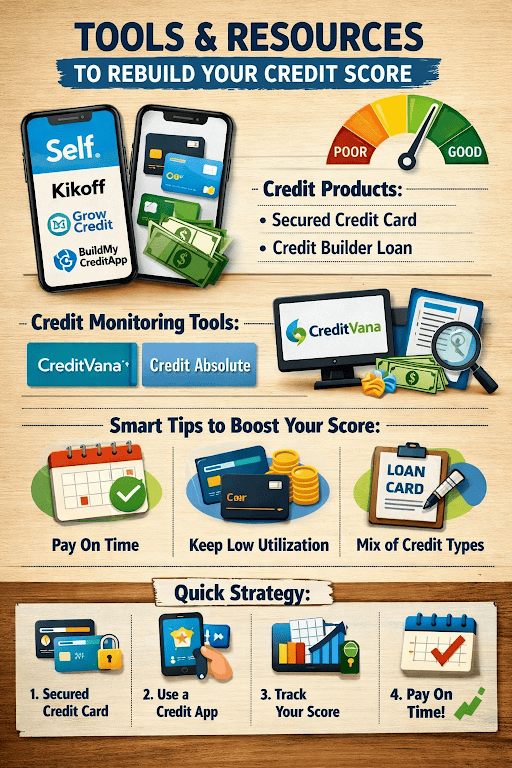
There are several tools and financial resources that you can use to rebuild your credit score. Among these are-
- Credit monitoring services- Allow you to keep an eye on your credit report and get alerts when something new happens. This way, you can always know how you are doing with your money.
- Credit score tracking tools- These tools are offered by lenders and financial platforms to help you understand what is affecting your credit score and give you ideas on how to make it better.
- Secured credit cards- They are a type of credit card that requires you to put down a deposit. They work just like regular credit cards. When you use them responsibly, you can start building a history of paying your bills on time.
Build Better Credit with Smarter Financial Choices
Improving your credit score is a long process that require time, effort, and discipline. Start simple by paying your bills on time, using little credit, and checking your credit report often to slowly improve your score.
In addition to this, you can also leverage platforms like the Hero FinCorp Personal Loan App to not just borrow money but also to utilise features that can help you manage your credit better.
Frequently Asked Questions
1. How much time it takes to rebuild credit?
Improving your credit score can take from a few months to many years. It primarily depends on how bad your credit was in the past and how you handle your money now.
2. How does credit utilization affect my score?
When you use a lot of credit, your score goes down. If you keep your credit usage low, like below 30 percent of what you are allowed, your score will get better.
3. What if I find mistakes on my credit report?
You should tell the credit bureau right away and give them proof so they can fix the mistake.
Disclaimer: The information provided in this blog post is intended for informational purposes only. The content is based on research and opinions available at the time of writing. While we strive to ensure accuracy, we do not claim to be exhaustive or definitive. Readers are advised to independently verify any details mentioned here, such as specifications, features, and availability, before making any decisions. Hero FinCorp does not take responsibility for any discrepancies, inaccuracies, or changes that may occur after the publication of this blog. The choice to rely on the information presented herein is at the reader's discretion, and we recommend consulting official sources and experts for the most up-to-date and accurate information about the featured products.
 Apply For Used Car Loan
 Apply For Personal Loan
 Apply For Loan Against Property
 Apply For Two Wheeler Loan
 Apply For Business Loan
 Apply For New Car Loan
Did You Know
Disbursement
The act of paying out money for any kind of transaction is known as disbursement. From a lending perspective this usual implies the transfer of the loan amount to the borrower. It may cover paying to operate a business, dividend payments, cash outflow etc. So if disbursements are more than revenues, then cash flow of an entity is negative, and may indicate possible insolvency.