How to Get a Personal Loan for Non-Listed Companies in India

- Understanding the Company Category List for Personal Loan
- Why Categorisation Matters
- Listed vs. Non-Listed: What’s the Difference?
- How to Check if Your Company is Listed or Not for Personal Loan
- 4 Strategic Steps to Secure a Non-Listed Company Personal Loan
- Eligibility for Personal Loan for non-listed company employees
- How to Apply for a Personal Loan Online
- Frequently Asked Questions
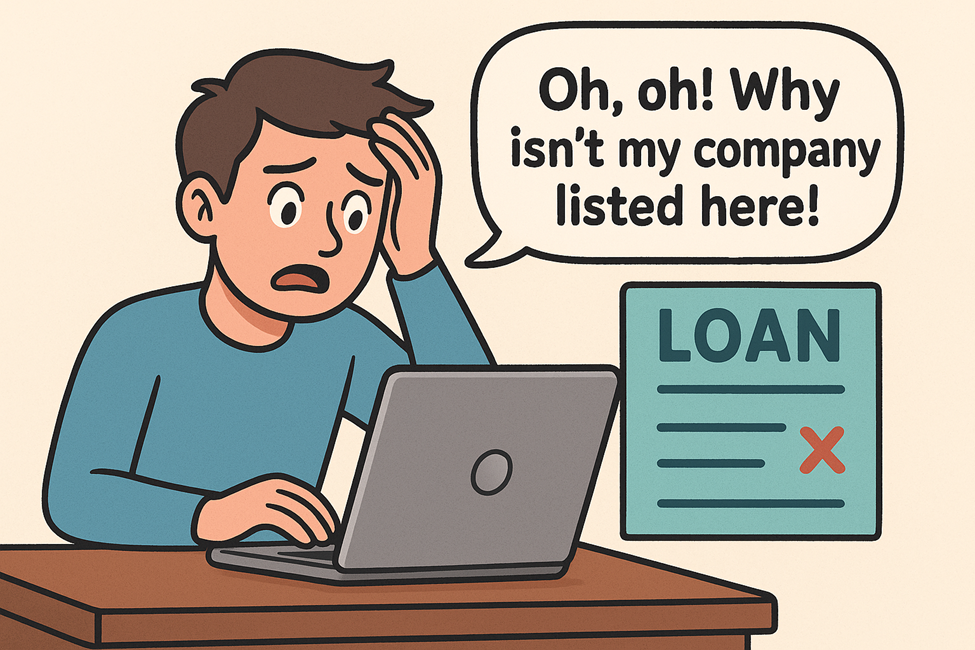
Meet Rohan. He is a senior product designer at a thriving, three-year-old fintech startup in Delhi. He earns a good salary, has never missed a credit card payment, and has been with his firm since its inception. However, when Rohan applied for a Personal Loan to fund a family emergency, he was met with a surprising rejection. The reason? His employer was "not on the lender's pre-approved list."
Like Rohan, thousands of skilled professionals working in Small to Medium Enterprises (SMEs) or early-stage startups face this hurdle. While many traditional lending institutions focus almost exclusively on "Category A" firms, getting a personal loan for non listed companies is far from impossible. It simply requires a strategic approach and an understanding of how modern lenders evaluate risk.
Understanding the Company Category List for Personal Loan
Lending institutions in India, including banks and NBFCs classify employers into specific categories-typically Category A, B, C, or Unlisted. This isn't arbitrary; it is a structured risk assessment part of a lender's internal Board-approved credit policy, as mandated by the Reserve Bank of India (RBI).
Why Categorisation Matters
The classification helps financial institutions measure risk under the RBI’s Scale-Based Regulatory (SBR) framework. Lenders generally prefer listed or "Category A" companies for three main reasons:
- Salary Stability: These firms have a proven track record of consistent payroll cycles.
- Business Longevity: There is a lower statistical probability of these companies shutting down during economic downturns.
- Operational History: Commercial credit history and financial audits are readily available for these entities.
Listed vs. Non-Listed: What’s the Difference?
| Feature | Listed / Category A | Non-Listed / Unlisted |
|---|---|---|
| Entity Type | Large MNCs, Blue-chip firms, or Public Limited companies. | Private Limited firms, SMEs, and early-stage startups. |
| Risk Perception | Lower perceived risk due to high financial stability. | Higher perceived risk; not yet vetted for the lender's database. |
| Audit Depth | Relies heavily on employer brand equity. | Requires a granular audit of the individual's financial health. |
How to Check if Your Company is Listed or Not for Personal Loan
If you are unsure where your employer stands, you don't have to wait for a rejection to find out. There are two primary ways to check your status:
- Eligibility Calculators: Most digital lending portals allow you to enter your employer's name in their application form. If the name does not appear in the dropdown menu, you should select "Others" or "Unlisted."
- Soft Pull Checks: You can request a preliminary check through a lending institution. This allows the lender to view your basic profile without performing a "Hard Inquiry" that could temporarily dip your credit score.
4 Strategic Steps to Secure a Non-Listed Company Personal Loan
If your employer is missing from the "pre-approved" list, you must shift the lender's focus from your company's brand to your personal financial discipline. Use these strategies to strengthen your profile:
1. Maintain a Robust Credit Score
A high credit score is your strongest asset when applying for a not listed company personal loan. Latest data suggests that approximately 79% of all new loans are granted to individuals with a score above 725. Ensure your report shows zero "Days Past Due" (DPD), as this proves to the lending institution that you have the discipline to repay your debts regardless of where you work.
2. Validate Income Consistency
For a personal loan for non listed companies, regulated lenders require proof of stability. You should prepare at least 6 to 12 months of bank statements. It is vital that these statements show a consistent "Salary" narration. In today's digital-first ecosystem, cash salaries or "hand-pay" are rarely accepted by regulated financial institutions.
3. Optimize Your FOIR
Lenders use the Fixed Obligation to Income Ratio (FOIR) to determine how much of your monthly income is already committed to existing debts. Ideally, your FOIR should be below 40-45%.
You can calculate your FOIR using this formula:
( Total Monthly Debt Obligations)
FOIR = _____________________X 100
(Gross Monthly Income)
If your existing EMIs consume a large portion of your salary, lenders may view you as "over-leveraged." Clearing minor debts, such as outstanding credit card balances, before you apply can significantly boost your approval odds.
4. Leverage Regulated NBFCs
While traditional financial institutions might have rigid "employee count" requirements, regulated NBFCs utilise advanced data analytics. They focus on your individual merit, such as your net take-home pay and CIBIL score, rather than just the size of your employer. Applying via a digital lending app often results in faster processing for unlisted profiles.
Eligibility for Personal Loan for non-listed company employees
At Hero FinCorp, we prioritise transparency and efficiency. A Personal Loan can be used for any legal purpose, such as home renovation, wedding expenses, or medical emergencies.
Key Loan Features:
- Loan Amount: Rs 50,000 to Rs 5 Lakh.
- Interest Rate: 18% per annum.
- Repayment Tenure: 12 to 36 months.
- Processing: Instant approval and quick disbursal.
Eligibility Criteria:
- Age: 21 to 58 years.
- Minimum Monthly Salary: Rs 15,000.
- Credit Score: A score of 725 or above is preferred for competitive rates.
Documents Required:
- A key advantage of a Hero FinCorp personal loan is its minimal documentation process. The application is digital, so there’s no need to upload or submit any physical documents.
How to Apply for a Personal Loan Online
The application process for a Personal Loan at Hero FinCorp is designed to be seamless:
- Download the App or Visit the Website: Start your application on the Hero FinCorp mobile app or official site.
- Enter Details: Provide your mobile number, name, income details, and PAN.
- Choose Loan Terms: Select the loan amount and the preferred EMI that fits your budget.
- Complete KYC: Verify your Aadhaar details and provide digital consent.
- Digital Signature: Once approved in real-time, digitally sign the eMandate and loan agreement.
- Disbursal: Receive the funds directly in your bank account.
Frequently Asked Questions
Can I get a personal loan if my company is very small?
Yes. Most regulated NBFCs focus on your net take-home pay (typically a minimum of Rs 20,000 - Rs 25,000) and your credit score rather than the total employee count of your firm.
Will the interest rate be higher for non-listed companies?
Under the RBI's Fair Practices Code, interest rates are risk-based. Lenders may add a small risk premium for unlisted firm employees. However, maintaining a credit score above 725 can help you negotiate an attractive rate.
What if my salary is paid in cash?
Regulated lending institutions rarely accept cash salaries for unsecured loans in the current digital ecosystem. It is essential that your income is credited directly to your bank account.
How can I improve my chances of approval?
Focus on reducing your current debt (FOIR) and ensuring your credit report has no defaults or late payments.
How long does the disbursal take for unlisted employees?
With digital KYC and eMandate, the process is quick. Once the agreement is digitally signed, funds are typically credited shortly thereafter.
Disclaimer: The information provided in this blog post is intended for informational purposes only. The content is based on research and opinions available at the time of writing. While we strive to ensure accuracy, we do not claim to be exhaustive or definitive. Readers are advised to independently verify any details mentioned here, such as specifications, features, and availability, before making any decisions. Hero FinCorp does not take responsibility for any discrepancies, inaccuracies, or changes that may occur after the publication of this blog. The choice to rely on the information presented herein is at the reader's discretion, and we recommend consulting official sources and experts for the most up-to-date and accurate information about the featured products.