How to Generate a CIBIL Score for the First Time: Complete Guide for New Credit Users

- What is a CIBIL Score?
- How to generate a CIBIL score for the first time?
- How Long Does It Take to Generate a First-Time CIBIL Score?
- Factors That Help Build Your First CIBIL Score
- Common Mistakes to Avoid While Building Your First CIBIL Score
- How to Check Your CIBIL Score After It Is Generated?
- Myths About First-Time CIBIL Score Generation
- Tips to Maintain a Healthy CIBIL Score After Generation
- Build Your Credit Journey with Confidence
- Frequently Asked Questions
Akash decides to apply for his first loan or credit card. Everything goes smoothly until the lender asks him for his CIBIL score. He checked online, but instead of a score, he saw that no credit history was available.
The reason is simple. A CIBIL score does not exist until you start using credit responsibly. This guide explains how to generate your first CIBIL score, how long it takes, and the habits that help you build a strong credit profile.
What is a CIBIL Score?
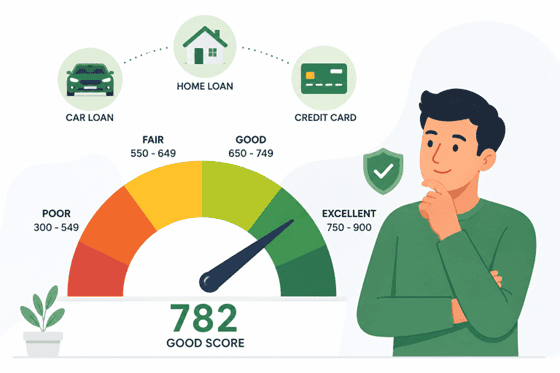
Your CIBIL score helps lenders identify if you are a responsible borrower. They use this three-digit score to assess your loan and credit card applications.
CIBIL Score Range
300 to 549: Poor
550 to 649: Fair
650 to 749: Good
750 to 900: Excellent
Why is CIBIL Score Important?
A good CIBIL score improves your chances of getting a loan or credit card. It can also help you receive better interest rates and faster approvals.
How to generate a CIBIL score for the first time?
If you have never borrowed before, you need to create a credit history first. Follow these simple steps to generate your first CIBIL score.
Step 1: Apply for a credit card and use it for small purchases. Ensure to repay the full bill on time.
Step 2: Borrow money from a lender and pay EMIs regularly to build a credit history.
Step 3: If you cannot get a regular credit card, apply for a secured credit card against a fixed deposit. Responsible usage also builds your credit profile.
Step 4: Pay every EMI and credit card bill before the due date to help the credit bureau generate your first CIBIL score.
How Long Does It Take to Generate a First-Time CIBIL Score?
Your first CIBIL score does not appear immediately. It takes around 3-6 months for the credit bureau to generate the score.
Credit Bureau Reporting Cycle
Banks and financial institutions usually report your credit activity every month. After they share your repayment details, the credit bureau updates your credit history. Most first-time users receive a CIBIL score within three to six months of using credit responsibly.
Factors Affecting Score Generation
Several factors decide how quickly your first score is generated.
- Regular repayment of EMIs or credit card bills
- Timely reporting by the lender to the credit bureau
- Consistent use of your credit account
- No missing or delayed payments
If your report still shows ‘No History’ after six months, contact your lender or the credit bureau to check whether your account details are being reported correctly
Factors That Help Build Your First CIBIL Score
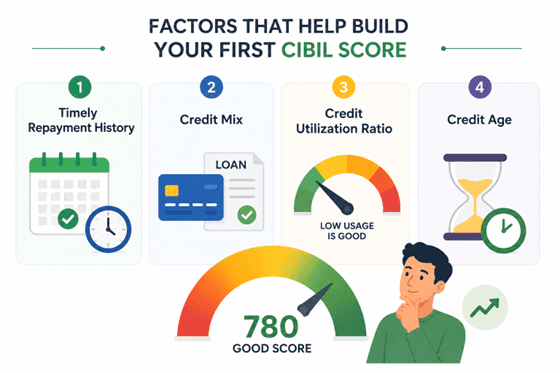
Generating your first score is only the beginning. Healthy credit habits help improve your score over time and make you a more reliable borrower in the eyes of lenders.
Timely Repayment History
Pay every EMI and credit card bill before the due date. Even one missed payment can affect your credit history.
Credit Mix
Use different types of credit only when you genuinely need them. A healthy mix of loans and credit cards shows that you can manage different credit products responsibly.
Credit Utilization Ratio
Use only a small part of your credit limit instead of spending it all.
Example:
- Credit limit: ₹1,00,000
- Credit used: ₹25,000
- Credit utilization ratio: 25%
Keeping your utilization below 30% is generally considered healthy.
Credit Age
Keep your oldest credit account active if possible. A longer credit history gives lenders more confidence in your repayment behavior.
Common Mistakes to Avoid While Building Your First CIBIL Score
Building your first CIBIL score takes time. However, you should avoid a few common mistakes to build a stronger credit profile from the beginning.
Missing EMI Payments
Pay every EMI and credit card bill before the due date. Even a single missed payment can lower your CIBIL score and stay in your credit history.
Maxing Out Credit Card Limit
Avoid using your entire credit limit. High credit utilization may indicate that you rely too heavily on credit. Try to keep your usage below 30% of the available limit.
Frequent Loan Inquiries
Apply for credit only during emergencies. Multiple loan or credit card applications within a short period can make lenders think that you are under financial stress.
Closing Old Credit Accounts Too Early
Do not close your oldest credit account unless necessary. An older account strengthens your credit history and supports your CIBIL score.
How to Check Your CIBIL Score After It Is Generated?
Once your first CIBIL score is available, check it regularly. This helps you track your progress and identify any inaccuracies before they affect future loan applications.
Online Credit Report Access
Visit the official CIBIL website or an authorized financial platform to access your credit report. Verify your identity and download your latest report by following the instructions.
Information to Verify in Your Credit Report
Check these details carefully before you apply for new credit.
- Your name and personal details
- Active loan and credit card accounts
- Repayment history
- Outstanding loan balance
- Credit inquiries made in your name
Myths About First-Time CIBIL Score Generation
Many people believe a CIBIL score appears automatically. In reality, your score develops only after you start using credit and build a repayment history.
Salary Alone Generates a CIBIL Score
Myth: A high salary automatically creates a CIBIL score.
Fact: Your salary does not generate a score. You need a credit history based on responsible borrowing and repayments.
Bank Account Automatically Creates a Credit Score
Myth: Opening a savings account gives you a CIBIL score.
Fact: A bank account alone does not create a credit history. You need a loan or a credit card that the lender reports to the credit bureau.
Checking Your Own CIBIL Score Reduces It
Myth: Checking your own CIBIL score lowers it.
Fact: Checking your own score is a soft inquiry and does not affect your CIBIL score.
Tips to Maintain a Healthy CIBIL Score After Generation
Generating your first CIBIL score is not enough. You have to be responsible with your borrowing and repayments to maintain a high score.
Make Timely Payments
Pay every EMI and credit card bill before the due date. Regular payments show lenders that you manage credit responsibly.
Maintain Low Credit Utilization
Avoid using your entire credit limit. Lower credit utilization reflects better credit management and supports a healthy CIBIL score over time.
Monitor Your Credit Report Regularly
You should check your credit report regularly. This helps to keep track of your score and identify incorrect information early.
Build Your Credit Journey with Confidence
Your first CIBIL score is just the beginning. Good repayment habits and responsible credit usage can strengthen your credit profile and improve your borrowing opportunities over time.
Before applying for a loan, you can check your credit score online through Hero FinCorp to understand where you stand. If you're ready to borrow, explore loan options on the Products page or apply easily via the Hero FinCorp Personal Loan App for a smooth, convenient experience.
Frequently Asked Questions
How to generate a CIBIL score for the first time?
Start using credit through a credit card or a small loan and repay every bill or EMI on time. After the lender reports your credit activity, CIBIL generates your first score.
How to create a CIBIL score if I have never taken a loan?
You should apply for a credit card and pay your bills before the due dates. This will help you build your credit history.
How long does it take to generate a first-time CIBIL score?
Once you start using credit responsibly, you will receive your CIBIL score within 3 to 6 months.
Can a secured credit card help generate a CIBIL score?
Yes. A secured credit card helps build your credit history when the lender reports your repayment behavior to the credit bureau.
What is the minimum credit history required for a CIBIL score?
CIBIL generally requires enough reported credit activity to assess your repayment behavior. For most borrowers, this takes a few months of responsible credit usage.
Does checking my own CIBIL score affect it?
No. Checking your own CIBIL score creates a soft inquiry, which does not affect your score.
What is a good CIBIL score for getting a loan?
Although every lender has its own eligibility criteria, a CIBIL score of 750 or above is generally considered good for loan approval.
Disclaimer: The information provided in this blog post is intended for informational purposes only. The content is based on research and opinions available at the time of writing. While we strive to ensure accuracy, we do not claim to be exhaustive or definitive. Readers are advised to independently verify any details mentioned here, such as specifications, features, and availability, before making any decisions. Hero FinCorp does not take responsibility for any discrepancies, inaccuracies, or changes that may occur after the publication of this blog. The choice to rely on the information presented herein is at the reader's discretion, and we recommend consulting official sources and experts for the most up-to-date and accurate information about the featured products.