Tradeline on a Credit Report: Meaning & Importance
- What Is a Tradeline on a Credit Report?
- What Information Does a Tradeline Show?
- Types of Tradelines on a Credit Report
- How Do Tradelines Affect Your Credit Score?
- Positive vs Negative Tradelines – What's the Difference?
- How to Check Tradelines on Your Credit Report?
- Tips to Manage Tradelines for a Healthy Credit Profile
- Build Strong Tradelines for Better Borrowing
- Frequently Asked Questions
A loan application often begins with a quick look at your credit report. Instead of finding only a CIBIL score, many people notice several account entries with different dates, balances, and payment details. At first glance, the report feels difficult to understand.
These are very simple once you understand the tradeline in detail. This article helps you understand what those entries mean and their importance when you apply for credit.
What Is a Tradeline on a Credit Report?
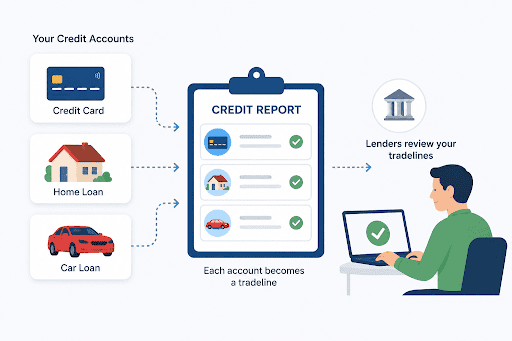
Every loan or credit card you take creates a separate record in your credit report. This record is called a tradeline.
A tradeline tracks one credit account and shows how you manage it. Lenders use these records to understand your repayment behaviour before approving new credit.
What Information Does a Tradeline Show?
Each tradeline provides important details about a single loan or credit card. These details help you understand your account's current status and show lenders how you have managed it over time.
A tradeline usually includes the lender's name, loan amount or credit limit, outstanding balance, payment history, opening date, and account status. Together, this information gives a clear picture of your credit behaviour.
Types of Tradelines on a Credit Report
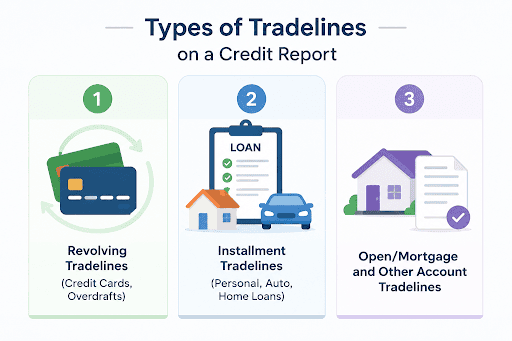
Different credit products create different tradelines. Knowing these types helps you understand your credit report more clearly.
Revolving Tradelines (Credit Cards, Overdrafts)
These tradelines come from credit cards and overdraft accounts. They give you a credit limit that you can use, repay, and use again. Your repayment history and credit usage appear under this tradeline.
Installment Tradelines (Personal, Auto, Home Loans)
These tradelines cover loans that you repay through fixed monthly EMIs. Every successful payment strengthens your repayment history, while missed payments stay on your credit record.
Open/Mortgage and Other Account Tradelines
Some accounts stay open until you repay the outstanding amount or close the facility. Mortgage-related accounts and certain specialised credit products can appear under this category. Each tradeline continues to record your repayment behaviour throughout the account's life.
How Do Tradelines Affect Your Credit Score?
Every payment you make through a loan or credit card leaves a mark on your credit report. Good repayment habits can improve your credit score, while poor credit habits can reduce it. The biggest factors that affect your score include:
- Payment history: Paying all EMIs and credit card bills on time shows you repay your dues responsibly. Missing payments can lower your credit score.
- Credit usage: Using only a small portion of your credit card limit indicates that you do not rely too heavily on borrowed money.
- Account age: Keeping older credit accounts in good standing helps build a longer and stronger credit history.
- Credit mix: Having different types of credit shows you can manage credit responsibly.
Positive vs Negative Tradelines – What's the Difference?
Understanding the difference between tradelines helps you identify what strengthens your credit and what needs attention.
| Positive Tradelines | Negative Tradelines |
|---|---|
| Show regular on-time payments | Show missed or delayed payments |
| Reflect responsible credit usage | Reflect defaults or overdue dues |
| Help improve your credit score | Can lower your credit score |
| Increase lender confidence | Make loan approvals more difficult |
| Build a stronger credit history | Weaken your overall credit profile |
How to Check Tradelines on Your Credit Report?
Finding your tradelines is easier than most people think. Once you have your credit report, you only need a few minutes to check whether all the details are correct.
- Step 1: Download your latest credit report
- Step 2: Review each tradeline and verify all details, such as the lender's name, loan or credit card details, etc.
- Step 3: Compare these details with your own records.
- Step 4: Contact your lender or the credit bureau if you find an error.
Tips to Manage Tradelines for a Healthy Credit Profile
Healthy tradelines do not happen by chance. Small financial habits can strengthen your credit profile over time.
- Pay every EMI and credit card bill before the due date.
- Keep your credit card usage low.
- Check your credit report regularly for errors.
- Try not to apply for multiple loans within a short period.
- Keep older credit accounts active whenever possible.
- Monitor every new loan or credit card that appears in your report
Build Strong Tradelines for Better Borrowing
You cannot improve your credit score overnight. It grows every time you borrow responsibly and repay on time. Your tradelines quietly record that journey, so keeping them healthy can make future borrowing much easier.
Whether you're planning a personal loan, home loan, Loan Against Property, or another type of credit, a strong credit profile always works in your favour. Hero FinCorp offers a range of borrowing solutions with a simple digital application process, making it easier to take the next step when the time is right.
Disclaimer: This article is for general information only and does not constitute financial advice or a guarantee of any outcome.
Frequently Asked Questions
What is a tradeline in simple terms?
A tradeline is the record of a loan or credit card that appears in your credit report. It shows how you manage that credit account over time.
How many tradelines should you have for a good credit score?
There is no fixed number. A few well-managed tradelines with regular repayments matter more than having many credit accounts.
What happens if a tradeline is reported incorrectly?
Report the error to your lender or the credit bureau and request a correction after verification.
Do closed accounts still appear as tradelines?
Yes. Closed accounts usually remain in your credit report for a certain period with their repayment history.
What is the difference between a tradeline and a credit account?
A credit account is the actual loan or credit card. A tradeline is the record of that account in your credit report.
Can adding a tradeline improve my credit score quickly?
No. Your repayment behaviour improves your credit score over time, not simply adding a new tradeline.
How long do tradelines stay on a credit report?
The duration depends on the account type and the credit bureau's reporting policy. Closed accounts may remain on your report for several years.
Disclaimer: The information provided in this blog post is intended for informational purposes only. The content is based on research and opinions available at the time of writing. While we strive to ensure accuracy, we do not claim to be exhaustive or definitive. Readers are advised to independently verify any details mentioned here, such as specifications, features, and availability, before making any decisions. Hero FinCorp does not take responsibility for any discrepancies, inaccuracies, or changes that may occur after the publication of this blog. The choice to rely on the information presented herein is at the reader's discretion, and we recommend consulting official sources and experts for the most up-to-date and accurate information about the featured products.