730 CIBIL Score: Is It Good or Bad and What Does It Mean for Your Financial Health?

- What Does a 730 CIBIL Score Mean? Is It Good or Bad?
- Where Does a 730 CIBIL Score Fall in the Credit Score Range?
- How to Improve Your 730 CIBIL Score?
- How a 730 CIBIL Score Affects Loan Eligibility and Interest Rates?
- Expert Tips to Maintain a 730+ CIBIL Score
- Make Your Good Score Work for You
- Frequently Asked Questions
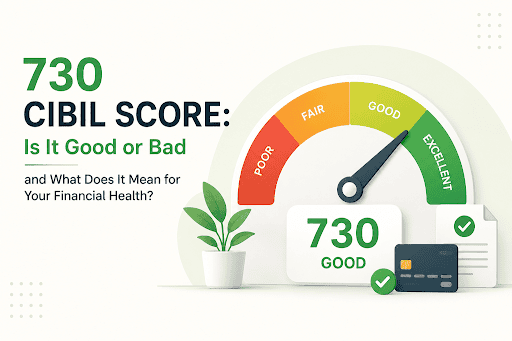
Your CIBIL score often becomes important when you plan to borrow money. A score of 730 can leave you unsure because it is neither very low nor very high. You may wonder whether it is enough to get a loan at a good interest rate, or if you should improve it first.
A score of 730 gives you a good chance of getting approved, but lenders do not rely on your credit score alone. They also look at other financial details before making a decision. This guide explains what a 730 CIBIL score means and how it can affect your loan application.
What Does a 730 CIBIL Score Mean? Is It Good or Bad?
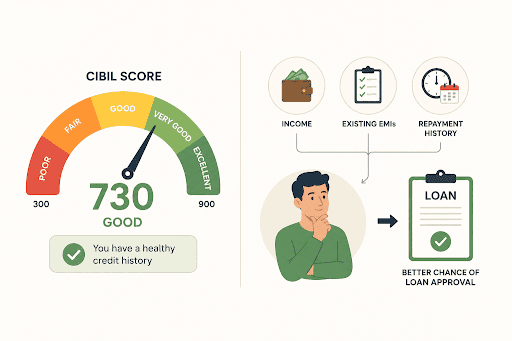
A CIBIL score gives lenders a quick picture of how you have managed your loans and credit cards. They look at this score along with your income and existing EMIs before deciding whether to approve your loan.
A score of 730 falls in the good range. It shows that you have built a healthy credit history and may have a better chance of getting a loan. However, you must also meet the lender's eligibility requirements.
Also Read: Factors Affecting Personal Loan Eligibility: Complete Checklist
Where Does a 730 CIBIL Score Fall in the Credit Score Range?
When you know the full CIBIL score range, it becomes easier to understand where a 730 CIBIL score falls.
- 300 to 549: This is a poor score, and lenders will not approve the loan due to high risk.
- 550 to 649: This is a fair score. The lenders might approve a smaller loan amount and charge higher interest rates.
- 650 to 749: This is a good score, and a 730 CIBIL Score falls in this range. When your score is in this range, lenders approve personal or home loans.
- 750 to 900: This is a very good to excellent CIBIL score. The lenders offer big loan amounts at lower interest rates.
How to Improve Your 730 CIBIL Score?
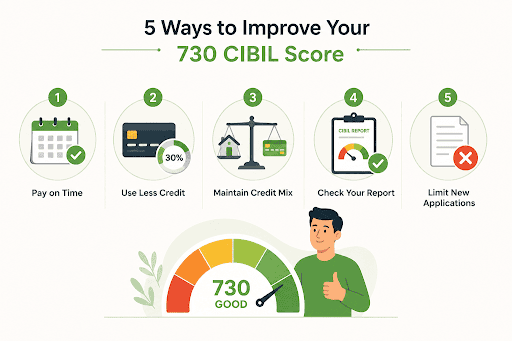
A score of 730 is good because it indicates you repay EMIs on time. If you continue paying your dues on time and keep your credit usage low, you can improve your score even further.
- Pay the monthly installments on time: This habit keeps your credit score high, making you more eligible for a loan. Even one missed payment can bring the score down.
- Keep your credit card usage low: Use 30% or less of your available credit limit. This will show the lenders that you can manage credit responsibly.
- Maintain a healthy mix of credit: Apply for both secured and unsecured loans, as it helps lenders see that you can handle different types of credit.
- Check your CIBIL report regularly: Any incorrect information about your repayments may also affect your score. You should check and raise a dispute quickly to get the original score.
- Avoid applying for several loans at once: lenders review all previous loans before approving any new one. Your CIBIL score falls if there are too many reviews in a short period.
How a 730 CIBIL Score Affects Loan Eligibility and Interest Rates?
A good CIBIL score improves your chances of getting a loan. This is because lenders know you repay EMIs responsibly.
With a score of 730, you may receive:
- Better chances of personal loan approval.
- More competitive interest rates than borrowers with lower scores.
- Higher loan amounts if your income supports repayment.
- Pre-approved offers from some lenders.
- Faster processing when you meet the lender's eligibility criteria.
Expert Tips to Maintain a 730+ CIBIL Score
Improving a credit score does not mean paying one installment on time. It is when you consistently repay the credit in a timely manner. Here are a few tips to help you improve:
Step 1: Repay all credit card bills and EMIs before the due date
Step 2: Maintain your credit card balance well below your available limit.
Step 3: Review your CIBIL report every few months to check for errors.
Step 4: Avoid closing your oldest credit account unless you have a valid reason.
Step 5: Apply for new credit only when you need it.
Make Your Good Score Work for You
A 730 CIBIL Score reflects your habit of managing credit responsibly. Continue paying your EMIs on time and use credit wisely to maintain a healthy score. A strong credit profile can also improve your chances of getting better loan offers in the future.
When you need a personal loan, choose a lender that keeps the process simple. With the Hero FinCorp Personal Loan App, you can check your eligibility, apply online, and track your application in just a few easy steps.
Frequently Asked Questions
What does a 730 CIBIL score mean for my creditworthiness?
A 730 CIBIL score means that you are a responsible borrower who repays the amount on time and is eligible for a loan.
Is a 730 credit score good enough for a home loan?
Yes. Lenders consider 730 to be a good credit score for a home loan.
How often should I check my CIBIL score?
You should check your CIBIL score every 3 to 6 months.
Can I improve my 730 CIBIL score quickly?
No. Improving your CIBIL score from 730 takes time. You will have to pay your EMIs on time and keep your credit card usage low.
Does applying for multiple loans affect my 730 credit score?
Yes. Applying for multiple loans within a short period lowers your CIBIL score.
What documents are needed to apply for a personal loan with a 730 score at Hero FinCorp?
Hero Fincorp requires identity proof, address proof, income proof, and bank statements to approve a personal loan.
Disclaimer: The information provided in this blog post is intended for informational purposes only. The content is based on research and opinions available at the time of writing. While we strive to ensure accuracy, we do not claim to be exhaustive or definitive. Readers are advised to independently verify any details mentioned here, such as specifications, features, and availability, before making any decisions. Hero FinCorp does not take responsibility for any discrepancies, inaccuracies, or changes that may occur after the publication of this blog. The choice to rely on the information presented herein is at the reader's discretion, and we recommend consulting official sources and experts for the most up-to-date and accurate information about the featured products.