Personal Loan Scams in India: How to Identify and Protect Yourself
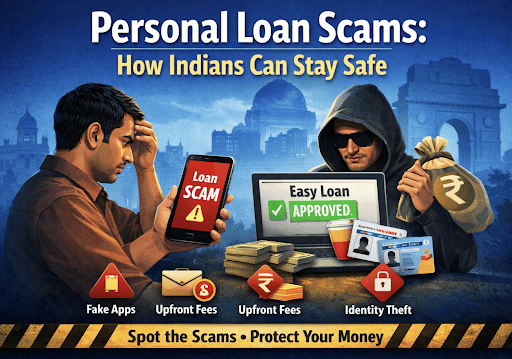
In today’s fast-paced digital world, personal loan scams in India are on the rise. With quick funds just a few taps away, fraudsters are exploiting the demand for instant cash. Whether you’re a young professional or a family planner, knowing how to avoid personal loan scams can save you from financial loss and stress.
At Hero FinCorp, we believe in transparent lending – here’s your complete guide to spotting and steering clear of personal loan frauds in India.
What Are Personal Loan Scams?
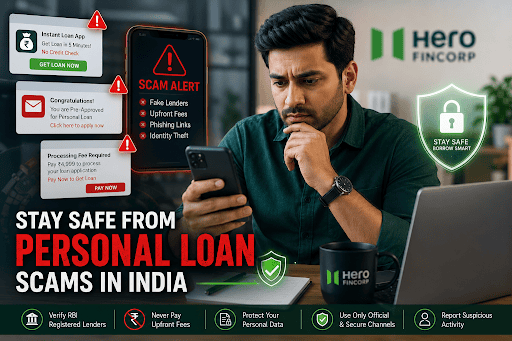
A personal loan scam (also known as personal loan fraud) is one in which fraudsters impersonate a legitimate lender and solicit the victim to send money or share personal information or make an advance payment. These scams often feature phrases like 'instant approval,' 'no credit check,' or 'guaranteed loans,' but the victim ends up empty-handed - or worse, with an identity theft.
Scammers thrive on haste and ignorance, and prey on digitally savvy users in the 26–45 age group who need fast cash for weddings, emergency medical treatment, or home repairs.
Types of Personal Loan Scams in India
Personal loan scams in India come in various forms. Here are the most common types of personal loan frauds in India:
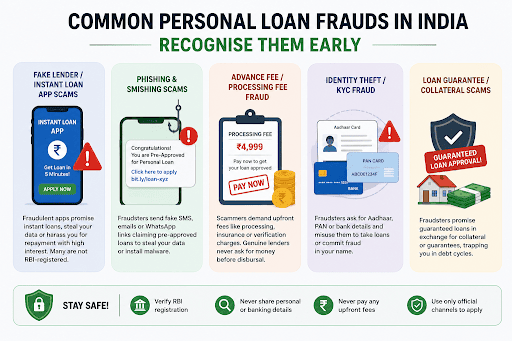
Fake Lender / Instant Loan App Scams
Counterfeit apps are disguised as genuine ones and provide lightning-fast loans. Once you download and enter your details, they either vanish with your data or hound you for repayment of minuscule sums with usurious interest. A lot of them function without RBI registration.
Advance Fee / Processing Fee Fraud
Scammers ask for 'processing fees', 'insurance' or 'verification charges' in advance and promise to disburse the fees soon after. Real lenders never require payment prior to receiving the loan.
Phishing and Smishing Scams
You receive SMS, WhatsApp, or email links claiming 'pre-approved personal loan'. Clicking leads to fake sites that steal banking credentials or install malware.
Identity Theft and KYC Fraud
Scammers ask for your Aadhaar, PAN or bank account information in the name of quick approval, and then they take out loans or commit other kinds of fraud in your name.
Loan Guarantee / Collateral Scams
Offers of 'guaranteed approval' in exchange for collateral or guarantees that later trap you in debt cycles.
Warning Signs of a Personal Loan Scam
Knowing how to identify personal loan fraud starts with recognizing the most common personal loan scam warning signs. If you notice any of the following red flags, proceed with caution before sharing your personal or financial information.
- Promises of instant approval without proper KYC or credit check.
- Demands for upfront fees or payments via UPI/personal accounts.
- Unrealistic interest rates or 'zero documentation' claims.
- Pressure to act immediately or 'offer expires today'.
- Unsolicited offers via WhatsApp, SMS, or social media.
- Lack of physical office address or verifiable RBI registration.
- Poorly designed apps/websites with grammatical errors.
How to Avoid Personal Loan Scams in India
Knowing how to avoid personal loan scams is essential before applying for credit online. By following a few simple precautions, you can strengthen your approach to personal loan fraud prevention in India and reduce the risk of falling victim to fraud.
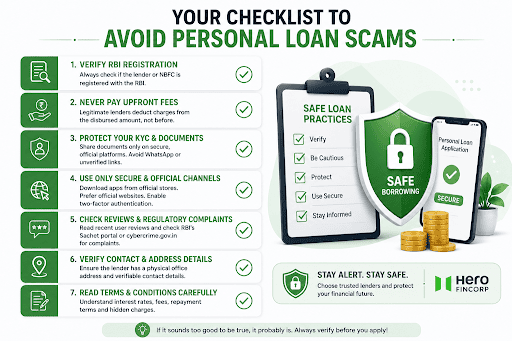
Verify RBI Registration of the Lender
Always check if the lender or NBFC is registered with the RBI. Reputed players like Hero FinCorp are fully compliant.
Never Pay Upfront Fees Before Loan Disbursement
Legitimate lenders deduct charges from the disbursed amount, not before.
Protect Your KYC and Personal Documents
Share documents only on secure, official platforms. Avoid sending scans via WhatsApp or unverified links.
Use Only Secure and Official Channels to Apply
Download apps from Google Play/App Store. Prefer official websites. Enable two-factor authentication.
Check Reviews and Regulatory Complaints
Go through the recent reviews of users and also check the complaints on RBI’s Sachet portal or cybercrime.gov.in.
What to Do If You Are Scammed in a Personal Loan in India?
Act quickly if you suspect personal loan fraud - this is the most important step for any personal loan scam victim. Here’s what to do:
File a Complaint on the National Cyber Crime Portal
Visit cybercrime.gov.in or call the helpline 1930 immediately. Provide all transaction details for a proper personal loan fraud complaint India.
Report to RBI and Your Bank Immediately
Use RBI’s Sachet portal or contact your bank to block accounts and dispute unauthorised transactions. Report the fraud to the lender’s grievance cell too.
Preserve all evidence – screenshots, transaction IDs, and messages.
What Are RBI Norms On Personal Loan Frauds in India?
The Reserve Bank of India has issued clear RBI guidelines on personal loan fraud and digital lending practices. Under the RBI personal loan scam rules India, the regulator insists on transparent practices, strictly disallows unauthorised apps, and mandates proper KYC along with Key Fact Statements (KFS). RBI periodically releases advisories to notify borrowers about fake loan apps and pre payment frauds and cautions them to transact with registered entities only.
Awareness is the key to avoid personal loan scams in India. By staying vigilant and choosing trusted lenders, you can safely access the funds you need without falling prey to fraud. Knowing how to avoid personal loan scams is one of the smartest things you can do with your money these days.
Need quick funds? Check your eligibility in minutes with Hero FinCorp’s instant personal loan tool and enjoy transparent, RBI-compliant processes.
Stay safe and borrow smart – your financial peace of mind really does matter.
Frequently Asked Questions
What is the most common personal loan fraud in India?
Fake instant loan apps and payment in advance are more common.
Can I know if a loan app is real or fake?
Verify RBI registration and read recent reviews, and make sure it’s on official app stores, with terms that are transparent.
Is it safe to apply for a personal loan online in India?
Yes, when you use RBI-registered lenders like Hero FinCorp through official channels.
Can I get my money back after a personal loan fraud?
Reporting to cybercrime.gov.in and your bank immediately enhance the possibility of recovery, but it varies case to case.
What should I do if I receive a suspicious loan offer via WhatsApp or SMS?
Do not click links or share details. Report it as spam and verify directly with known lenders.
Does RBI regulate all personal loan apps in India?
RBI regulates legitimate NBFCs and banks. Many fake apps operate illegally - always verify.
How do personal loan fraudsters steal your identity using KYC documents?
They misuse shared Aadhaar/PAN copies to open fraudulent accounts or apply for loans in your name.
Disclaimer: The information provided in this blog post is intended for informational purposes only. The content is based on research and opinions available at the time of writing. While we strive to ensure accuracy, we do not claim to be exhaustive or definitive. Readers are advised to independently verify any details mentioned here, such as specifications, features, and availability, before making any decisions. Hero FinCorp does not take responsibility for any discrepancies, inaccuracies, or changes that may occur after the publication of this blog. The choice to rely on the information presented herein is at the reader's discretion, and we recommend consulting official sources and experts for the most up-to-date and accurate information about the featured products.