How UPI Credit Line Works & Who Should Use It
- What is a Credit Line on UPI?
- How Does a UPI Credit Line Work?
- Who Is Eligible for a UPI Credit Line?
- UPI Credit Line vs. Traditional Credit Cards vs. Personal Loans
- What is the Open Credit Enablement Network (OCEN)?
- Do’s and Don’ts of UPI Credit Lines
- How to Apply for a Credit Line on UPI: Step-by-Step Process
- Benefits of Using a Credit Line on UPI
- Should You Use a UPI Credit Line?
- Conclusion
- Frequently Asked Questions
Imagine you need to pay for groceries, a sudden bill, or an online order. But your savings account balance is a little low. A new fix may save the day: a credit line option on UPI. Instead of rejecting the payment, the system allows you to use the credit limit linked to your Unified Payments Interface (UPI) ID and settle it later.
Sounds interesting? It is indeed! And we’re here to demystify it for you!
What is a Credit Line on UPI?
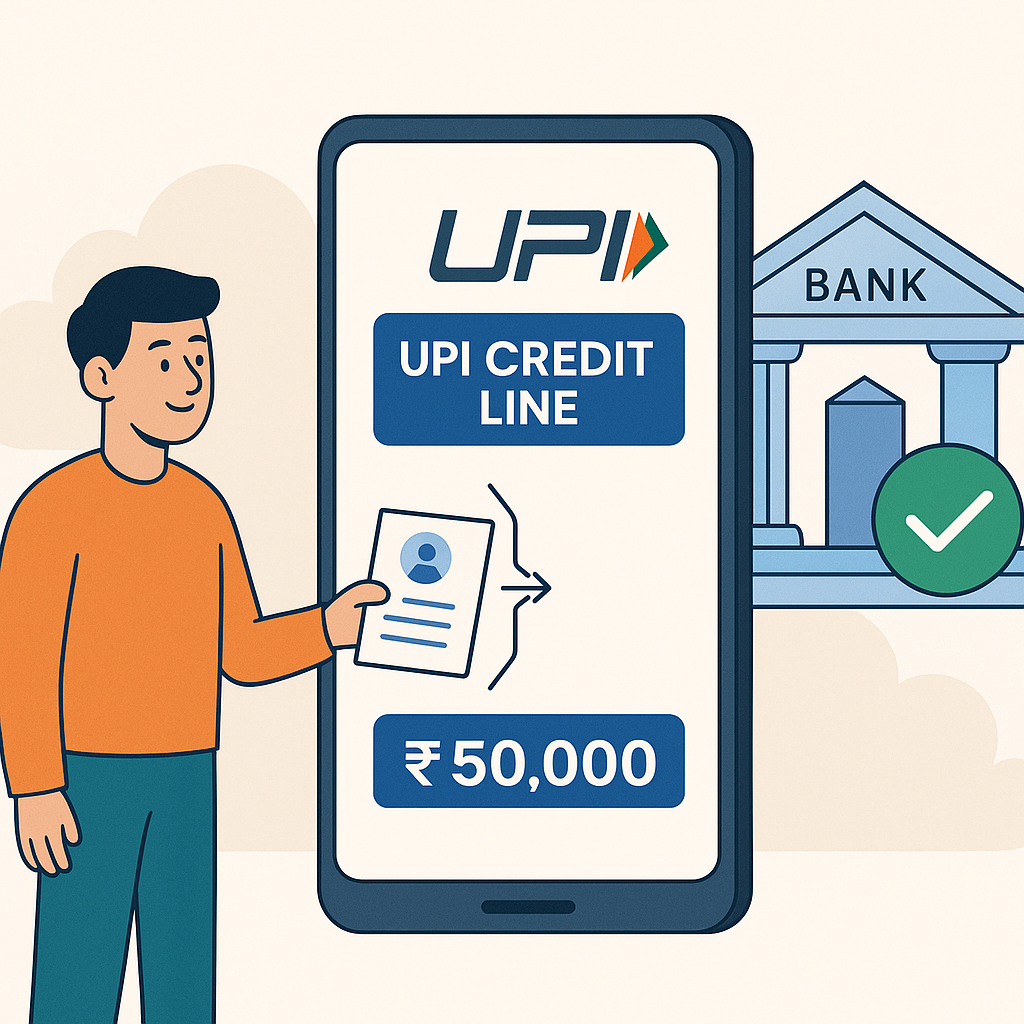
A UPI credit line is a pre-sanctioned credit facility issued by a bank or NBFC. It is linked directly to your UPI account instead of your savings account. When activated, you can draw from this credit line as needed for UPI payments. It’s pretty much like a credit card, but integrated into the UPI infrastructure.
Unlike a traditional loan, which gives you a lump sum, a UPI credit line offers a flexible, draw-as-needed limit. Unlike a physical credit card, there’s no plastic; the credit is integrated directly into your UPI interface. You repay as per the bank or app terms.
This facility formally came into effect on 4th September 2023. It is governed under regulatory guidelines issued by the Reserve Bank of India (RBI) via the National Payments Corporation of India (NPCI)..
Also Read: - Mobile Wallet vs UPI: Key Differences You Should Know
How Does a UPI Credit Line Work?
Here’s how the UPI credit line works -
- Bank assesses your income, credit history, and KYC.
- Based on your profile, it sanctions a credit limit.
- On approval, you link that credit line to your UPI ID through your UPI app (e.g. Google Pay, PhonePe, Paytm).
- You make payments via UPI as usual via QR scan or VPA. While doing so, you draw from the credit line instead of your bank balance.
- At the billing or due date, repay the amount used. Once paid, the full limit is restored.
Also Read - Line-based personal loans (revolving credit) explained
Who Is Eligible for a UPI Credit Line?
Here are the basic UPI credit line eligibility criteria -
- A savings or current bank account with a bank partnered for a UPI credit line
- Full KYC (PAN, Aadhaar, mobile number, address verification)
- Clean credit history or acceptable creditworthiness (banks assess repayment records)
- Registered UPI ID or VPA and UPI app support for credit-line linking
Do note that UPI credit line eligibility criteria may vary by bank/app. For instance, some may add income-proof or transaction history requirements.
UPI Credit Line vs. Traditional Credit Cards vs. Personal Loans
Choosing the right borrowing tool depends on your transaction size, immediate cash needs, and preferred repayment style. As the Reserve Bank of India (RBI) expands digital credit facilities via the Open Credit Enablement Network (OCEN), consumers have multiple distinct ways to borrow.
| Feature | UPI Credit Line | Traditional Credit Cards | Personal Loans |
|---|---|---|---|
| Structure | Pre-approved revolving digital limit linked directly to your UPI ID. | Revolving credit limit accessed via a physical or virtual card network. | Fixed, one-time lump-sum cash payout sent to your bank account. |
| Interest | Charged only on the exact amount spent for the precise days used. | Interest-free grace period (20–50 days); heavy interest on rolling balances. | Fixed interest charged on the entire disbursed principal from day one. |
| Repayment | Highly flexible; pay the outstanding balance or convert it into EMIs. | Minimum amount due monthly or structured post-purchase merchant EMIs. | Fixed Equated Monthly Instalments (EMIs) over a predetermined tenure. |
| Acceptance | Works instantly at any retail or online merchant UPI QR code. | Limited to swipe/POS terminals or online card payment gateways. | High versatility; cash can be transferred or spent anywhere. |
- Choose a UPI Credit Line for small-ticket, daily retail payments or bridging sudden, short-term cash flow gaps directly from your phone.
- Choose a Credit Card to maximise milestone lifestyle rewards, e-commerce cashback, and airport lounge access benefits.
- Choose a Personal Loan from structured institutions like Hero FinCorp when funding major, planned milestones without disturbing revolving credit utilisation.
What is the Open Credit Enablement Network (OCEN)?
The OCEN is a standardised, API-based software protocol designed by Indian Software Products Industry Round Table (iSPIRT) to democratise digital lending in India. Acting as a unified communication middleware, it bridges the gap between traditional lenders and digital apps. By standardising interactions, OCEN enables platforms to embed credit solutions (like real-time UPI Credit Lines) and offer quick, cash-flow-based loans directly to consumers.
Do’s and Don’ts of UPI Credit Lines
When you activate a pre-approved credit line from your bank on your UPI app, following disciplined financial habits is essential for a smooth and secure borrowing experience.
The Do’s:
- Establish Distinct PINs: Set a unique UPI PIN for credit line transactions that is completely different from your savings account PIN to enhance safety.
- Stick to Merchant Checkouts: Avoid using the credit line for unnecessary spending beyond essential retail payments.
- Configure UPI Autopay: Set up automated repayment mandates within your payment app while you apply or activate UPI credit services.
- Monitor Balances Consistently: Regularly review your available balance if you avail a credit line before initiating any outbound transaction.
The Don’ts:
- Don't Share Confidential Data: Never share your UPI PIN or the activation OTP with anyone, including customer service agents or bank representatives.
- Don't Bypass Use Guidelines: Refrain from attempting transfers or transaction types (such as peer-to-peer transfers or cash withdrawals) unless they are explicitly permitted under the specific terms of your issuing bank.
- Don't Breach Your Credit Limit: Avoid overextending beyond your pre-approved credit cap, as failed over-limit attempts can hurt your credit score.
- Don't Delay Bill Repayments: Never miss your payment schedules; timely repayments prevent penalty charges and maintain a healthy CIBIL profile.
How to Apply for a Credit Line on UPI: Step-by-Step Process
Here’s how to apply a credit line on UPI quickly -
- Open your preferred UPI app (Google Pay, PhonePe, Paytm, etc.) and go to the “Credit Line” or “Loans / Credit” section.
- Select your bank from the list of supported banks.
- Complete KYC and submit required documents (PAN, Aadhaar, address, income proof where requested).
- Wait for approval. During this period, banks assess creditworthiness and then sanction a pre-approved limit.
- Once approved, link the credit line to your UPI ID in the app. Set up a dedicated UPI PIN for credit-line transactions (for security).
- Start using the UPI credit line for merchant payments or online shopping.
- Repay as per the bank’s billing cycle.
Benefits of Using a Credit Line on UPI
Here are a few reasons for using a credit line on UPI -
- Instant access to credit without waiting for loan disbursal
- No paperwork or physical card required
- Acceptable across all UPI-enabled merchants and QR-code payments
- Useful for sudden, short-term expenses or emergencies
- Gives flexibility and increases purchasing power without draining savings
- Ideal for users without a credit card who need credit on the go
- Helps smooth cash flow, since you repay only what you use
Should You Use a UPI Credit Line?
UPI credit line combines the ease of UPI with the flexibility of credit. It fits well when you need quick funds without disrupting your bank balance. But like all credit, it works best when handled responsibly.
If you need large amounts, long-term repayment, or want better credit-building, then a traditional loan may still be a more suitable option. NBFCs like Hero FinCorp offer a fully digital loan process with instant disbursal. Apply now and experience the difference.
Conclusion
The "Credit Line on UPI" facility marks a major shift in on-demand retail financing, blending the extreme speed of the unified payments interface infrastructure with revolving financial flexibility. By following security best practices and ensuring timely repayments, this tool serves as an excellent asset to seamlessly manage your monthly short-term cash flow gaps.
Frequently Asked Questions
Can I get multiple UPI credit lines from different banks?
Yes. You can get multiple UPI credit lines from different banks if you have active accounts with multiple banks that offer the facility and you meet their eligibility criteria.
Is the UPI credit line interest-free?
No. Interest applies similarly to a credit facility. If you repay within the due date, it may act like short-term credit, but interest or charges will apply as per the bank’s terms.
What is the typical credit limit under the UPI credit line?
It depends on the bank’s assessment of your creditworthiness, income, and history. Limits range from ₹1,000 to ₹2 Lakhs, and sometimes even ₹5 Lakhs!
Does using a UPI credit line affect my credit score?
Yes. Just like any credit facility. Timely repayments could build positive credit behaviour; defaults or delays will harm your score.
What happens if I fail to repay my UPI credit line balance on time?
You will incur hefty late payment charges and interest penalties, while your CIBIL score drops, hurting future loan eligibility.
Are there daily transaction limits implemented on a UPI credit line?
Yes, while the standard NPCI daily cap is ₹1 Lakh, individual issuing banks set smaller custom daily transaction limits.
Can I configure UPI Autopay to handle my credit line dues?
Yes, you can activate a UPI Autopay e-mandate within your payment app to automatically clear outstanding monthly bills.
What are the primary disadvantages or risks of activating a UPI credit line?
The seamless instant access can trigger impulsive overspending, while high interest rates apply if you roll over unpaid balances.
Disclaimer: The information provided in this blog post is intended for informational purposes only. The content is based on research and opinions available at the time of writing. While we strive to ensure accuracy, we do not claim to be exhaustive or definitive. Readers are advised to independently verify any details mentioned here, such as specifications, features, and availability, before making any decisions. Hero FinCorp does not take responsibility for any discrepancies, inaccuracies, or changes that may occur after the publication of this blog. The choice to rely on the information presented herein is at the reader's discretion, and we recommend consulting official sources and experts for the most up-to-date and accurate information about the featured products.