What Is a Utility Bill? Types, Examples, and Importance
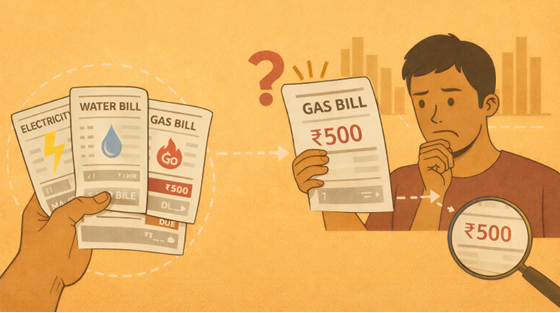
Most of us pay utility bills every month for things like electricity, water, gas, and internet. They usually get paid on time and then forgotten, even though they take up a noticeable part of monthly expenses.
This matters when trying to keep household costs under control.
What Is a Utility Bill?
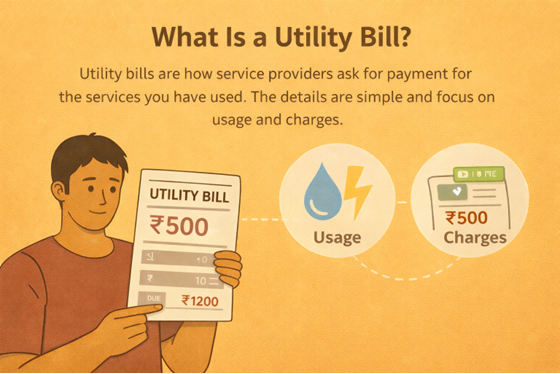
Utility bills are how service providers ask for payment for the services you have used. The details are simple and focus on usage and charges.
Because they arrive so often, they naturally become part of monthly spending. Paying attention to them helps with managing cash flow and understanding usage patterns.
Different Types of Utility Bills in India
Here are the common types of utility bills that households and businesses deal with in India:
Electricity Bill
This bill shows the amount of electricity used during a billing period and the charges applied per unit. It is issued by state electricity boards or private power distributors and is usually paid monthly.
Water Bill
Water bills are raised by municipal bodies or private suppliers for the water supplied to a home or commercial property. In some cities, sewage charges may appear on the same bill.
Gas Bill (LPG and PNG)
For LPG, a bill is issued with every cylinder booking and delivery, whereas PNG users are charged monthly based on consumption.
Internet and Broadband Bill
Internet service providers issue monthly bills covering plan charges, equipment rental, and taxes for home or office connections.
Telephone and Mobile Bills
Landline bills cover fixed monthly rentals and call charges, while postpaid mobile bills list usage for calls, data, and messaging.
Sewage and Sanitation Charges
In a few areas, sewage and sanitation services are billed separately by local authorities.
Along with other utility bills, these charges make up the cost of basic services used every day.
Importance of Utility Bills and Timely Payment
Utility bills are tied to fixed due dates, and keeping up with them helps avoid unnecessary issues. Since they cover everyday services, delays are often felt immediately.
Extra charges are common when payments are late, and continued delays can sometimes result in service being cut off. Over time, this can affect both budgeting and routine activities.
Banking apps, UPI, and services like Bharat BillPay have made it much easier to pay bills in India, even when you are on the move. This convenience helps many people stick to payment timelines without much effort.
How to Pay Your Utility Bills in India
Utility bill payments in India are supported through a mix of digital and offline options. Most service providers make it easy to choose a method that fits individual preferences.
Step 1: Check Your Bill Details
Go through the bill to confirm the payable amount, due date, and consumer or account number. Having these details reduces issues during payment.
Step 2: Select a Payment Option
Payments can be made using your bank’s mobile app or net banking, UPI apps such as BHIM, Google Pay, or PhonePe, Bharat BillPay-enabled platforms, or authorised payment centres.
Step 3: Complete the Payment
Use the chosen app or portal to select the service provider, enter the consumer number, and confirm the bill amount. Payment is authorized through UPI or bank credentials, with confirmation sent shortly after.
Step 4: Keep the Payment Record
Keep the receipt or transaction ID in case you need it later.
Tips to manage utility bills effectively:
Schedule bill payments around due dates and salary timing, and use apps that offer reminders or auto-pay to avoid delays.
Also Read: Split Payments: What is it, Methods, How Does it Work & Uses
Utility Bill Examples: Understanding Your Bill Details
Reviewing a utility bill example helps make sense of the figures and sections shown on your statement. An electricity bill works well as a reference because it clearly breaks down usage and charges.
Most electricity bills begin with charges for consumption, which are based on the number of units of electricity used during the billing period. The more units consumed, the higher this part of the bill will be.
Along with usage charges, the bill includes taxes and surcharges. These may cover government taxes, fixed service charges, and other regulatory fees added by the provider. The bill also clearly mentions the due date for payment.
Delayed payments may attract late fees or added charges. Customer care details are usually included on the bill so issues or corrections can be raised.
To review a bill properly, check the units used and compare them with the listed rate. Go through taxes and additional charges, and reach out to the provider if something seems incorrect.
Managing Utility Bills With Confidence
Utility bills may feel ordinary, yet they influence how household finances are managed each month. Paying them on time keeps essential services active and spending predictable.
There can still be months when expenses overlap and stretch cash flow. In those situations, access to quick financial support can help restore stability.
With Hero FinCorp, you can explore personal loans that assist with short-term requirements without upsetting your overall financial plan.
Apply for a personal loan today!
Frequently Asked Questions
1. What is the difference between a utility bill and other bills, like insurance or credit card bills?
Utility bills are for essential services such as electricity, water, gas, or telecom and are linked to usage. Insurance and credit card bills relate to financial products, not daily services.
2. Can a utility bill be used as proof of address in India?
Yes. Recent electricity, water, piped gas, or postpaid mobile bills are commonly accepted for this purpose.
3. How often are utility bills generated in India?
Most bills are generated monthly. Some services may issue them every two months.
4. What should I do if I receive an incorrect utility bill?
Contact the provider using the details available on the bill.
5. Are mobile phone bills considered utility bills?
Yes. Postpaid mobile bills are treated as utility bills.
6. How can I automate utility bill payments to avoid missing due dates?
Bharat BillPay is commonly used within bank and UPI apps for setting up reminders and auto-payments.
Disclaimer: The information provided in this is for informational purposes only. While we strive to present accurate and updated content, travel conditions, weather, places to visit, itineraries, budgets, and transportation options can change. Readers are encouraged to verify details from reliable sources before making travel decisions. We do not take responsibility for any inconvenience, loss, injury, or damage that may arise from using the information shared in this blog. Travel involves inherent risks, and readers should exercise their judgment and caution when implementing recommendations.