How to Check Active Loan on PAN Card – Step-by-Step Guide
- What Is an Active Loan on a PAN Card?
- Why Should You Check Active Loans Linked to Your PAN Card?
- How to Check Active Loan on PAN Card Online (Step-by-Step)
- How to Check an Active Loan on a PAN Card for Free?
- Information Required to Check Loan Status by PAN Number
- Common Reasons Your PAN Card Shows an Unknown or Active Loan
- What to Do If You Find a Fraudulent Loan on Your PAN Card?
- How Often Should You Check Active Loans on Your PAN Card?
- Stay One Step Ahead Before You Borrow
- Frequently Asked Questions
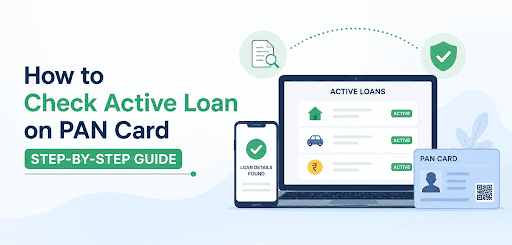
A friend tells you to check your credit report before applying for a loan. You expect everything to look normal, but an active loan appears that you do not recognize. You start panicking and overthinking about now what.
Many people discover old loan records, reporting mistakes, or even loans they never applied for, only after checking their credit history. Knowing how to check an active loan on your PAN card helps you spot such issues early. This guide explains the process in simple steps and tells you what to do if you find a problem.
What Is an Active Loan on a PAN Card?
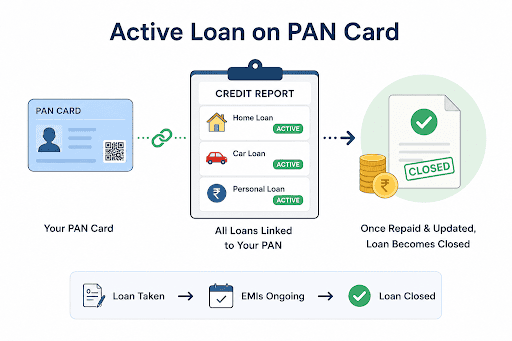
Every loan you take gets linked to your PAN card through your credit history. An active loan simply means you still have an unpaid loan account, whether you pay the EMIs regularly or not. If you search for the active loan on your PAN card, think of it as a record of all loans you have not closed yet. Once you repay the loan and the lender updates the records, the account moves to the closed status.
Why Should You Check Active Loans Linked to Your PAN Card?
You may not think about your old loans until you apply for a new one. By then, an incorrect loan record or an unknown loan could delay your application or affect your credit score.
Checking your active loans regularly helps you spot such problems early. It also confirms that every loan linked to your PAN card is yours.
How to Check Active Loan on PAN Card Online (Step-by-Step)
You can check your loan details through different channels. Choose the method that suits you best.
Using Credit Bureau Websites (CIBIL, Experian, Equifax, CRIF)
Visit the website of any recognized credit bureau and register with your PAN number and other basic details. After identity verification, download your credit report and review the list of active loan accounts, repayment statuses, and lenders.
Using NBFC/Lender Apps or Net Banking
Many banks and NBFCs allow you to view active loans through their mobile apps or internet banking portals. After logging in, open the loan section to check your outstanding balance, EMI schedule, and account status.
Contacting the Lender Directly
If you cannot access your records online, contact your lender's customer support. After identity verification, they can confirm your active loan details and help you obtain account statements.
How to Check an Active Loan on a PAN Card for Free?
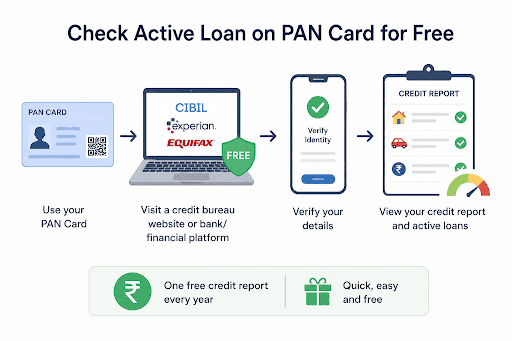
Most credit bureaus allow one free credit report every year. Several banks and financial platforms also provide free access to your credit summary. If you only want to verify whether a loan appears under your PAN, these options usually work well at no extra cost.
Information Required to Check Loan Status by PAN Number
Keep these details ready before you check your loan status online:
- PAN card number
- Registered mobile number
- Date of birth
- OTP sent to your registered mobile number or email
- Answers to security questions, if the website asks for them
Common Reasons Your PAN Card Shows an Unknown or Active Loan
If you notice an unfamiliar loan on your credit report, one of these reasons could be responsible:
- Your closed loan still appears as active because the lender has not updated the loan closure.
- Incorrect information appears on your credit report because of a reporting or data entry error.
- Someone has misused your PAN or personal details to take a loan in your name.
Review your credit report regularly to spot these issues early and get them corrected before they affect your future loan applications.
What to Do If You Find a Fraudulent Loan on Your PAN Card?
If you find an incorrect loan on your account, instead of panicking, follow these simple steps.
Step 1: Inform the lender and ask for an investigation.
Step 2: Report it to the credit bureau and submit the necessary documents
Step 3: File a complaint with the National Cyber Crime Reporting Portal or with the local police station about the misuse of your PAN card.
Step 4: Check your credit score regularly until the lender removes the incorrect loan
How Often Should You Check Active Loans on Your PAN Card?
Check your active loans at least once a year to make sure your credit report stays accurate. You should also review it before applying for a new loan and after closing an existing one to catch errors before they create problems.
Stay One Step Ahead Before You Borrow
Checking your active loans before applying for credit helps you avoid unexpected surprises and borrow with confidence. Make it a habit to review your credit report regularly so you always know what appears against your PAN card.
Once your records are in order, the next step becomes much easier. You can explore loan options on Hero FinCorp's products page, check your eligibility online, or apply through the Hero FinCorp Personal Loan App for a simple and hassle-free borrowing experience. Apply here.
Frequently Asked Questions
How can I check active loans on my PAN card?
You can check active loans through your credit report, your lender's online portal, or by contacting the lender directly.
How to check the active loan on the PAN card for free?
You can access your free annual credit report through eligible credit bureaus or use financial platforms that offer free credit summaries.
Can someone take a loan using my PAN card without my knowledge?
Fraud is possible if your documents are misused. Regularly checking your credit report helps you detect suspicious loans quickly.
Is checking my PAN-linked loans free of cost?
Yes. Most borrowers can access one free credit report every year, while some financial platforms offer free credit checks.
Does checking active loans on PAN affect my CIBIL score?
No. Viewing your own credit report counts as a soft inquiry and does not affect your credit score.
How long does it take for a new loan to reflect on my PAN-linked credit report?
Most lenders update credit bureaus every month. A new loan usually appears within a few weeks after the lender submits the latest information.
What should I do if I find an active loan I never took?
You should contact the lender immediately and file a report with the credit bureau.
Disclaimer: The information provided in this blog post is intended for informational purposes only. The content is based on research and opinions available at the time of writing. While we strive to ensure accuracy, we do not claim to be exhaustive or definitive. Readers are advised to independently verify any details mentioned here, such as specifications, features, and availability, before making any decisions. Hero FinCorp does not take responsibility for any discrepancies, inaccuracies, or changes that may occur after the publication of this blog. The choice to rely on the information presented herein is at the reader's discretion, and we recommend consulting official sources and experts for the most up-to-date and accurate information about the featured products.