RBI New CIBIL Score Rules 2026: What Borrowers Need to Know

- What Are Online Personal Loans?
- Are Online Personal Loans Actually Safe?
- How to Tell If an Online Lender Is Legitimate
- The 8-Point Safety Checklist Before Applying for an Online Loan
- Risks of Choosing the Wrong Online Lender
- How to Stay Safe While Applying for an Online Personal Loan
- Common Warning Signs of Fake Loan Apps
- Conclusion
- Frequently Asked Questions
Rohan cleared his credit card bill before applying for a personal loan. Even then, his credit report still showed the old balance, leaving him confused about his score.
To reduce such delays, the RBI has introduced important changes to credit reporting. This guide explains the RBI's new CIBIL score rules for 2026, how they work, and what they mean before you apply for your next loan.
What Are the RBI New CIBIL Score Rules 2026?
RBI has introduced new credit reporting rules to make your credit information more accurate and up to date. Lenders now need to report information faster, while borrowers get better transparency and a quicker way to correct mistakes in their credit reports.
Why did the RBI Introduce New Credit Reporting Guidelines?
Imagine you paid your loan EMI on time, but your credit report continued to show the old status for several days. A delay like this could affect your next loan application. RBI introduced these guidelines to reduce such gaps, improve the quality of credit information, and help both borrowers and lenders rely on more accurate records.
Objectives of the New Credit Score Framework
The revised framework aims to keep credit information current and accurate. It also encourages lenders to report data regularly, resolve disputes faster, and improve transparency whenever borrowers access or review their credit information.
Who Will Be Impacted by These Changes?
These rules affect almost everyone who uses credit. Personal loan borrowers, home loan applicants, credit card users, first-time borrowers, banks, NBFCs, and credit information companies will all follow the updated reporting framework.
Key Changes Introduced Under RBI's Credit Score Guidelines
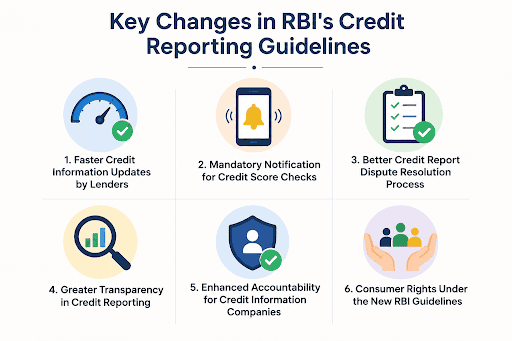
The updated framework introduces several borrower-friendly improvements.
Faster Credit Information Updates by Lenders
Banks and NBFCs now report borrower information more frequently than before. RBI first introduced fortnightly reporting and has now directed lenders to move towards weekly reporting in 2026.
Mandatory Notification for Credit Score Checks
The new rule requires lenders to notify borrowers whenever they access a credit report.
Better Credit Report Dispute Resolution Process
Lenders and credit bureaus must coordinate more quickly so borrowers do not unnecessarily wait for genuine corrections.
Greater Transparency in Credit Reporting
Borrowers now receive better visibility into how lenders report their credit information. Clearer communication reduces confusion and helps you understand changes in your credit report more easily.
Enhanced Accountability for Credit Information Companies
Credit Information Companies must maintain higher data quality and closely monitor reporting standards. RBI has also increased oversight to improve the reliability of borrower records.
Consumer Rights Under the New RBI Guidelines
The new framework gives borrowers stronger rights, from raising a dispute to expecting lenders and credit bureaus to handle their information responsibly under defined regulatory standards.
How Do the New RBI Rules Affect Your CIBIL Score?
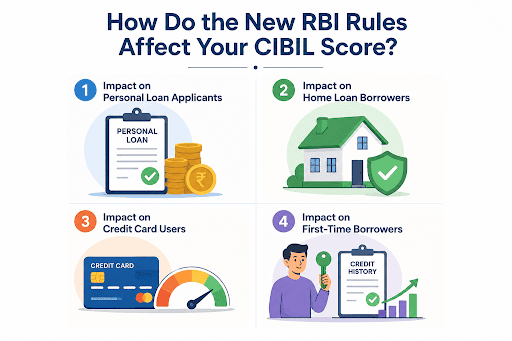
The new framework changes how does not change the way your CIBIL score is calculated. Instead, it changes how quickly lenders update your repayment information. As a result, your recent financial behavior can reflect sooner in your credit profile.
Impact on Personal Loan Applicants
If you pay your EMIs on time or clear existing dues, lenders may see the updated information sooner. This can support faster credit assessment during a personal loan application.
Impact on Home Loan Borrowers
Home loans continue for many years, so accurate reporting becomes even more important. Regular updates help maintain a clear repayment history throughout the loan tenure.
Impact on Credit Card Users
Credit card users may benefit when timely bill payments and lower outstanding balances appear sooner in their credit reports. At the same time, missed payments can also reflect more quickly.
Impact on First-Time Borrowers
First-time borrowers can begin building their credit history with more accurate and timely reporting. Consistent repayments remain the best way to establish a healthy credit profile from the beginning.
RBI New Credit Score Rules vs Previous Credit Reporting Framework
The latest RBI guidelines focus on making credit reporting faster and more transparent. The table below shows how the new framework differs from the earlier system.
| Earlier Framework | New RBI Framework |
|---|---|
| Lenders updated credit information less frequently. | Lenders will update credit information weekly starting in 2026. |
| Borrowers waited longer to see repayment updates. | Recent repayments can reflect much faster. |
| Borrowers had limited visibility into what lenders saw when they checked credit reports. | Borrowers receive notifications when lenders access their credit reports. |
| Error correction often took longer. | Defined timelines help resolve disputes faster. |
| Data quality depended on individual reporting practices. | RBI places greater responsibility on lenders and credit information companies to maintain accurate records. |
Common Reasons Your Credit Score May Still Decline Despite New Rules
The new rules improve the reporting process, but they do not protect your credit score from poor borrowing habits. Your financial behavior still plays the biggest role in your credit profile.
Missed EMI Payments
A missed EMI can lower your credit score, even if you pay it later. Since lenders now report information more frequently, delayed payments may appear in your credit report much sooner.
High Credit Utilization Ratio
Using most of your credit card limit shows higher credit dependence. Try to keep your credit utilization below 30% of your available limit to maintain a healthy credit score.
Example
Credit Card Limit: ₹1,00,000
Recommended Usage: ₹30,000 or less
Credit Utilisation = (₹30,000 ÷ ₹1,00,000) × 100 = 30%
Multiple Loan Applications
Every loan application creates a hard inquiry on your credit report. Applying for several loans within a short period can make lenders believe that you depend heavily on credit.99
Loan Settlement or Defaults
Settling a loan instead of repaying it fully can affect your credit profile. A loan default can cause even greater damage and may affect future borrowing opportunities.
How to Maintain a Healthy Credit Score Under the New RBI Framework?
The new reporting rules make your repayment history visible sooner. Good financial habits can therefore improve your credit profile faster, while poor habits can affect it just as quickly.
Pay EMIs and Credit Card Bills on Time
When you pay your credits before the due date, your credit history starts to grow stronger.
Monitor Credit Reports Regularly
Check your credit report at regular intervals. Early checks help you identify errors and understand how your borrowing behavior affects your score.
Keep Credit Utilization Below Recommended Levels
Do not use your entire credit limit. This shows that you are a responsible borrower and improves your credit score.
Raise Disputes Immediately When Errors Occur
Review your credit report carefully. If you notice incorrect information, raise a dispute immediately with the credit information company or your lender.
Avoid Excessive Borrowing
You should not borrow only in case of an emergency. When you have few borrowings, paying EMIs becomes easy.
What Borrowers Should Do Before Applying for a Loan in 2026
A little preparation before applying for a loan can improve your chances of approval. These simple checks also help you avoid unexpected surprises during the application process.
Check Your Latest Credit Score
Review your latest credit score before submitting your application. A recent score gives you a better idea of how lenders may assess your profile.
Review Existing Loan Obligations
Check your ongoing loans and outstanding balances. Clearing small dues before applying may strengthen your application.
Improve Your Debt-to-Income Ratio
Keep your monthly loan obligations within a comfortable limit. A lower debt-to-income ratio shows that you can manage another loan responsibly.
Stay Ahead with a Strong Credit Score
The latest RBI credit reporting rules make the system faster, clearer, and more borrower-friendly. At the same time, they make responsible borrowing more important because your financial behavior can reflect more quickly in your credit report.
When you are ready to borrow, choose a lender that offers a simple and transparent experience. Hero FinCorp helps you apply online, track your loan digitally, and manage repayments with ease through its personal loan app on Android and iOS.
Frequently Asked Questions
What are the RBI's new CIBIL score rules for 2026?
The new framework introduces weekly credit reporting, better borrower notifications, faster dispute resolution, and stronger accountability for lenders and credit information companies.
How often will lenders update credit information under the new rules?
Under the new rules, the lenders will update the credit information weekly.
Will RBI's new guidelines automatically improve my credit score?
No. The new rules will update the credit information quickly. Your credit score will improve only if you pay the EMI on time.
What happens if my credit score falls below 725?
A credit score below 725 may reduce your chances of approval or lead to stricter loan terms.
Can I receive alerts when my credit report is accessed?
Yes. Under the new framework, borrowers can receive notifications when lenders access their credit reports for loan processing.
How can I dispute incorrect credit information?
You can raise a dispute through the credit bureau or the lender.
What is the best way to improve my CIBIL score in 2026?
You should pay EMI on time, keep your credit utilization low, avoid unnecessary loan applications, and review your credit report regularly for errors.
Disclaimer: The information provided in this blog post is intended for informational purposes only. The content is based on research and opinions available at the time of writing. While we strive to ensure accuracy, we do not claim to be exhaustive or definitive. Readers are advised to independently verify any details mentioned here, such as specifications, features, and availability, before making any decisions. Hero FinCorp does not take responsibility for any discrepancies, inaccuracies, or changes that may occur after the publication of this blog. The choice to rely on the information presented herein is at the reader's discretion, and we recommend consulting official sources and experts for the most up-to-date and accurate information about the featured products.