What Is a UPI Reference Number & How to Track It Online?
- Where to Find Your UPI Reference Number?
- Key Benefits of Using a UPI Reference Number for Users & Businesses
- UPI Reference Number vs. UPI Number: Clearing the Confusion
- How to Track the UPI Reference Number Online?
- How to Use the UPI Reference Number for Dispute Resolution?
- Common Myths About a UPI Reference Number
- Track Every UPI Payment Without Stress
- Frequently Asked Questions
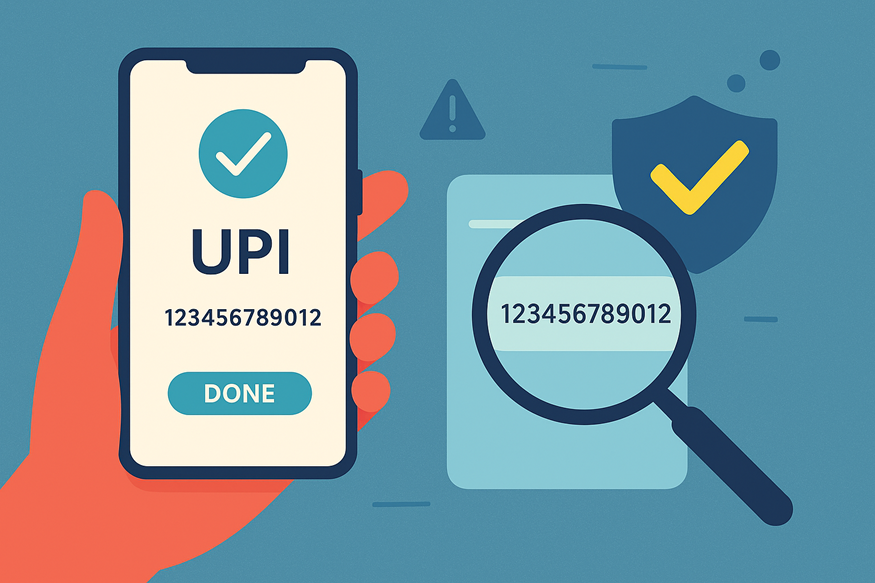
Have you ever paid someone via UPI, but the receiver didn't get the money? Or has someone ever said they paid you via UPI, but it didn’t reflect in your bank statement? Yes, these are some common UPI scam techniques these days.
The UPI payment system is doing better than ever, with its transaction failure rate below 1%. Yet, some users fall prey to such purported UPI issues due to a lack of awareness.
Here’s the thing: A UPI app has everything one needs, not just to send and receive money but to keep themselves protected against fraud. Let's discuss one such element, the UPI reference number, and explain how you can use it to dodge scams.
Where to Find Your UPI Reference Number?
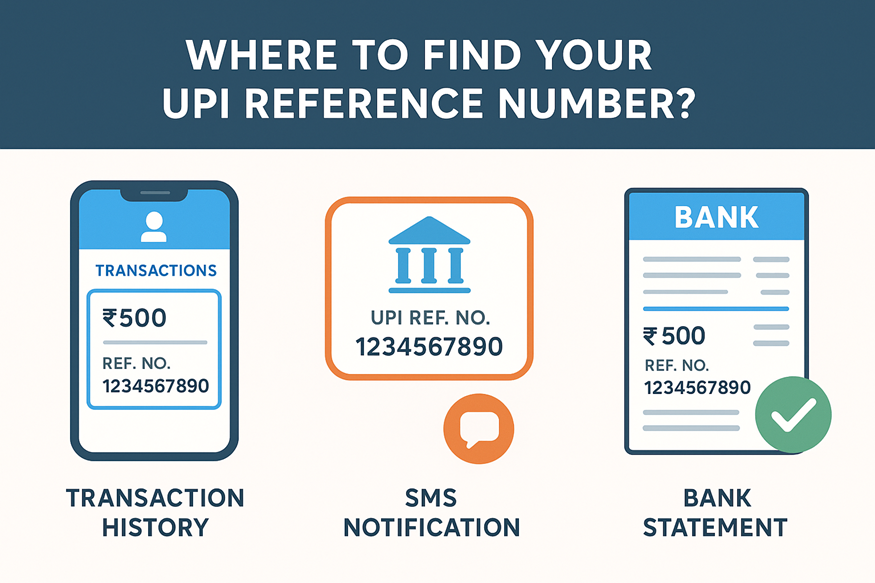
After completing a UPI transaction, you can find the UPI reference number in the transaction history of your payment app (Google Pay, PhonePe, Paytm, or BHIM). Each payment generates a unique UPI reference number, visible when you tap on the transaction to view its details. The number appears alongside the payment amount, status, and timestamp.
You can also find the same reference number in the SMS notification sent by your bank after the transaction. It is also recorded in your bank statement under the corresponding debit or credit entry, allowing you to verify and track UPI reference number details whenever needed.
Key Benefits of Using a UPI Reference Number for Users & Businesses
A reference number helps users and businesses track, verify, and manage every transaction more efficiently.
- Allows quick transaction tracking in case a payment is pending, failed, or delayed.
- Helps customer support teams resolve disputes faster with a unique payment identifier.
- Improves security by making every transaction traceable and easier to verify.
- Enables users to maintain clear and accurate financial records.
- Adds transparency to digital payments and supports better financial hygiene.
- For businesses, it simplifies reconciliation, audits, and payment matching.
UPI Reference Number vs. UPI Number: Clearing the Confusion
A reference number helps track a specific transaction, while a UPI number is a numeric alias used to make or receive UPI payments. Here’s the difference:
| Aspect | UPI Reference Number | UPI Number |
|---|---|---|
| Purpose | Tracks a specific UPI transaction | Acts as a numeric alias for making or receiving UPI payments |
| Use case | Dispute resolution, tracking, reconciliation | Sharing a simpler payment address instead of an alphanumeric UPI ID |
| Nature | Transaction-specific identifier | User/payment alias linked to a payment account |
| Main benefit | Helps verify and trace a payment | Makes UPI payments easier and more convenient |
How to Track the UPI Reference Number Online?
Tracking your reference number is easy. You can use the payment app you have used to make/receive the payment, or directly check it in your bank statements online. Here's how to find UPI Reference details online.
- Open your payment app (Google Pay, PhonePe, Paytm, etc.). Alternatively, open your bank app or visit the official website.
- Go to the “Transaction History” section and pick the transaction you want to track.
- You’ll find a 12-digit code called Unique Transaction Reference (UTR). This is your reference number.
Apart from bank websites/apps and UPI apps, you can also locate the UPI reference number via -
- SMS/Email - Look for confirmation messages from your bank or the UPI app.
- Bank Statement - The reference number appears next to the transaction in your downloaded bank statement.
Note: On Google Pay, the bank-generated UTR acts as the official reference number, while the app also creates its own internal transaction ID.
How to Use the UPI Reference Number for Dispute Resolution?
You need your reference number details anytime a payment fails, gets stuck, gets debited twice, or doesn’t show up for the receiver. It helps your bank or payment app trace the transaction and confirm what actually happened.
How to file a complaint
- Open your payment app and head to Help or Support.
- Select the transaction to begin tracking the UPI reference number.
- Enter the reference number, add a short note, and submit.
- Keep the number handy if support needs verification.
What to do if the problem persists?
- Contact your bank’s customer care and share the reference number for quicker tracking.
- If it still isn’t fixed, raise a complaint on NPCI’s official portal using the same number.
Also Read: How to Check UPI Transaction Status?
Common Myths About a UPI Reference Number
UPI is now the world’s top real-time payment system. Despite this, many people don’t fully understand how a reference number works. So, here’s a myth vs fact check -
- Myth: Sharing your UPI reference number is unsafe.
Fact: You can share your UPI reference number with bank officials or the payment recipient without any worry. It’s totally safe to do so.
- Myth: A UPI reference number and a UPI ID are the same.
Fact: A reference number is generated after a payment is completed, while a payment account address is used to send and receive money.
- Myth: You need the UPI reference number to send or receive a payment.
Fact: The reference number is generated automatically after a payment is completed. You only get the UPI reference number once the transaction is successful.
Track Every UPI Payment Without Stress
UPI has basically become the default way to pay, and it’s only going to grow from here. So it makes total sense to start understanding UPI reference details and how they work. Once you know how to track and verify payments properly, the UPI reference number becomes a useful tool for avoiding confusion, payment disputes, and scams.
If you’re working toward a major goal and need quick financial support, apply for a personal loan with Hero FinCorp and move forward with confidence.
Frequently Asked Questions
Can one UPI reference number be used for multiple transactions?
No, because each UPI transaction has a unique reference number.
What to do if the UPI reference number is lost?
Check your UPI app’s transaction history to find the reference number. You can also check your bank statement.
Is a UPI reference number the same as a UPI ID or a transaction ID?
No, the reference number isn’t the same as a UPI ID. However, it is similar to a transaction ID.
Can I share my UPI reference number with others safely?
Yes, you can safely share your UPI reference number with others.
How long are UPI reference numbers valid for tracking?
A UPI reference number doesn’t expire, so it’s always valid for tracking.
Can a bank track a failed UPI transaction if I lose my UPI reference number?
Yes, banks can trace it using internal logs, your registered mobile number, the transaction date, exact time, and debit amount, as backed by RBI customer service guidelines.
Is my 8–10 digit UPI Number the same as my transaction reference identifier?
No. Your UPI Number is a permanent payment alias (like your phone number). In contrast, the transaction identifier is a unique 12-digit code generated per transaction by the NPCI.
How do e-commerce merchants use the UPI reference number for order validation?
Merchants use automated APIs to match the 12-digit reference number provided by the user against their payment gateway settlement records to verify successful fund transfers before processing orders.
Disclaimer: The information provided in this blog post is intended for informational purposes only. The content is based on research and opinions available at the time of writing. While we strive to ensure accuracy, we do not claim to be exhaustive or definitive. Readers are advised to independently verify any details mentioned here, such as specifications, features, and availability, before making any decisions. Hero FinCorp does not take responsibility for any discrepancies, inaccuracies, or changes that may occur after the publication of this blog. The choice to rely on the information presented herein is at the reader's discretion, and we recommend consulting official sources and experts for the most up-to-date and accurate information about the featured products.