National Cyber Security Awareness Month 2026: Building Safer Digital Habits to Protect Yourself Online
- Why Is National Cyber Security Awareness Month Important?
- Common Cyber Threats You Should Be Aware Of
- 10 Essential Cyber Hygiene Practices to Follow Every Day
- What Should You Do If You Become a Victim of Cyber Fraud?
- Making Cybersecurity a Shared Responsibility
- This National Cyber Security Awareness Month, Make Every Click Count
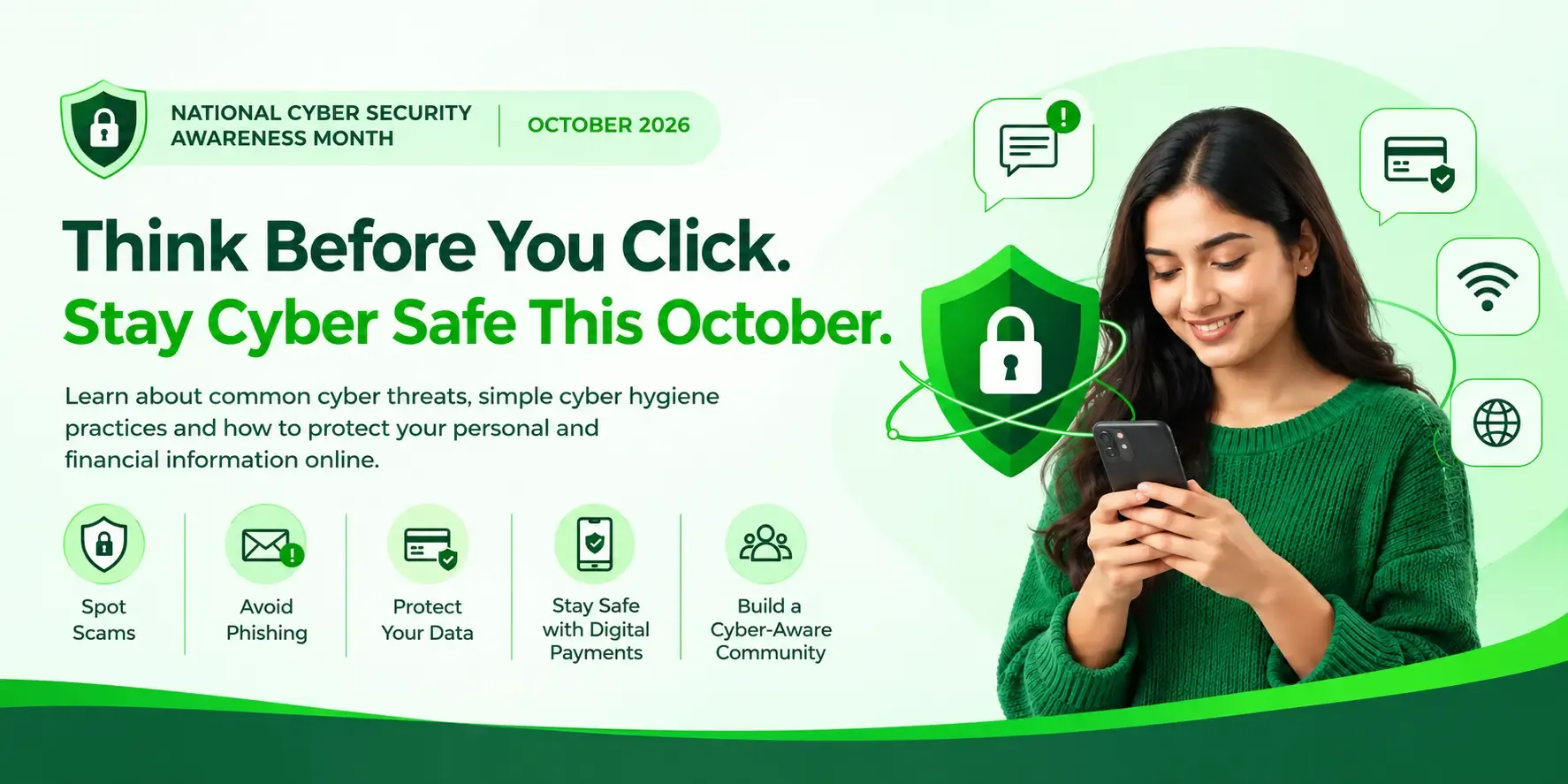
This October, take a step towards a safer digital world. Understand common cyber threats, practise good cyber hygiene and learn how to protect your personal and financial information online.
In an increasingly connected world, digital platforms have transformed how we communicate, access information, manage finances and carry out everyday transactions. From online banking and digital payments to mobile applications and financial services, technology has made everyday activities more accessible and convenient.
However, greater digital adoption also brings increased exposure to cyber threats. Fraudulent calls, phishing messages, fake websites, identity theft and digital payment scams can put personal information and financial security at risk.
Recognising the importance of online safety, October is globally observed as National Cyber Security Awareness Month (NCSAM). The initiative aims to enhance cybersecurity awareness across public and private sectors and highlight the importance of adopting safe digital practices.
As we observe National Cyber Security Awareness Month 2026, it is important to remember that cybersecurity is not just the responsibility of organisations or technology experts. Every individual who uses a smartphone, accesses the internet or makes digital transactions has a role to play in maintaining a safer digital environment.
Why Is National Cyber Security Awareness Month Important?
Digital interactions have become an essential part of everyday life. People regularly share personal information, access financial services, make online payments and communicate through digital platforms.
While these services offer convenience, a lack of awareness about potential cyber threats can expose users to fraud and misuse of sensitive information.
National Cyber Security Awareness Month serves as an important reminder to develop responsible digital habits and understand the risks associated with online activities.
The importance of cyber awareness can be understood through the following aspects:
1. Protecting Personal Information
Personal details such as mobile numbers, email addresses, identity documents and banking information can be misused if they fall into the wrong hands. Understanding where and with whom to share such information is essential.
2. Preventing Financial Fraud
Cybercriminals often use fake payment requests, fraudulent links and impersonation techniques to deceive individuals. Awareness of these methods can help users identify suspicious activities and avoid financial losses.
3. Promoting Safe Digital Transactions
With the growing adoption of UPI, mobile banking and digital payment platforms, users need to understand how to authenticate transactions securely and recognise fraudulent payment requests.
4. Safeguarding Digital Identities
Email accounts, social media profiles and financial accounts contain information that can be exploited for identity theft or unauthorised access. Practising good cybersecurity habits helps protect these digital identities.
Common Cyber Threats You Should Be Aware Of
Cybercriminals use different techniques to manipulate users into revealing confidential information, downloading malicious applications or authorising fraudulent transactions.
Understanding these common threats can help you stay alert.
1. Phishing: Beware of Suspicious Emails and Messages
Phishing involves fraudulent emails, SMS messages or websites that imitate trusted organisations. These communications may claim that your bank account needs verification, your KYC details require updating or an urgent action is pending.
The objective is often to encourage users to click malicious links and share sensitive information such as passwords, OTPs or banking credentials.
How to stay safe:
- Avoid clicking links received from unknown or suspicious sources.
- Verify the sender's identity before responding.
- Access banking and financial services through their official websites or applications.
- Never share passwords or OTPs through unverified links.
2. Vishing: Do Not Trust Every Phone Call
Vishing, or voice phishing, involves fraudulent phone calls from individuals impersonating bank representatives, customer support executives or government officials.
They may create urgency by claiming that your account is at risk, a transaction requires immediate verification or your KYC details need to be updated.
How to stay safe:
- Never share OTPs, PINs, CVVs or passwords over phone calls.
- Do not follow instructions from unknown callers to install applications or share your screen.
- Disconnect suspicious calls and contact the organisation through its official customer support channels.
3. UPI and Digital Payment Frauds
Digital payment platforms have made money transfers quick and convenient. However, fraudsters may exploit users through fake payment requests, QR code scams and impersonation.
A common misconception is that scanning a QR code or entering a UPI PIN is required to receive money.
How to stay safe:
- Remember that entering your UPI PIN authorises a payment; it is not required to receive money.
- Verify the recipient's name and transaction amount before authorising payments.
- Avoid approving unfamiliar collect requests.
- Never share your UPI PIN or banking credentials with anyone.
4. Fake Loan Offers and Fraudulent Applications
Fraudsters may circulate attractive loan offers through unsolicited calls, SMS messages, social media advertisements and unofficial mobile applications.
Such offers may promise guaranteed approvals or unusually favourable borrowing terms to obtain personal information, collect fraudulent upfront payments or misuse sensitive data.
How to stay safe:
- Verify the identity and authenticity of the lending institution before applying.
- Download financial applications only from trusted sources.
- Check the permissions requested by mobile applications.
- Read the applicable loan terms and conditions carefully.
- Avoid sharing personal or financial information through unverified platforms.
5. Identity Theft and Data Misuse
Identity theft occurs when someone uses another person's personal information to impersonate them, access accounts or conduct fraudulent activities.
Information such as identity documents, mobile numbers, email addresses and financial details can be misused if shared carelessly.
How to stay safe:
- Share personal information only when necessary.
- Avoid uploading identity documents to unfamiliar websites.
- Use secure and verified platforms when submitting sensitive information.
- Keep your account credentials confidential.
6. Malware and Malicious Applications
Malware refers to harmful software that can compromise devices, monitor activities or steal information. It may enter devices through suspicious downloads, unofficial applications or malicious links.
Some fraudulent applications may also request unnecessary permissions to access sensitive information.
How to stay safe:
- Download applications only from official app stores.
- Avoid installing applications at the request of unknown callers.
- Review application permissions before granting access.
- Keep your smartphone, operating system and applications updated.
10 Essential Cyber Hygiene Practices to Follow Every Day
Cyber hygiene refers to the everyday practices and precautions that help protect devices, online accounts and personal information from cyber threats.
This National Cyber Security Awareness Month, make these practices part of your daily digital routine:
- Use Strong and Unique Passwords: Create passwords that are difficult to guess and avoid using the same password across multiple accounts.
- Enable Two-Factor Authentication: Add an additional layer of security to important accounts wherever the facility is available.
- Never Share Confidential Credentials: Keep OTPs, passwords, UPI PINs and CVV details private.
- Verify Before Clicking: Check unfamiliar website addresses, links and email senders before opening them.
- Download Applications from Trusted Sources: Use official app stores and review the permissions requested by applications.
- Keep Your Devices Updated: Install security updates for your smartphone, computer, browser and applications regularly.
- Avoid Unsecured Public Wi-Fi: Avoid accessing sensitive financial accounts or conducting transactions over untrusted public networks.
- Monitor Your Financial Transactions: Regularly review bank statements and transaction notifications to identify unfamiliar activities.
- Limit Personal Information Sharing: Avoid publicly sharing sensitive personal and financial details on social media platforms.
- Report Suspicious Activities: If you suspect cyber fraud, inform your bank or financial service provider immediately and report the incident through the appropriate official channels.
What Should You Do If You Become a Victim of Cyber Fraud?
Despite taking precautions, individuals can sometimes become victims of cybercrime. In such situations, timely action is important to minimise potential losses and initiate the appropriate response.
If you notice an unauthorised financial transaction or suspect that you have been targeted by a cyber fraud, follow these steps:
1. Contact Your Bank Immediately
Inform your bank about the suspicious transaction and request assistance in securing your account or blocking the affected payment instrument, wherever necessary.
2. Call the National Cybercrime Helpline – 1930
If you have experienced financial cyber fraud in India, call 1930 immediately to report the incident.
3. Register an Online Complaint
Visit the Government of India's National Cyber Crime Reporting Portal to submit a complaint.
4. Secure Your Digital Accounts
Change compromised passwords, revoke suspicious application permissions and enable two-factor authentication wherever available.
5. Preserve Relevant Evidence
Keep transaction IDs, screenshots, phone numbers, emails and messages associated with the incident. These details may help support the investigation.
Remember, reporting suspected financial cyber fraud promptly is important.
Making Cybersecurity a Shared Responsibility
Creating a safer digital environment requires collective participation from individuals, organisations and communities.
While organisations must focus on strengthening their digital security practices, individuals must also understand the importance of responsible online behaviour.
Parents can educate children about safe internet usage, employees can participate in cybersecurity awareness initiatives, and individuals can help friends and family members identify suspicious online activities.
Simple awareness initiatives through digital platforms, social media communication and educational content can help spread important cyber hygiene messages to a wider audience.
More importantly, cybersecurity awareness should not be limited to one month. It should become an everyday habit.
This National Cyber Security Awareness Month, Make Every Click Count
As we observe National Cyber Security Awareness Month in October 2026, let us take a collective step towards building a safer and more responsible digital ecosystem.
Whether you are making a UPI payment, accessing financial services, applying for a loan online or sharing information on social media, take a moment to verify before you trust.
Remember these simple principles:
- Think before you click.
- Verify before you share.
- Protect your passwords and personal information.
- Stay alert to suspicious calls, messages and payment requests.
- Report cyber fraud without delay.
A safer digital world begins with an aware digital user. Stay informed, practise good cyber hygiene and make online safety a part of your everyday life.
Disclaimer: The information provided in this blog post is intended for informational purposes only. The content is based on research and opinions available at the time of writing. While we strive to ensure accuracy, we do not claim to be exhaustive or definitive. Readers are advised to independently verify any details mentioned here, such as specifications, features, and availability, before making any decisions. Hero FinCorp does not take responsibility for any discrepancies, inaccuracies, or changes that may occur after the publication of this blog. The choice to rely on the information presented herein is at the reader's discretion, and we recommend consulting official sources and experts for the most up-to-date and accurate information about the featured products.