Delhi EV Policy 2.0: Your Guide to Savings and New Rules
If you are planning to buy an EV in Delhi, the showroom price isn't the only thing to check. Delhi EV Policy 2.0 can affect your purchase through incentives, tax and registration benefits, while phased rules will change which vehicles can get new registrations. Here’s what the policy means for buyers and vehicle owners, and what to check before you buy.
What Is the Delhi EV Policy 2.0?
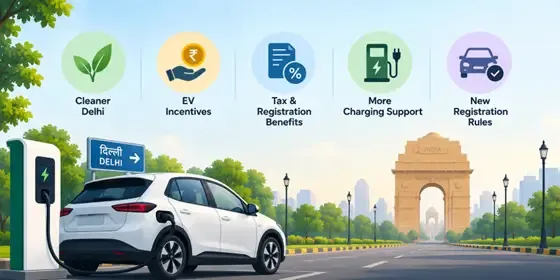
Delhi EV Policy 2.0 is the government’s latest plan to control pollution and promote electric vehicles. The government notified it on 30 June 2026, and the policy came into effect on 1 July 2026. It will continue until 31 March 2030.
For buyers, the policy is not just about EV incentives. It also covers road tax and registration benefits, charging infrastructure, and changes to vehicle registration over the next few years.
The idea is simple: make electric vehicles easier to buy and use while gradually moving Delhi towards cleaner transport.
Key Benefits of the Delhi EV Policy
The Delhi EV policy offers many benefits, which vary by category and vehicle age.
- Purchase incentives for eligible EVs.
- 100% exemption from road tax and registration fees.
- Charging infrastructure support.
- Scrapping incentives for eligible older vehicles.
Purchase Incentives by Vehicle Type
Purchase incentives reduce:
Two-wheelers: ₹30,000 → ₹20,000 → ₹10,000.
Three-wheelers: ₹50,000 → ₹40,000 → ₹30,000.
N1 goods vehicles: ₹1 lakh → ₹75,000 → ₹50,000.
Quick Summary: Tax Waivers.
For an eligible electric car up to ₹30 lakh:
Road tax = 100% exemption
Registration fee = 100% exemption
Cars above ₹30 lakh do not qualify.
Tax and Registration Waivers
The upfront cost of an EV can look high, but Delhi’s policy removes two charges that usually add to the final on-road price. Eligible electric vehicles registered in Delhi get a 100% exemption from road tax and registration fees during the policy period.
For electric cars, the benefit depends on the ex-showroom price:
- Up to ₹30 lakh: You pay no road tax or registration fee. This exemption applies until 31 March 2030.
- Above ₹30 lakh: The exemption does not apply. You will have to pay the applicable road tax and registration fees.
This means the price you see at the dealership is not the whole story. If your EV falls within the ₹30 lakh limit, these two exemptions can bring down the amount you need to pay when you register the car.
Who Is Eligible for the Delhi EV Policy Benefits?
Check these conditions before buying:
- You must be a Delhi resident to qualify for purchase incentives.
- You must purchase and register the eligible EV in Delhi.
- Your electric two-wheeler must cost no more than ₹2.25 lakh ex-showroom.
- A car must cost no more than ₹30 lakh for the ₹1 lakh scrapping incentive.
- You must own a Delhi-registered BS-IV or older vehicle.
- You must buy the EV within six months of receiving the Certificate of Deposit.
- You must apply within 30 days of RC generation.
Latest Updates on the Delhi EV Policy (2026)
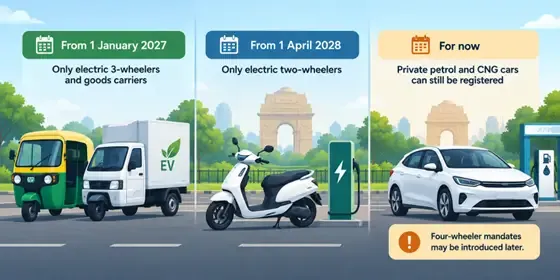
From 1 January 2027, Delhi will allow only electric L5 three-wheelers and N1 goods carriers for new registration. From 1 April 2028, only electric two-wheelers can receive new registrations.
How to Make the Most of the Delhi EV Policy Benefits?
Planning your purchase around the policy can help you avoid missing an eligible benefit or registration deadline. Follow these steps before you buy an EV.
Step 1: Know your eligibility
Firstly, know your EV’s category, price, and Delhi registration eligibility. Also, before planning to scrap your old vehicle, ensure that it meets the terms and conditions.
Step 2: Keep your documents ready
If you scrap an eligible vehicle, keep the Certificate of Deposit (CoD) safely. You must buy the new EV within six months of the CoD date to claim the applicable scrappage incentive.
Step 3: Calculate your actual savings
Compare the on-road price after the applicable tax, registration, and scrappage benefits. If you need extra funds, use Hero FinCorp’s loan options and check the EMI before you buy.
What Delhi EV Policy 2.0 Means for Your Next Vehicle
Delhi EV Policy 2.0 changes both the cost of buying an EV and the future registration choices available to vehicle owners. Check your vehicle category, eligibility, scrappage conditions, and applicable tax exemptions before booking. If you need extra funds, a Hero FinCorp two-wheeler or car loan can help you manage the purchase without stretching your monthly budget.
Frequently Asked Questions
When did the Delhi EV Policy 2.0 come into effect and how long is it valid?
The Delhi EV Policy 2.0 came into effect on 1st July 2026. This policy is valid until 31 March 2030.
What is the scrapping incentive for cars?
Owners who scrap a Delhi-registered BS-IV or older car and buy a new electric car up to ₹30 lakh ex-showroom can get ₹1 lakh. It is limited to the first 1,00,000 eligible applicants.
Are electric cars eligible for tax benefits under this policy?
Yes. Electric cars up to ₹30 lakh ex-showroom are eligible for tax benefits under this policy.
Will new petrol/CNG vehicle registrations be affected by this policy?
Yes, in specified categories. From 1 January 2027, only electric L5 three-wheelers and N1 goods carriers can receive new registrations. From 1 April 2028, only electric two-wheelers can receive new registrations in Delhi.
Do I need to register my vehicle in Delhi to claim these benefits?
Yes. Purchase incentives apply when you buy and register the EV in Delhi. The buyer must also meet the policy’s other conditions. Scrapping benefits require Delhi registration for the old vehicle.
Disclaimer: The information provided in this blog post is intended for informational purposes only. The content is based on research and opinions available at the time of writing. While we strive to ensure accuracy, we do not claim to be exhaustive or definitive. Readers are advised to independently verify any details mentioned here, such as specifications, features, and availability, before making any decisions. Hero FinCorp does not take responsibility for any discrepancies, inaccuracies, or changes that may occur after the publication of this blog. The choice to rely on the information presented herein is at the reader's discretion, and we recommend consulting official sources and experts for the most up-to-date and accurate information about the featured products.