Pros and Cons of Buying an Electric Scooter

Electric scooters are getting to be a more popular choice for people traveling in India. Lots of commuters are looking for ways to cut down on fuel costs and t͏hey want a transport option that is cleaner also. This growing interest is due to several things. Battery technology is better now, people know more about these vehicles, and finding a place to ch͏arge them is getting easier. All these factors combined make electric scooters more appealing than in past years.
Understanding the pros and cons of electric scooter ownership can help you decide whether it suits your budget, travel needs, and daily lifestyle. This guide explains the pros and cons of electric scooters in a simple and practical way.
Pros of Buying an Electric Scooter
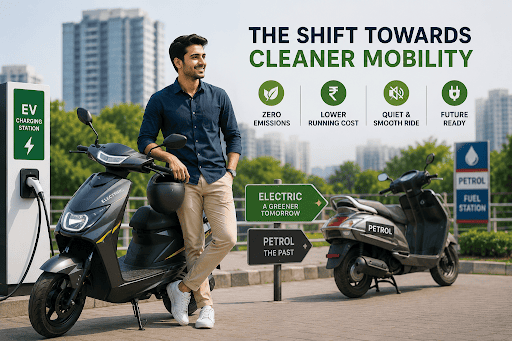
To understand the advantages and disadvantages of electric scooter ownership, it helps to begin with the benefits. For many city riders, the pros and cons of electric scooter usage clearly lean in favour of convenience, lower running expenses, and smoother commuting.
Eco-Friendly Mode of Transportation
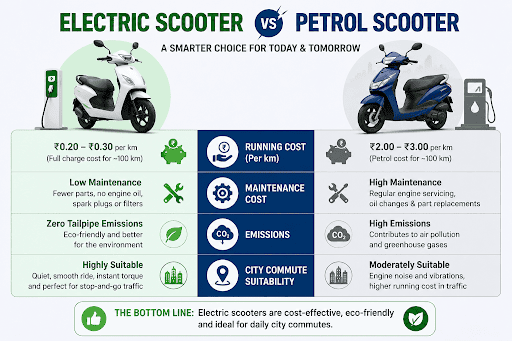
A significant benefit of electric scooters is that they emit absolutely no tailpipe emissions. This particular aspect really helps in cutting down air pollution in cities, especially where it is very crowded. Now, even though the process of making electricity can have its own environmental effect, electric scooters are, largely speaking, considered a much cleaner choice compared to gasoline-powered models, at least for day-to-day transportation.
Lower Running Costs
Among the strongest pros of electric scooter ownership is the difference in day-to-day running cost. Charging an electric scooter is usually much cheaper than refuelling a petrol scooter. Over months and years, this can translate into noticeable savings for people who commute regularly for work, study, or daily errands.
Lower Maintenance Costs
Electric scooters often have fewer moving components compared to the trad͏itional petrol scooters, and this typically means they require less upkeep ov͏er time. You do not have to worry about things like changing engine oil, replacing spark plugs, or getti͏ng exhaust system repairs done. So, this can definitely bring down the costs associated with regular servicing, even though parts such as the tires, brakes, and the suspension still need to be inspected regularly.
Smooth and Silent Riding Experience
These electric scooters provide a very smooth acceleration, and that is because they deliver torque almost instantly. Another thing is they run quite quietly, which really makes riding around the city feel more comfortable and a lot less stressful for the rider. For someone just starting out, this quiet, calm riding experience is truly a significant advantage.
Lightweight and Easy to Handle
Many of these electric scooters are actually built with city use in mind, so this often makes them relatively light and not difficult to handle while you are in traffic. They are often easier to park, alo͏ng with being easier to make turns and manage at lower speeds, particularly on busy city streets or through those narrow residential pa͏ths.
Government Subsidies and Tax Advantages
There are different government programs and state-level rules, which mean some buyers might get subsidies or various incentives when they buy an electric vehicle.
Good for Everyday City Travel
Electric scooters tend to be a utilitarian decision for those whose daily commute primarily consists of such activities as going to the office, driving children to tuition, grocery shopping, or running short errands around town. If your daily travel distance is comfortably within what the scooter can do on one charge, the lower running costs and how easy they are to manage make electric transport quite appealing.
Should the initial price seem a bit much to handle all at once, financing options are often available, making the purchase itself simpler. Hero FinCorp’s two wheeler loan can support eligible borrowers looking for a more manageable way to buy their preferred scooter.
Cons of Using an Electric Scooter
While there are many advantages and disadvantages of electric scooter ownership to consider, buyers should also understand the limitations. The pros and cons of electric scooters can vary depending on where you live and how you plan to use the vehicle.
Limited Riding Range
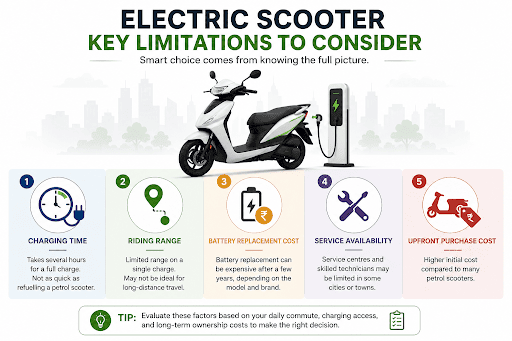
One frequent concern is the range, which can be quite limited on these scooters. Despite the gradual improvement of batteries over time, many electric models still don’t travel as far on one charge as a petrol scooter can on a tank of fuel. For individuals who often travel long distances, this particular aspect could certainly prove inconvenient.
Charging Infrastructure Availability
Then there is the issue of charging infrastructure and its availability. While access to charging points is getting better, it does not mean it is equally developed in all places. For a potential buyer, this makes their geographical location really quite an important part of the decision-making process.
Longer Charging Time
The time it takes to charge is another point. Filling up a petrol scooter only takes a few minutes typically. But, for an electric scooter, it could take several hours to get a full charge; this, of course, depends on the specific battery and also the type of charger being used. That sort of difference means you just have to plan things out a little bit better you know.
Higher Initial Purchase Cost
Electric scooters frequently carry a higher upfront price tag than petrol sc͏ooters that are similar in specification. While it is true that over the longer term, savings on fuel and mainten͏ance might help to offset this, that initial price point can feel quite high for quite a few buyers.
Battery Replacement Cost
Battery replacement is a significant trade-off when designing an EV, as batteries have a limited lifecycle and are expensive to replace. The battery is also among the costliest parts in an electric scooter. Over time, the effectiveness of batteries may decrease, and replacement after a time may be required. That is an important long-term cost to keep in mind when you're comparing the cost of ownership.
Limited Service and Repair Network
Service support is better now, though the electric scooter repair network is still evolving in parts of India. Spares and qualified mechanics are not always particularly easy to come by, especially out in the sticks. Before you buy, it's a good idea to find out where the brand’s authorised service network is.
Things to Consider Before Buying an Electric Scooter
Understanding the pros and cons of electric scooters in India is only part of the decision. You should also consider your own commuting pattern and budget before choosing a model.
Daily Travel Requirement
Approximate the distance you generally cover in a day. Select a scooter with a range that comfortably exceeds your daily routine without causing range anxiety.
Home or Public Charging Facility
Charging convenience matters. If you have access to charging at home or work, ownership becomes much easier. If you depend on public charging alone, availability should be checked carefully.
Battery Warranty and Lifespan
Look at the battery warranty, expected lifespan, and manufacturer terms. A longer warranty may offer more peace of mind.
Brand Service Network
A strong service network can make ownership easier in the long run. You should always check if service centers and spare parts for the vehicle are accessible where you live.
Total Cost of Ownership
It is important not to compare just the purchase price. One really needs to review the total costs, and this includes things like the electricity used, insurance, regular servicing, and the potential need for battery replacement down the line. Also, if you are financing it, you must consider the loan EMIs.
Should You Finance an Electric Scooter?
If you are considering an electric scooter loan or a two wheeler loan for electric scooter purchase, financing can make ownership more affordable without exhausting your savings.
EMI Benefits
A loan lets you take a cost and divide it into monthly payments, which means you do not have to pay the whole amount right away. This can turn out to be helpful if you would rather keep your savings for unexpected situations or other things you might want to save up for.
Ownership that is More Affordable
When you get the right loan period and monthly payment, financing can make owning an electric scooter seem much more practical, and it fits better within a budget.
Things to Compare Before Getting a Loan
Before you go ahead and apply for one, you should compare the interest rates, how long the lo͏an lasts, any extra charges there are, and also look at the terms for paying it back e͏arly. If you need funding support, you can explore Hero FinCorp’s personal loan journey here.
End Note
The pros and cons of electric scooter ownership depend on how and where you plan to ride. They certainly have their advantages for city living, especially since they don't cost much to run and they're pretty quiet compared to other options. That said, you have to weigh those advantages against practical considerations like how far you can really go on a charge, and whether you have a convenient place to plug it in. The cost of replacing a motor battery is another thing to investigate before you decide to buy one.
Frequently Asked Questions
What are the advantages and disadvantages of electric scooter?
Low price and maintenance, more comfortable, less noise and pollution are the advantages, and limited range, long charging time, battery replacement cost and fragmented charging infrastructure are the disadvantages.
What are the benefits and downsides to electric scooters?
The advantages and disadvantages of purchasing an electric scooter will depend on the usage. An electric scooter is definitely the best choice for routine journeys or city travel, but a bit less suitable for regular or long-haul journeys.
Is buying an electric scooter a good decision in India?
In India, a good percentage of young city commuters consider buying an electric scooter as a beneficial choice. The purchase of an electric scooter can be made the right decision if your daily travelling is covered under its battery range and you can manage the charging cycle smoothly.
What is the biggest disadvantage of an electric scooter?
Range and a long charging period is the biggest disadvantages, as perceived by several users, especially the ones who go for long trips on a regular basis.
Are electric scooters cheaper to maintain than petrol scooters?
Yes, usually. Electric scooters don’t have that many parts and hence they are easier to manage and take care of compared to petrol scooters. However, the expense of replacing a battery may arise at some point in time, which can be a big loss.
How long does an electric scooter battery last?
Well, it totally depends on the brand and usage type of your electric scooter, but mostly a good quality battery lasts for many years of constant usage.
Can I get a two wheeler loan to buy an electric scooter?
Of course you can! Lenders today provide a range of two wheeler loans for purchasing electric scooters. If your loan profile is fit then you could compare and apply for the best two wheeler loans in India.
Disclaimer: The information provided in this blog post is intended for informational purposes only. The content is based on research and opinions available at the time of writing. While we strive to ensure accuracy, we do not claim to be exhaustive or definitive. Readers are advised to independently verify any details mentioned here, such as specifications, features, and availability, before making any decisions. Hero FinCorp does not take responsibility for any discrepancies, inaccuracies, or changes that may occur after the publication of this blog. The choice to rely on the information presented herein is at the reader's discretion, and we recommend consulting official sources and experts for the most up-to-date and accurate information about the featured products.